RZ Stage 2 package
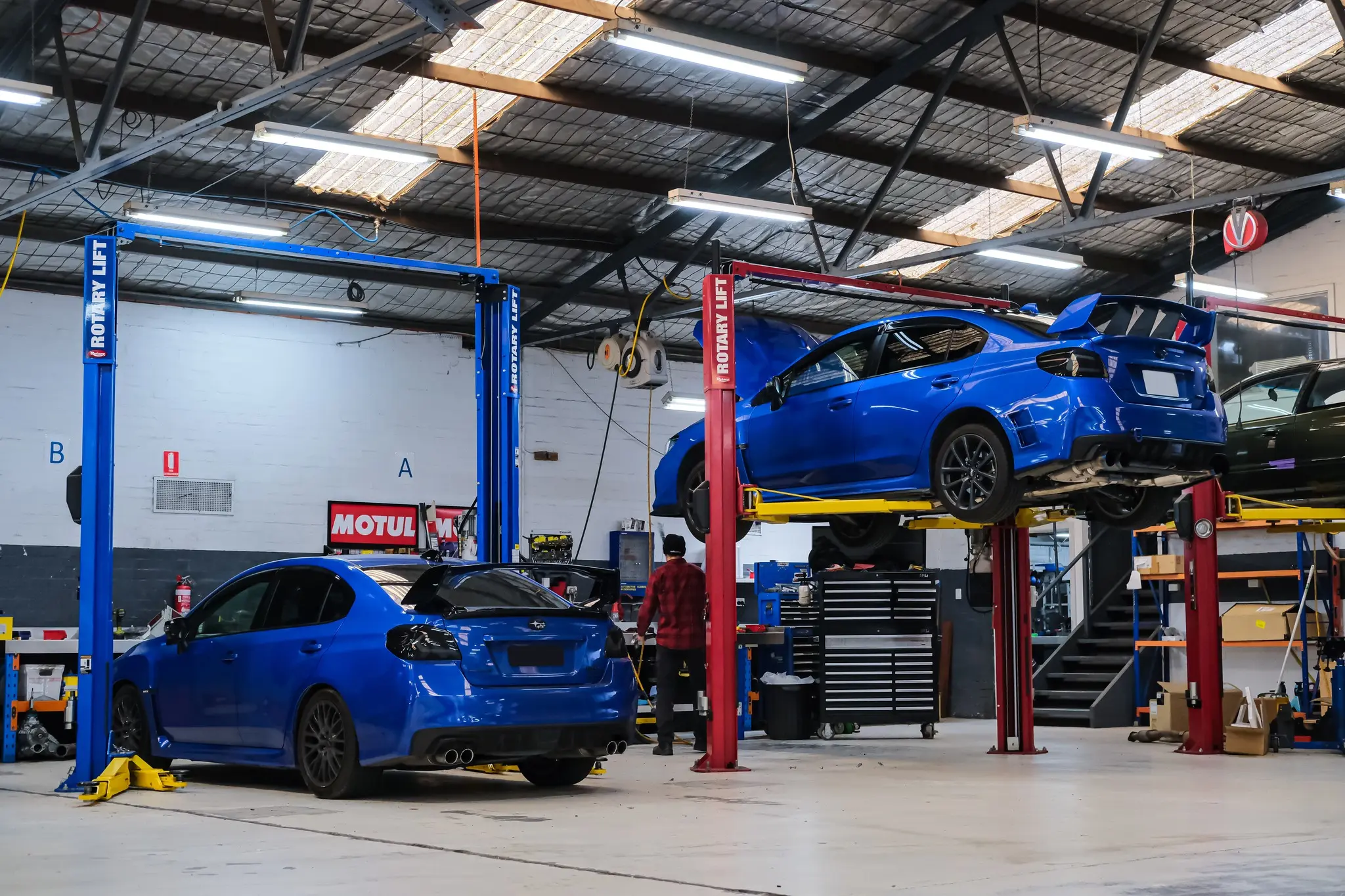
Two FA20DIT WRX VAs came in at the same time for the same build. Both stock, both owned by guys who wanted more power without doing anything stupid to the engine. More grunt, better throttle response, and something they could trust long term.
The FA20DIT makes decent power stock, but it’s leaving a lot on the table. The factory intercooler heat soaks easily, the airbox is restrictive, and the exhaust chokes the turbo on the way out. A proper Stage 2 package deals with all of that at once.
Why the verticooler over a front-mount
We get asked this a lot on VA builds. For a street car, we almost always go with the Process West Verticooler.
The factory top-mount is small. It heat soaks in traffic, on warm days, basically any time you’re not moving at highway speed. When charge temps climb, the ECU pulls timing and boost, and you lose power. The Process West Verticooler drops straight in where the factory one sits, but with a much larger core and a vertical flow design that cools far better.
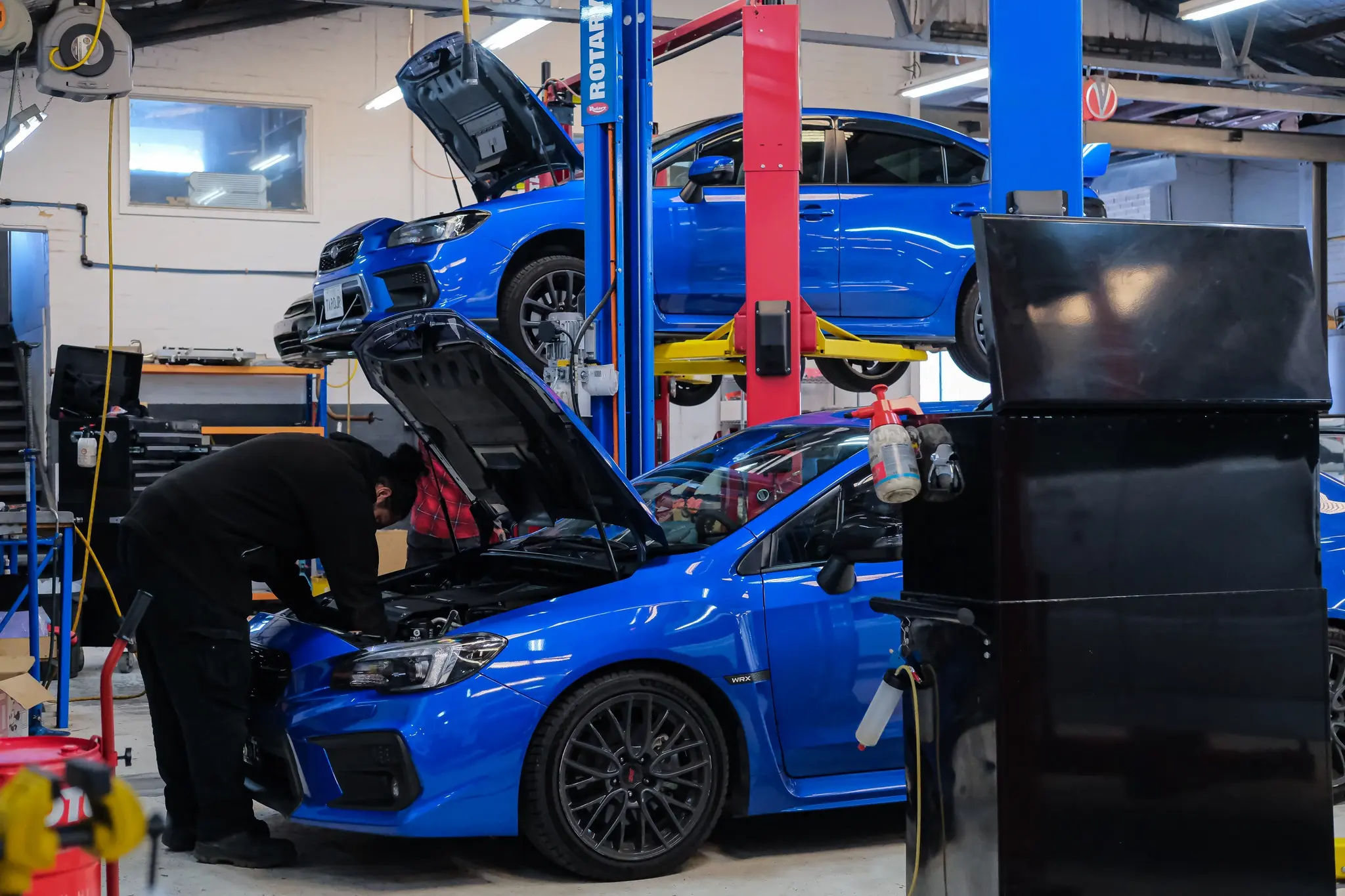
The reason we pick this over a front-mount for street use is turbo response. A front-mount adds a long charge pipe run from the turbo down to the intercooler and back up to the throttle body. That extra volume of air has to be pressurised, and you feel it as slower spool and a lazier throttle. The Verticooler keeps the short, direct path from turbo to intake manifold, so the car still hits boost quickly. For a car that lives on the street, that matters more than chasing the absolute lowest intake temps a front-mount might get at sustained full throttle.
Intake and exhaust
The Process West cold air intake replaces the factory airbox. It pulls cooler air from outside the engine bay through a bigger, less restrictive path to the turbo inlet. A turbo that can breathe more freely on the inlet side spools faster and works less hard. People underestimate how much the intake side matters on these cars.
The Invidia j-pipe replaces the factory cat section right after the turbo. That’s the biggest restriction in the stock exhaust. Removing it drops backpressure and lets the turbo push exhaust gas out without fighting the factory restriction. More power, better spool.
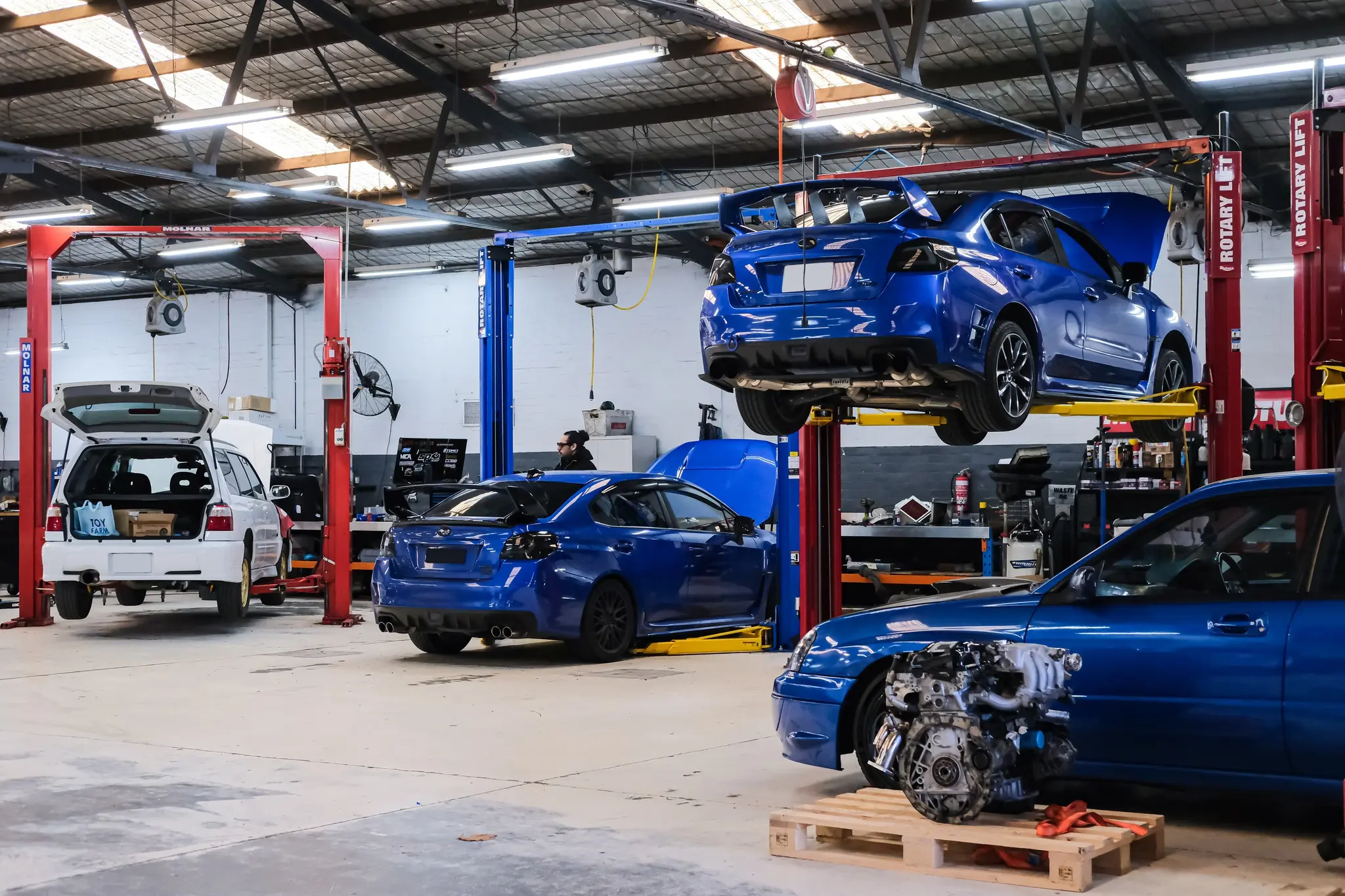
With the intake and j-pipe done, the turbo has an easier job on both sides. Less restriction in, less restriction out. The Verticooler keeps charge temps down in between.
Custom dyno tune
None of this matters without a tune. The factory ECU calibration has no idea the hardware has changed, so it won’t take advantage of the extra airflow. It might even run poorly, with fuelling and boost targets that don’t suit the new parts.
Both cars were tuned on our roller dyno using EcuTek, which gives us full access to the FA20DIT’s ECU. Boost targets, fuel maps, ignition timing, cam timing, throttle response, all rewritten from scratch for the hardware.
We tuned for reliability first. Boost sits at a level the FA20DIT is comfortable with long term. Fuelling is set to hold safe air-fuel ratios across the full rev and load range. Timing is advanced to where the engine makes good power without getting close to knock. The tune is conservative where it needs to be and takes what’s available where there’s room.