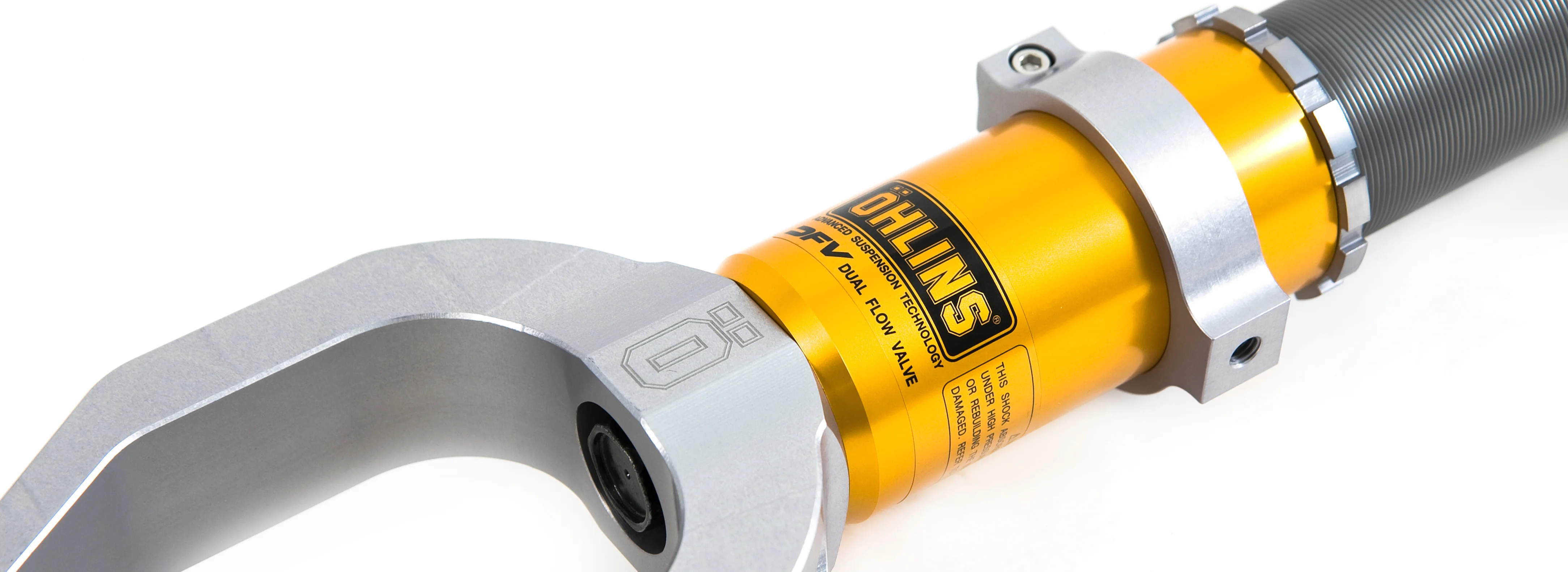

About Ohlins DFV
DFV stands for Dual Flow Valve. It's a patented valve design that controls damping forces in the shaft speed range that matters most for handling, traction, and ride quality.
With a normal single tube damper, you're always compromising. Soften it for the street and it gets sloppy in corners. Firm it up for track and the ride is harsh on the way there. The DFV gets around this by tuning compression and rebound independently.
Every coilover in the Ohlins Road & Track range uses DFV technology. Street or track, the damper works properly in both.
How does it work?
The DFV lets you tune intermediate shock absorber speeds independently from low and high speed damping. On a conventional single tube damper, adjusting the intermediate range affects everything else. You can't touch one without moving the others.
The Ohlins Road & Track range uses DFV on every fitment. It's built for drivers who want one set of coilovers that actually works on both the street and the track, without having to pick which one matters more.
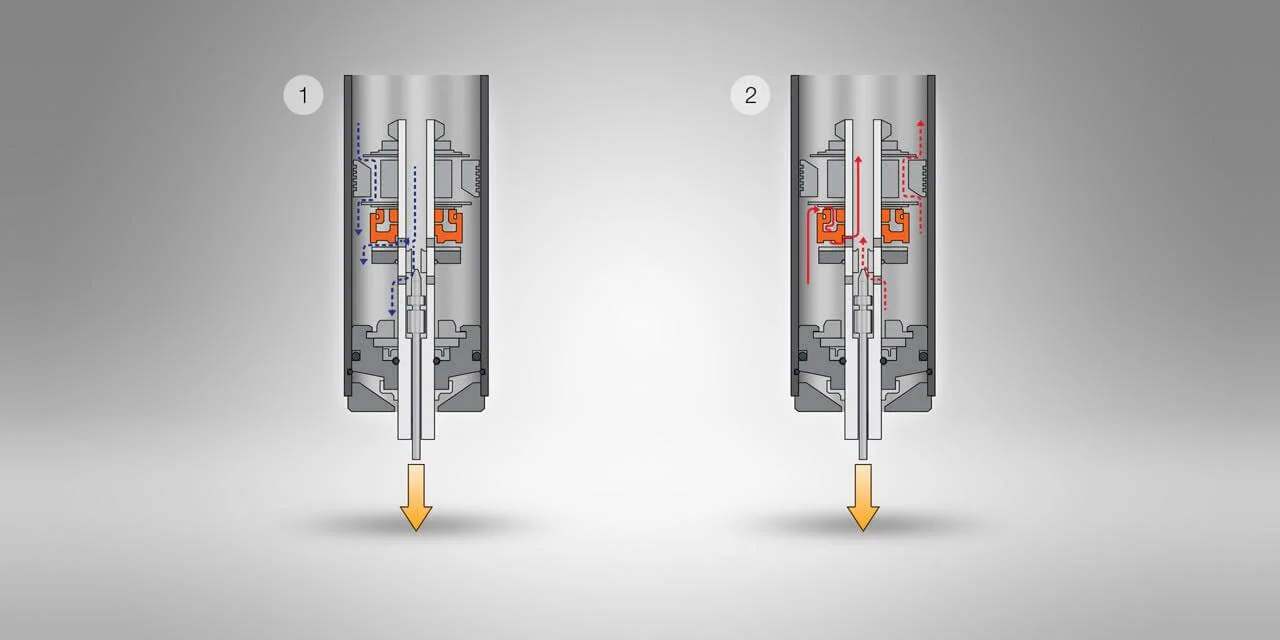
Compression & rebound
On the compression side, low shaft speeds send oil through the shaft jet bleed. High speeds push it through the compression ports in the piston. At intermediate speeds, the compression valve in the DFV regulates the flow. Hit a sudden bump and oil also escapes through the DFV's compression ports, so the wheel follows the surface instead of fighting it.
Rebound works the same way. Low speeds go through the jet bleed, high speeds through the piston rebound ports. At intermediate speeds, the DFV's rebound valve takes over. Sudden accelerations open the DFV rebound ports to keep the tyre in contact with the road.
Because the DFV opens more readily on minor imperfections, the ride is surprisingly soft. More like an OE suspension than an aftermarket coilover. In a lot of cases, it's actually more comfortable than stock while still giving you the handling and traction you need on track. Over undulating surfaces, the car crests bumps and potholes while staying stable. The tyres stay loaded.
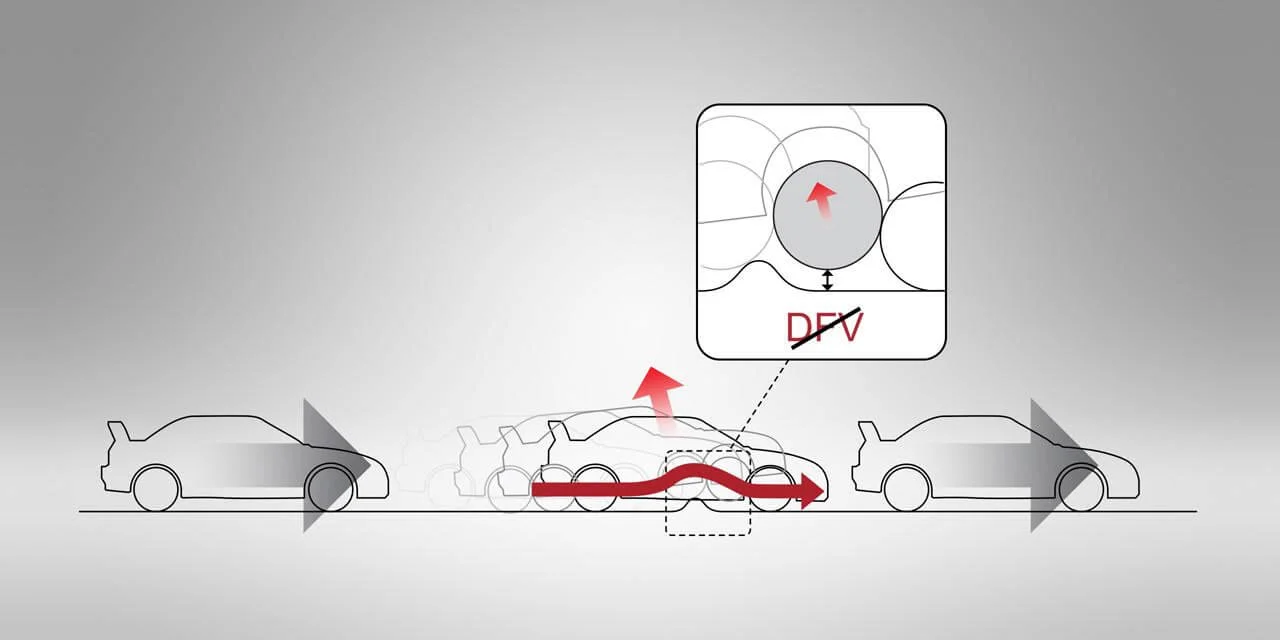
Without DFV
Without DFV, the oil can't flow through the piston fast enough on the rebound stroke after a bump. The damper extends too slowly and the tyre lifts off the road surface. You lose contact, you lose grip. This is the fundamental limitation of a conventional single tube damper at intermediate shaft speeds.
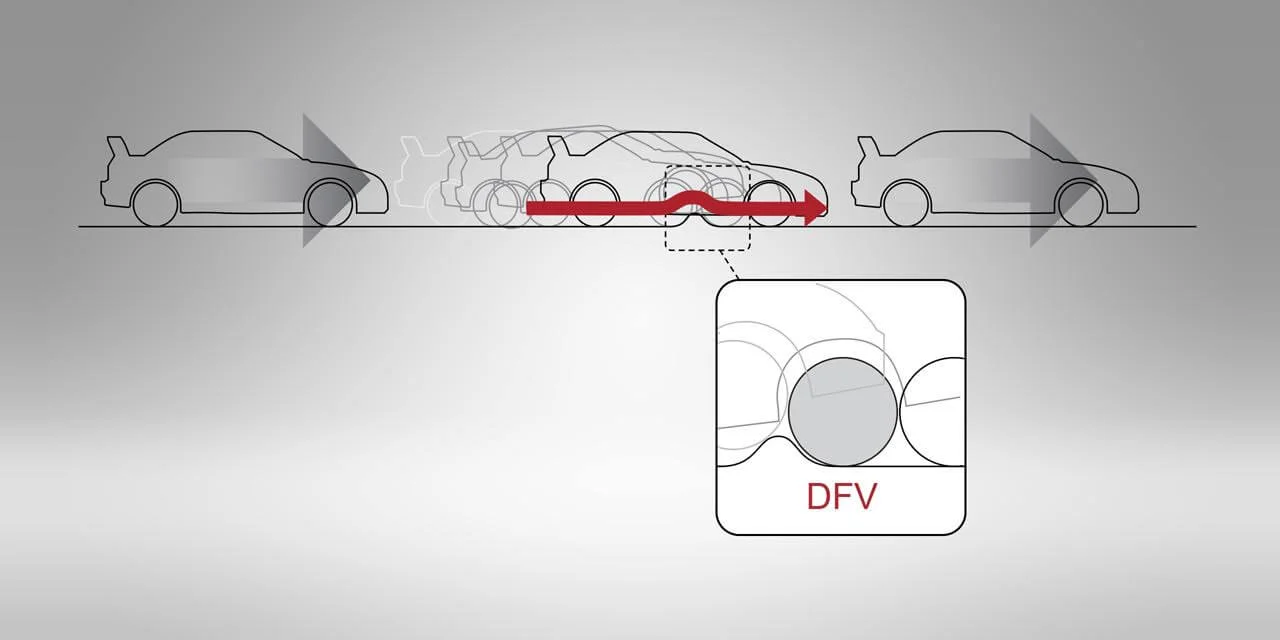
With DFV
The DFV valve opens and lets oil flow past the piston faster on the rebound stroke. The damper extends quickly enough for the tyre to follow the road surface back down after a bump. Contact is maintained. Grip is maintained. That's the whole point of the valve.
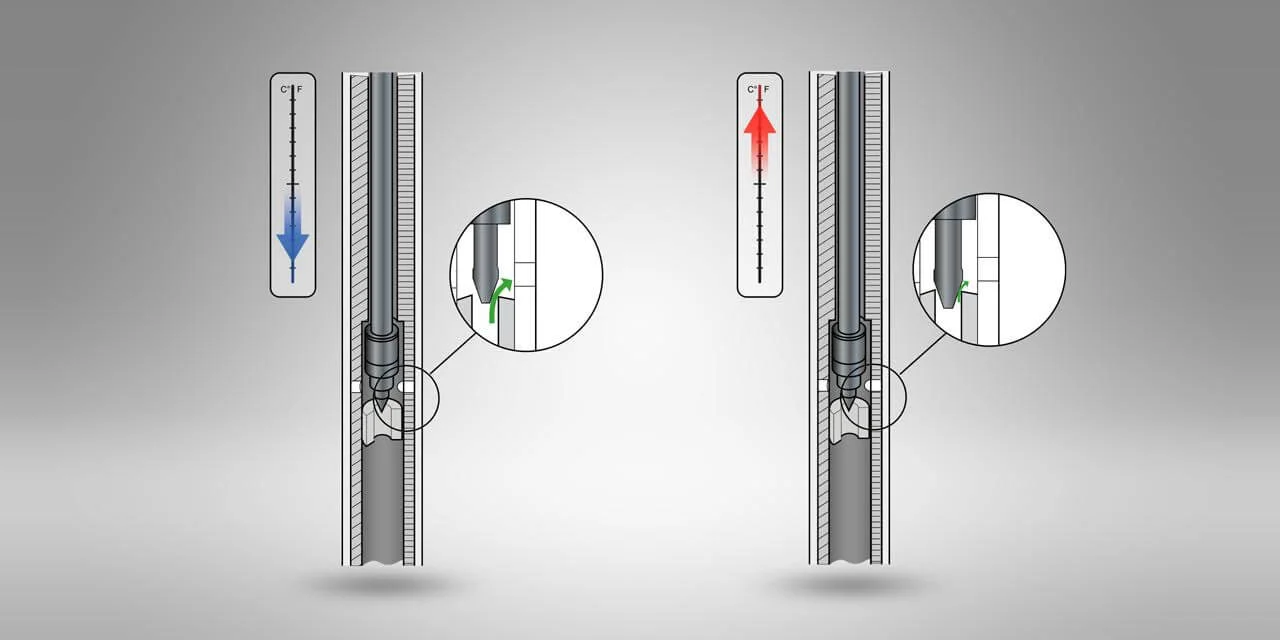
Thermal expansion
Dampers get hot. That's unavoidable. Every time the piston moves, the damping work turns into heat. As the fluid heats up it gets thinner, which lowers the damping forces. The car starts to feel different after a few hard laps compared to when you first went out.
Ohlins built a needle bleed valve into the DFV that expands with temperature. As the fluid thins out, the needle closes the orifice it flows through, compensating for the viscosity drop. The damping rate stays consistent. The car feels the same on lap 1 as it does on lap 10.