What the FL5 leaves on the table
The Honda Civic Type R FL5 is one of the best performance cars you can buy from the factory. The K20C1 turbocharged four-cylinder is a proven engine that Honda have refined over multiple generations, and the FL5 chassis is excellent. But like every manufacturer-tuned car, the factory calibration is conservative. Honda has to account for fuel quality variations across global markets, emissions compliance, noise regulations, and warranty liability. That leaves real power and drivability gains untouched.
This FL5 came to us with a straightforward goal: a quality catback exhaust and a proper custom dyno tune. The owner drives the car daily and enjoys spirited weekend drives. The brief was better sound, better throttle response, and more power, all while keeping the refinement and reliability that makes the FL5 such a good daily driver.
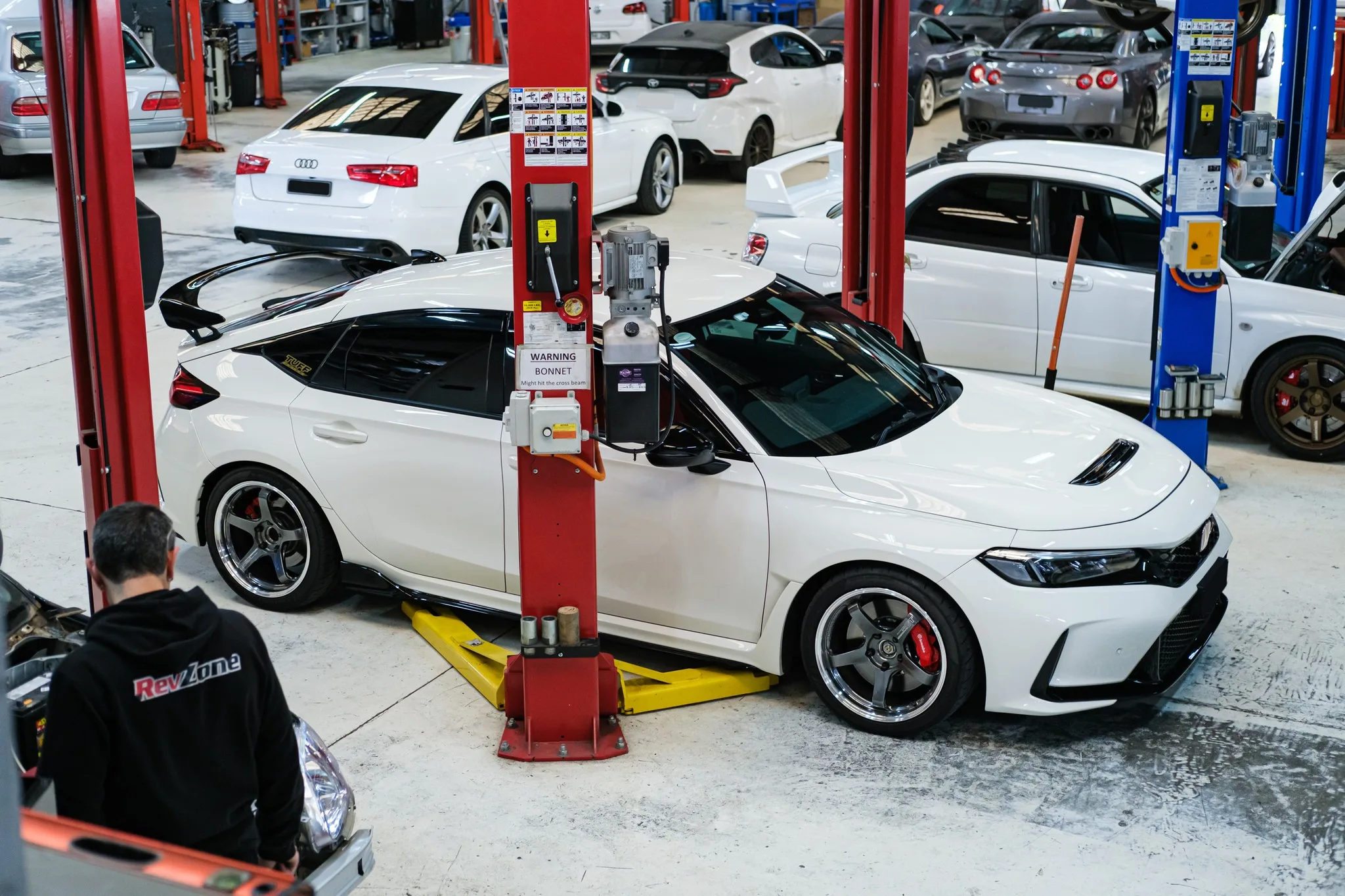
Choosing the HKS Legamax Sports
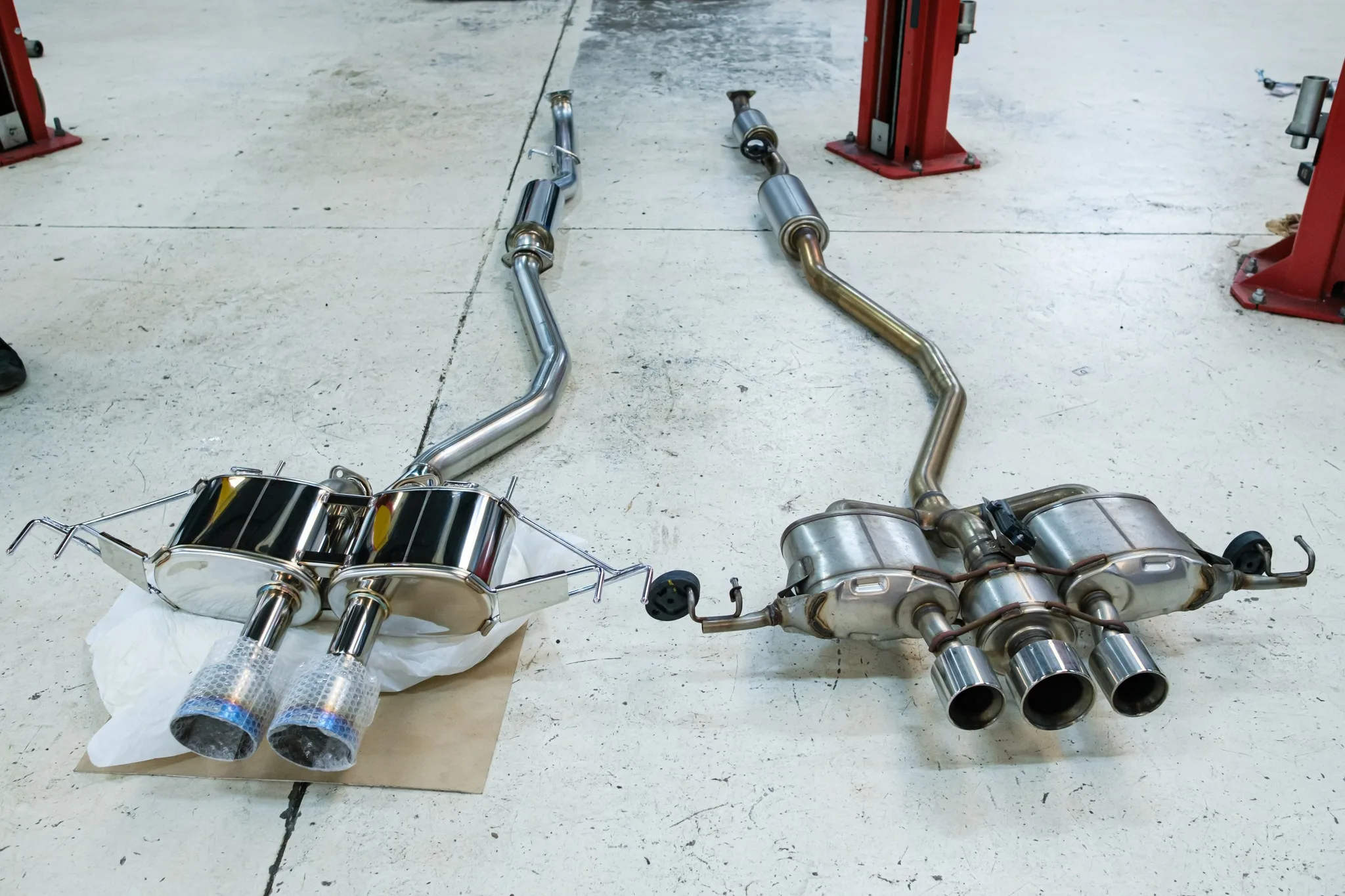
The exhaust market for the FL5 is already crowded, and not all systems are equal. We went with the HKS Legamax Sports catback for a few reasons.
It bolts directly to the factory mid-pipe, so there is no impact on emissions compliance. The piping diameter and muffler design reduce backpressure without creating an obnoxiously loud exhaust note. This matters on the FL5 because the K20C1 is a turbocharged engine, and the turbo itself acts as a natural muffler. Catback systems on turbo cars have a more moderate effect on sound compared to naturally aspirated applications. The system you choose needs to be well-designed to actually shift the tone without resorting to straight-through resonators that drone at cruise.
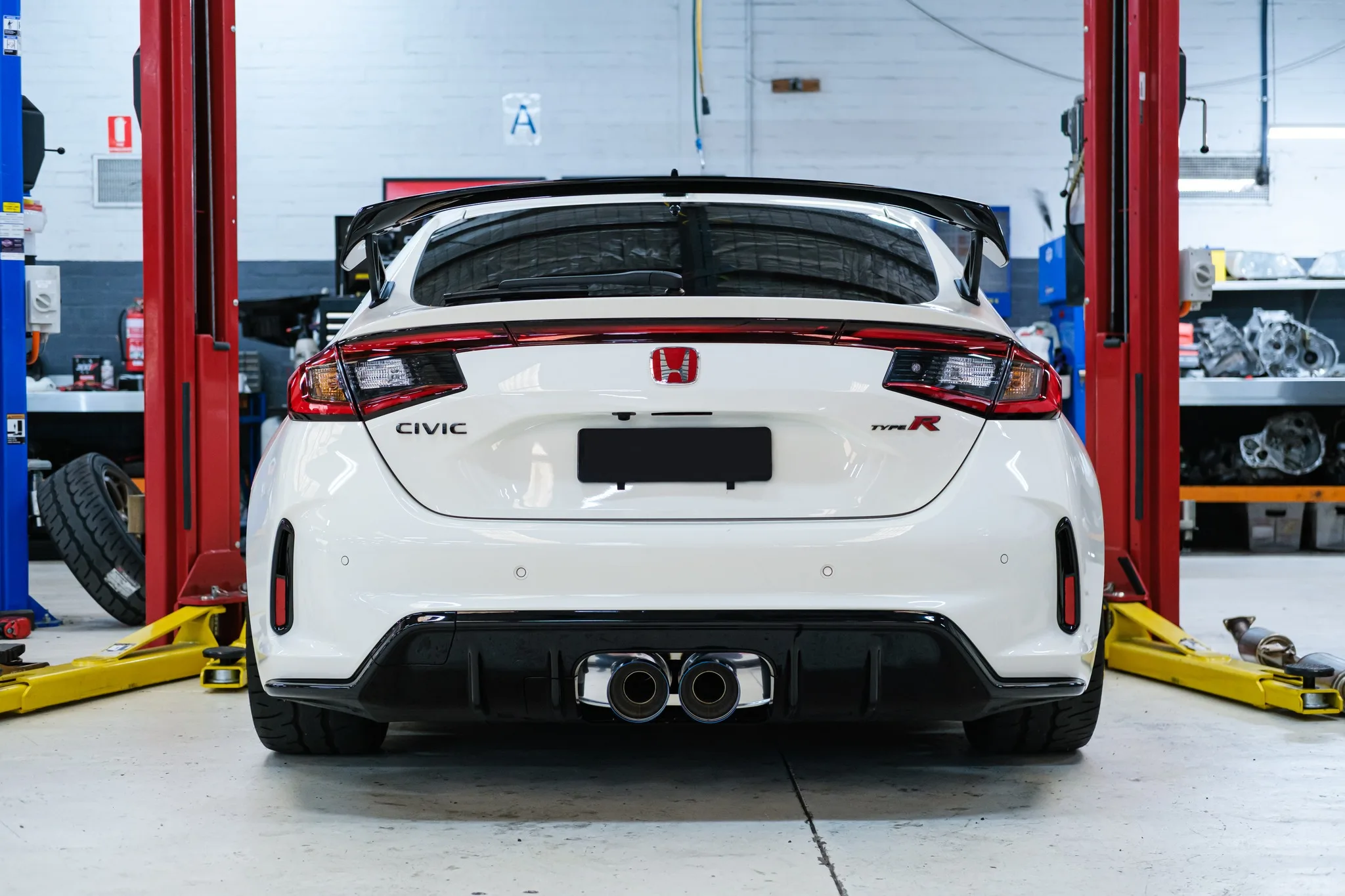
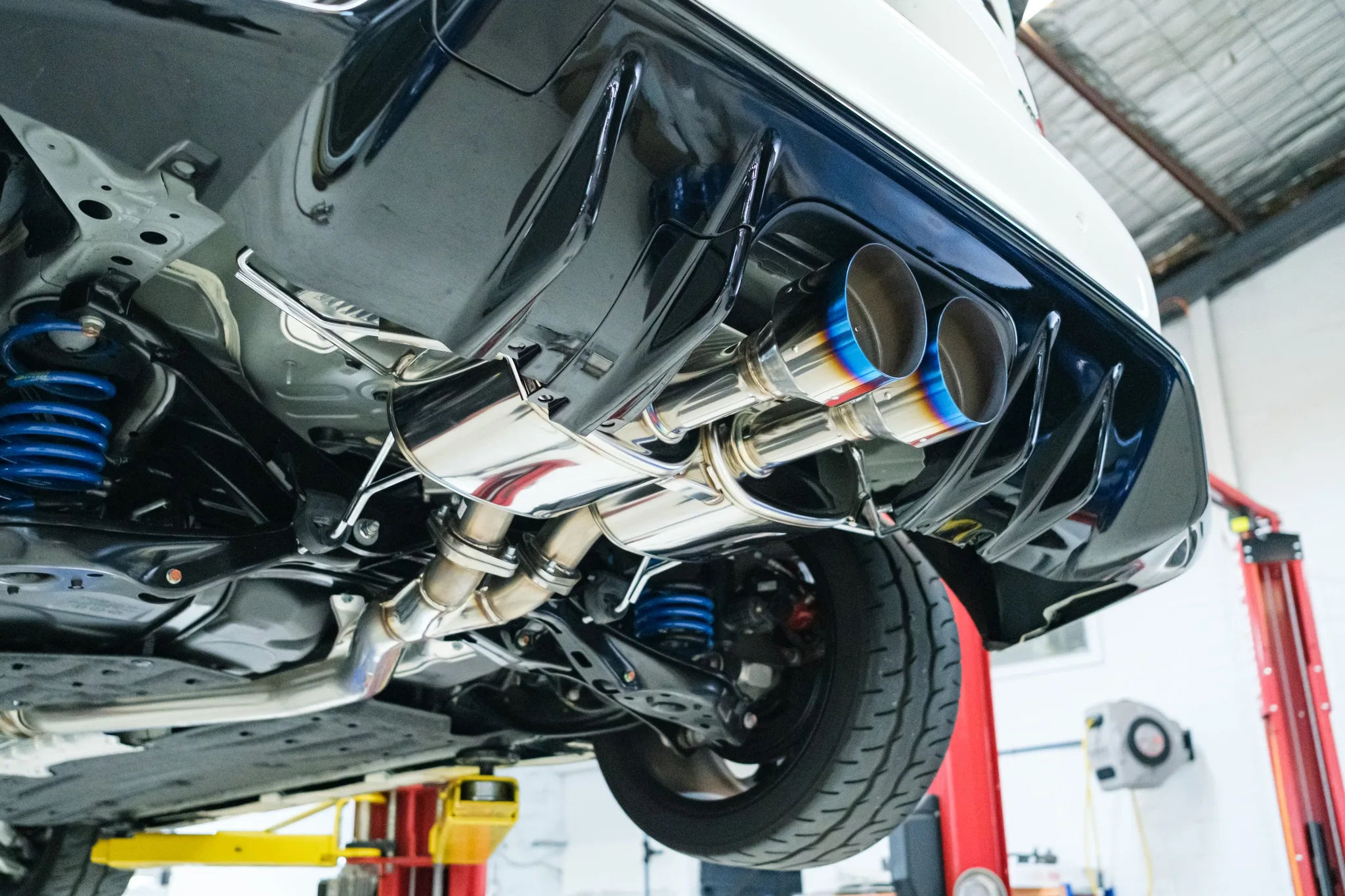
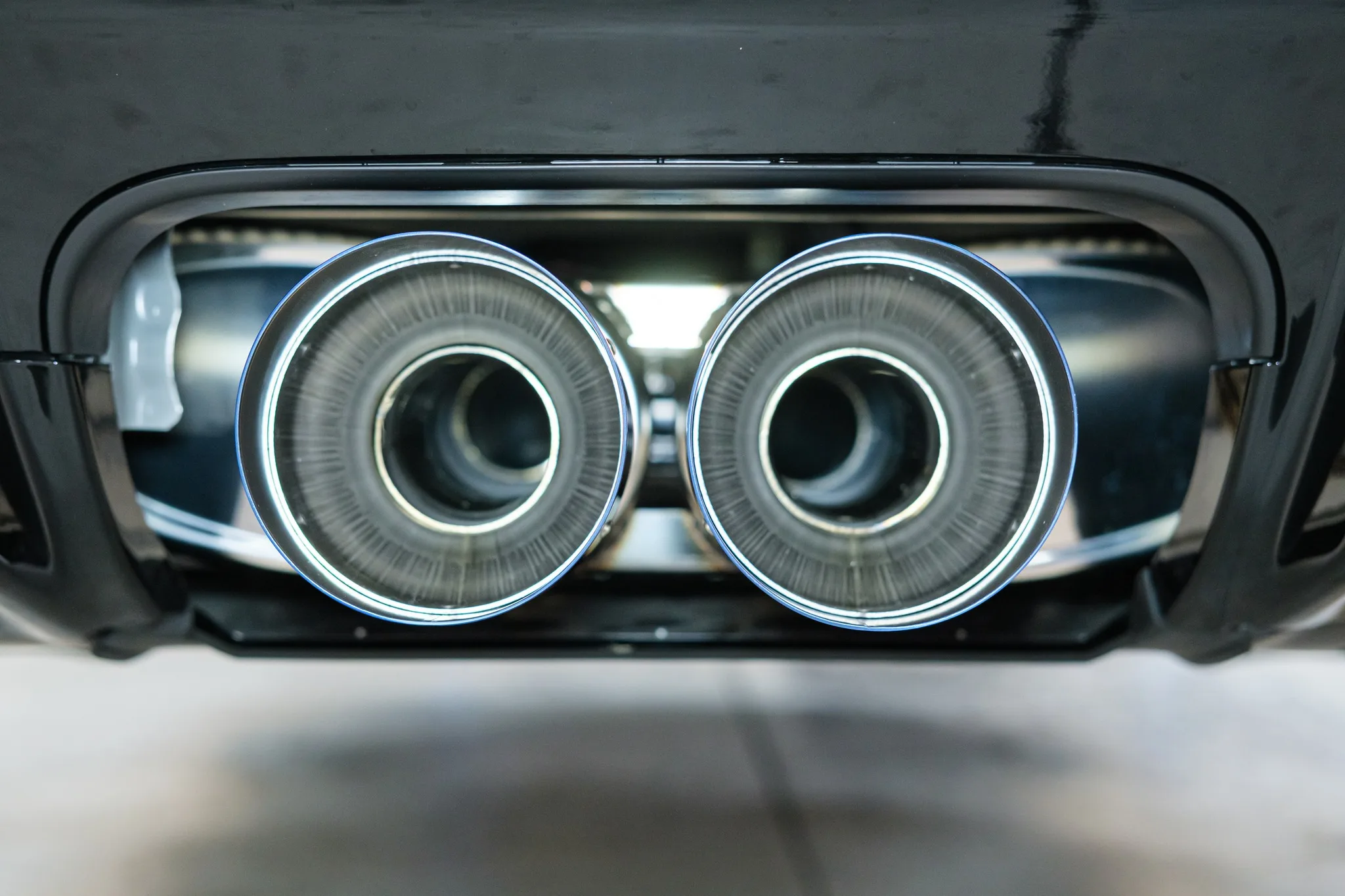
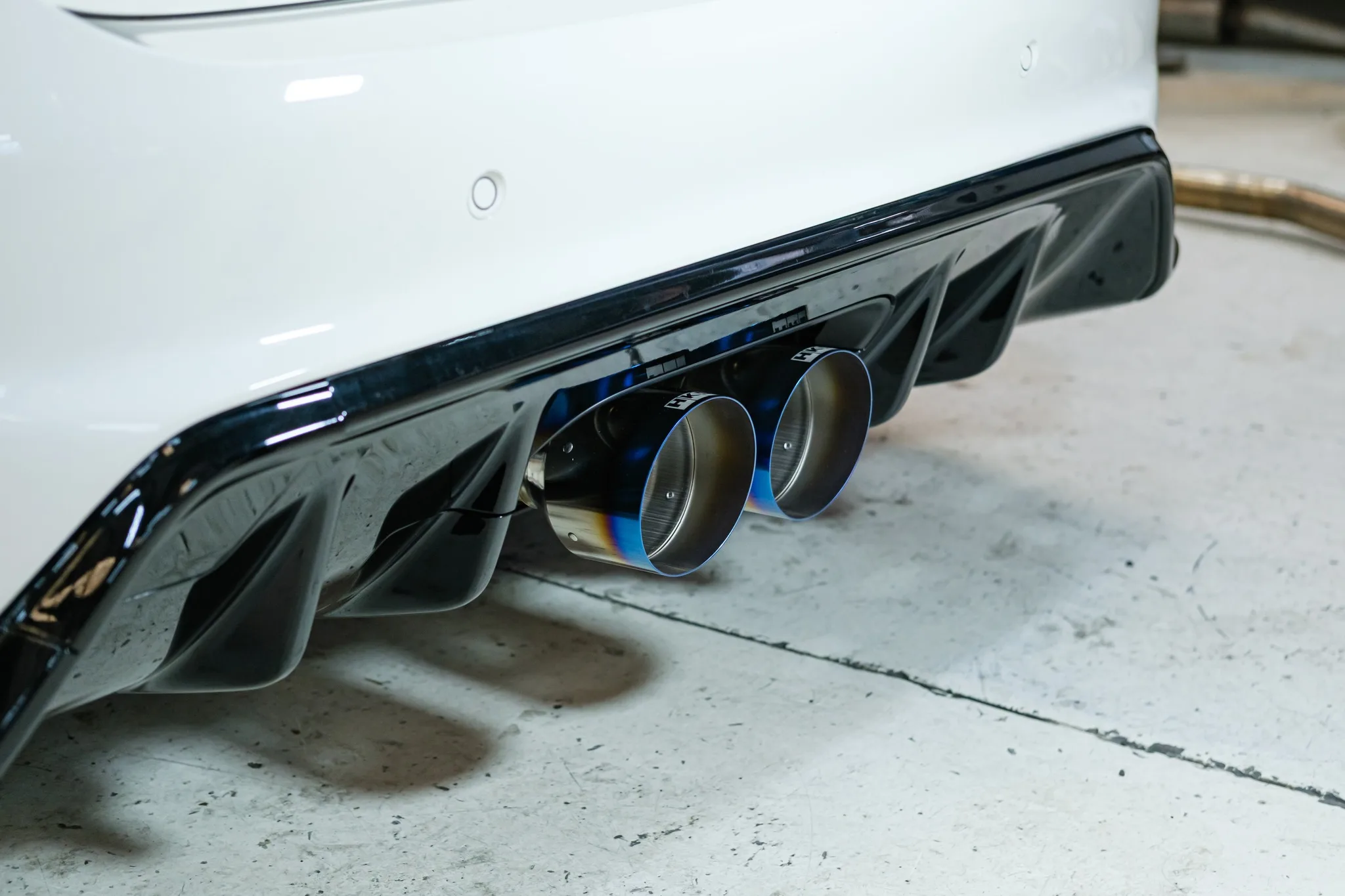
The titanium tips are a highlight of this system. The burnt blue finish complements the FL5’s aggressive rear end and sits well within the factory rear diffuser. It looks good without being aftermarket-obvious.
Installation and fitment
The factory catback was removed and the Legamax Sports system was fitted from the mid-pipe flange back. The HKS system is a direct-fit replacement with properly located hangers and flange alignment. No cutting, welding, or modification required. The exhaust sits tight to the underbody with correct clearance to the heat shields and rear subframe.
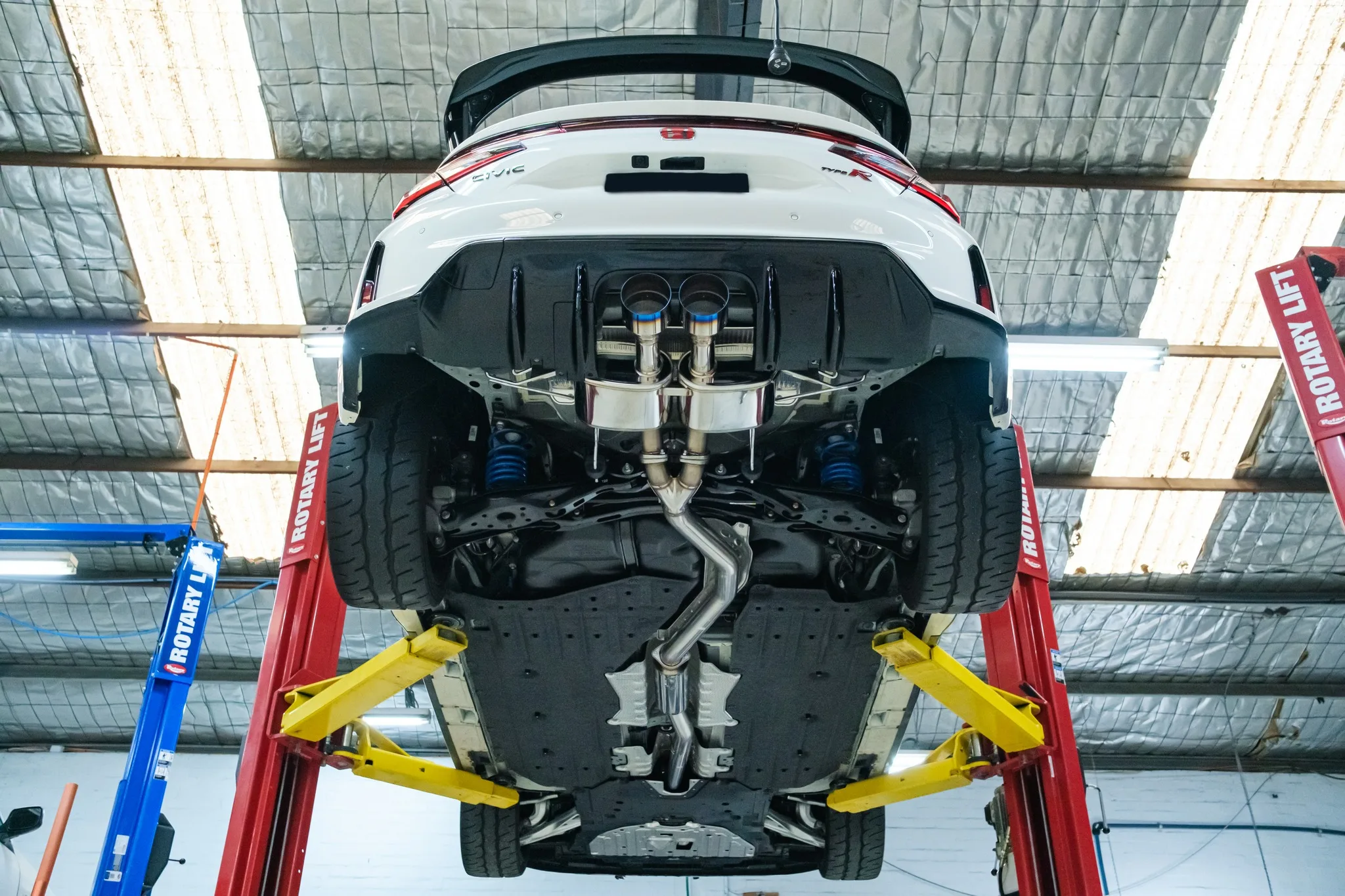
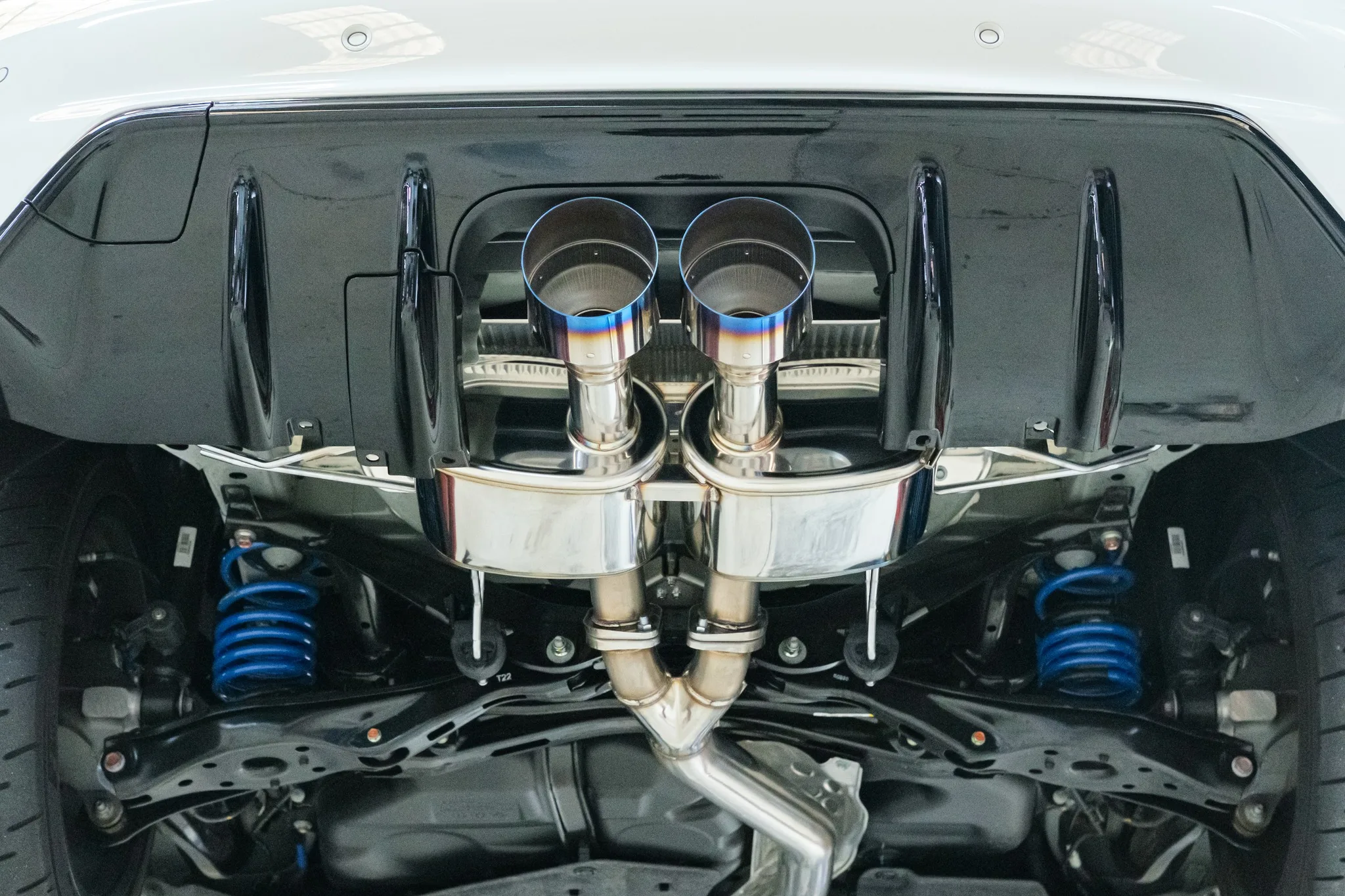
The FL5 retains the active exhaust valve system from the factory, so valve operation continues to work as intended. In comfort mode or at light throttle, the exhaust stays quiet and civilised. Open it up in Sport or +R mode and the Legamax Sports delivers a deeper, more purposeful tone under load. The stock system can’t do that.
The ECU jailbreak and Hondata FlashPro
Tuning the FL5 is not as simple as plugging in a flash tool and uploading a map. Honda locked the ECU on the FL5 generation of the Type R, so the ECU needs to be jailbroken before any third-party tuning tool can communicate with it. This is a one-time procedure that opens the ECU for reflashing via the OBD2 port using Hondata’s FlashPro hardware.
Once the jailbreak is done and FlashPro is connected, we have full access to the K20C1’s fuel maps, ignition timing tables, cam timing, boost targets, and other parameters that Honda locks away. This is not a generic off-the-shelf remap. The FlashPro gives us a tuning platform, but the calibration itself is built from scratch on our roller dyno to suit this specific car with its specific exhaust modification.
Custom dyno calibration
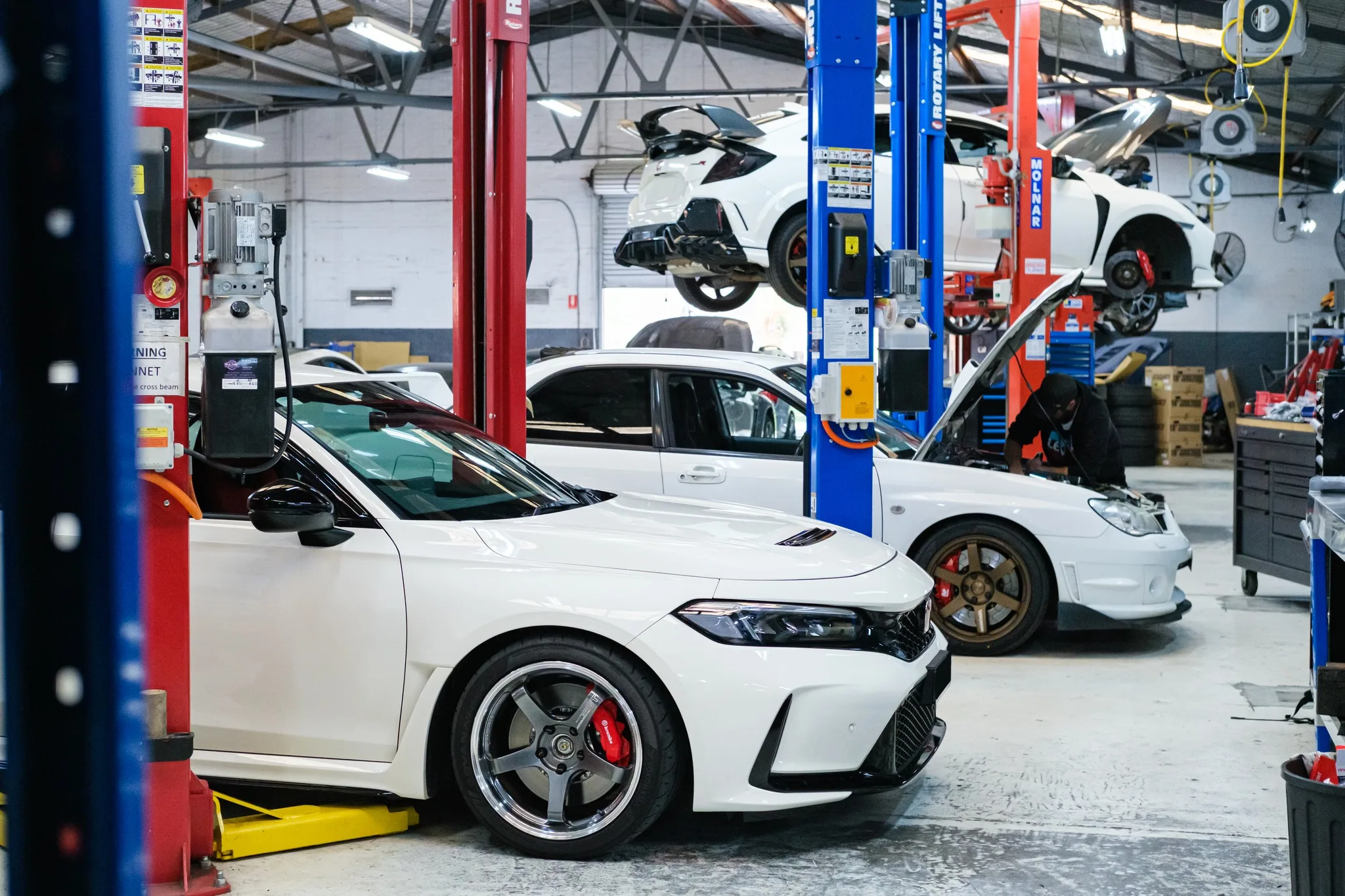
The car went on our roller dyno and the custom calibration was built from the ground up on 98 RON. The roller dyno gives us repeatable, accurate data to tune against.
We focused on fuel delivery optimisation, ignition timing advancement where the engine could safely support it, cam phasing adjustments to improve the torque curve shape, and revised boost targets to pull out the headroom Honda left in the factory tune. The K20C1 responds well to ignition timing on 98 RON fuel. The factory tune is conservatively timed to account for lower-octane fuels in markets like the United States, so there is solid power available just by optimising the timing tables for 98 RON.
Just as important as the peak power gains is the improvement in throttle response and part-throttle behaviour. The factory tune has throttle tip-in smoothing and turbo lag compensation that dulls the connection between your right foot and the engine’s output. It makes the car easier to drive for a broad audience, but it also makes it feel lazier than it should. The custom calibration sharpens this up noticeably. The engine responds more immediately to throttle input, the turbo feels like it comes on boost sooner, and the mid-range pull is stronger and more linear.
How it drives now
The Legamax Sports exhaust and the custom Hondata tune have changed the FL5’s character in a way that is obvious from behind the wheel. The exhaust gives the K20C1 a deeper, more aggressive voice under load that sounds like a proper performance engine. At cruise it stays refined and liveable as a daily driver. The active valve system means you still get a quiet exhaust note when you want it.
The tune cleans up the factory fueling and ignition tables. Throttle response is sharper, the mid-range pull is noticeably stronger, and power delivery is smoother all the way to redline. The improvements are felt across the entire rev range, whether you are in traffic or at full throttle on a back road.