The brief
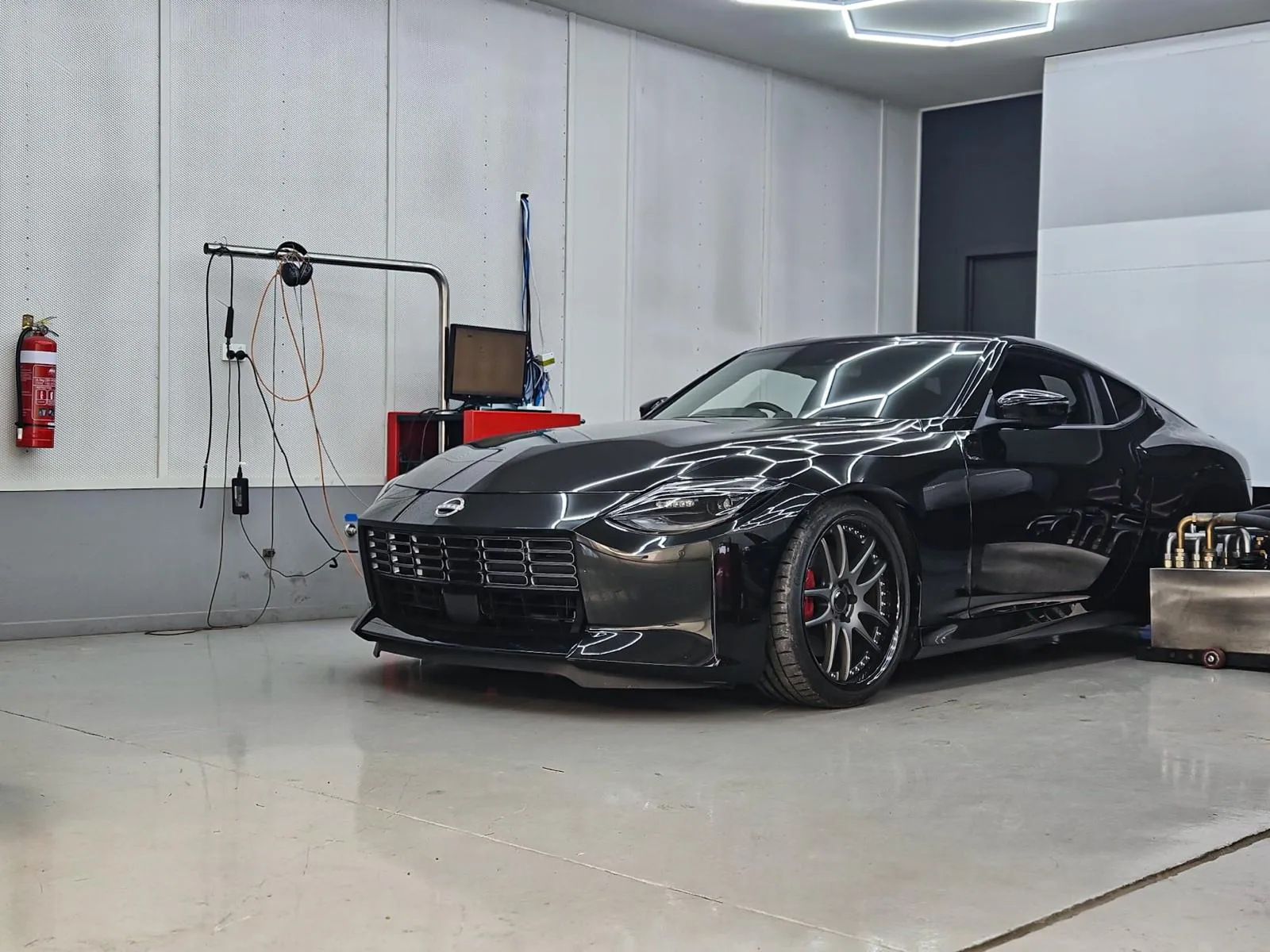
Sam wanted his 2018 Nismo to do double duty. Comfortable on the street, aggressive on club track days. Not chasing a number, just a properly sorted car that felt better everywhere in the rev range on both 98 and E85.
The scope: full exhaust from headers to tips, flex fuel conversion, oil cooler for track use, and a custom ECUTEK dyno tune to tie it together. Five days in the workshop.
Engine out for headers
On paper, “full exhaust and flex fuel” sounds like a bolt-on job. On a 370Z, it’s not.
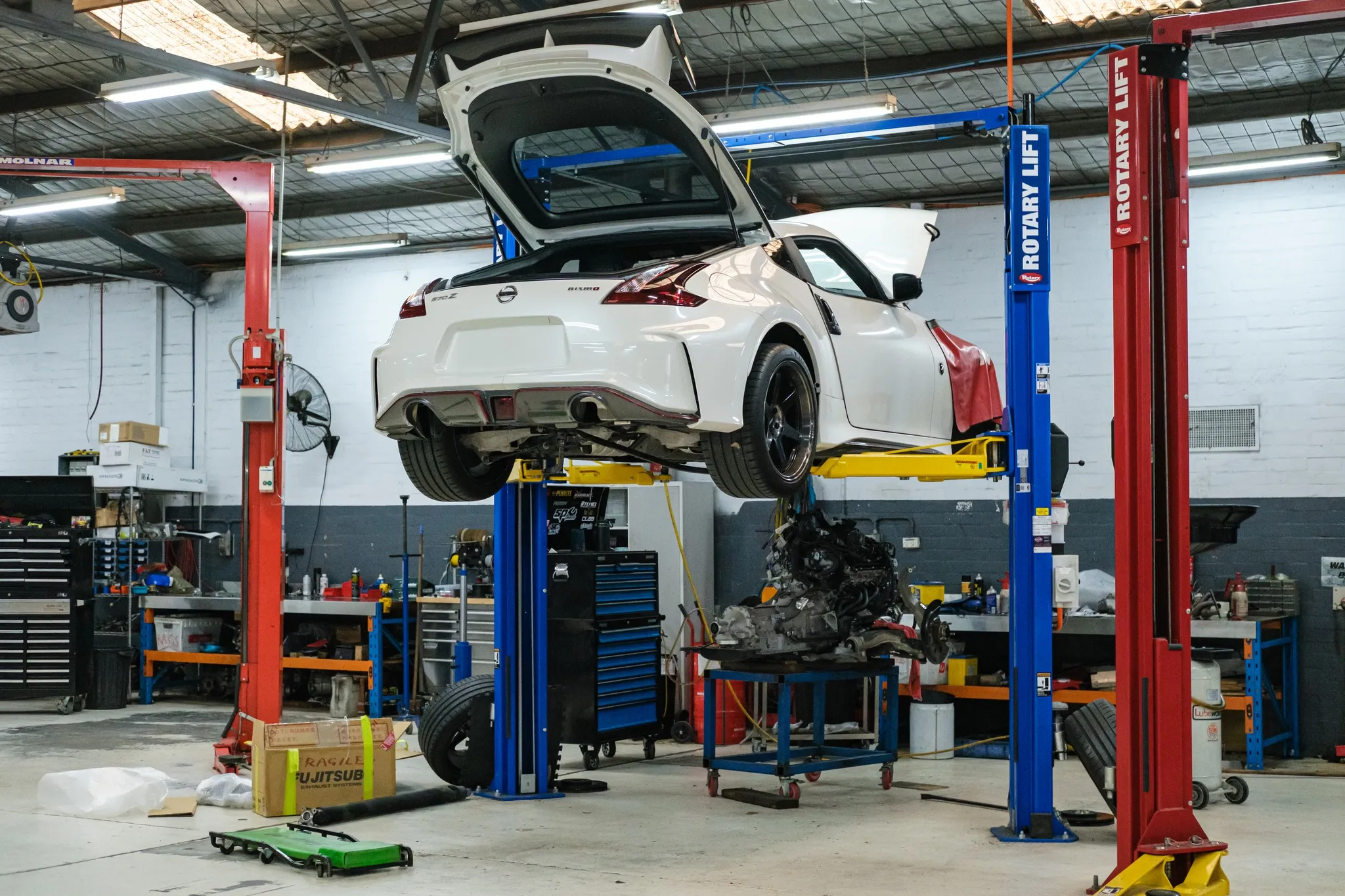
The VQ37’s exhaust manifolds sit buried between the engine and the firewall. There’s no way to fit aftermarket headers with the engine in the car. So the engine and transmission came out as one assembly.
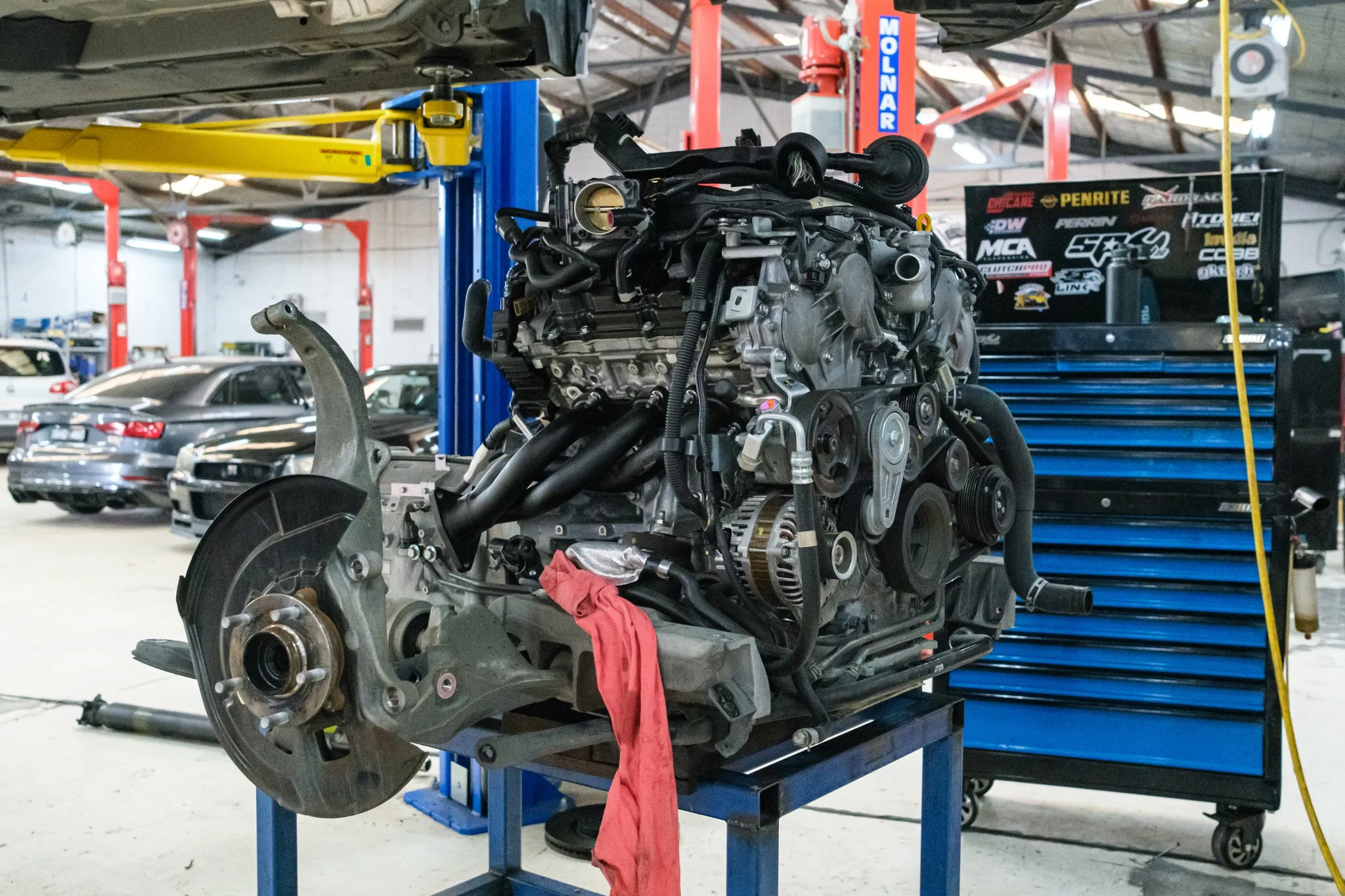
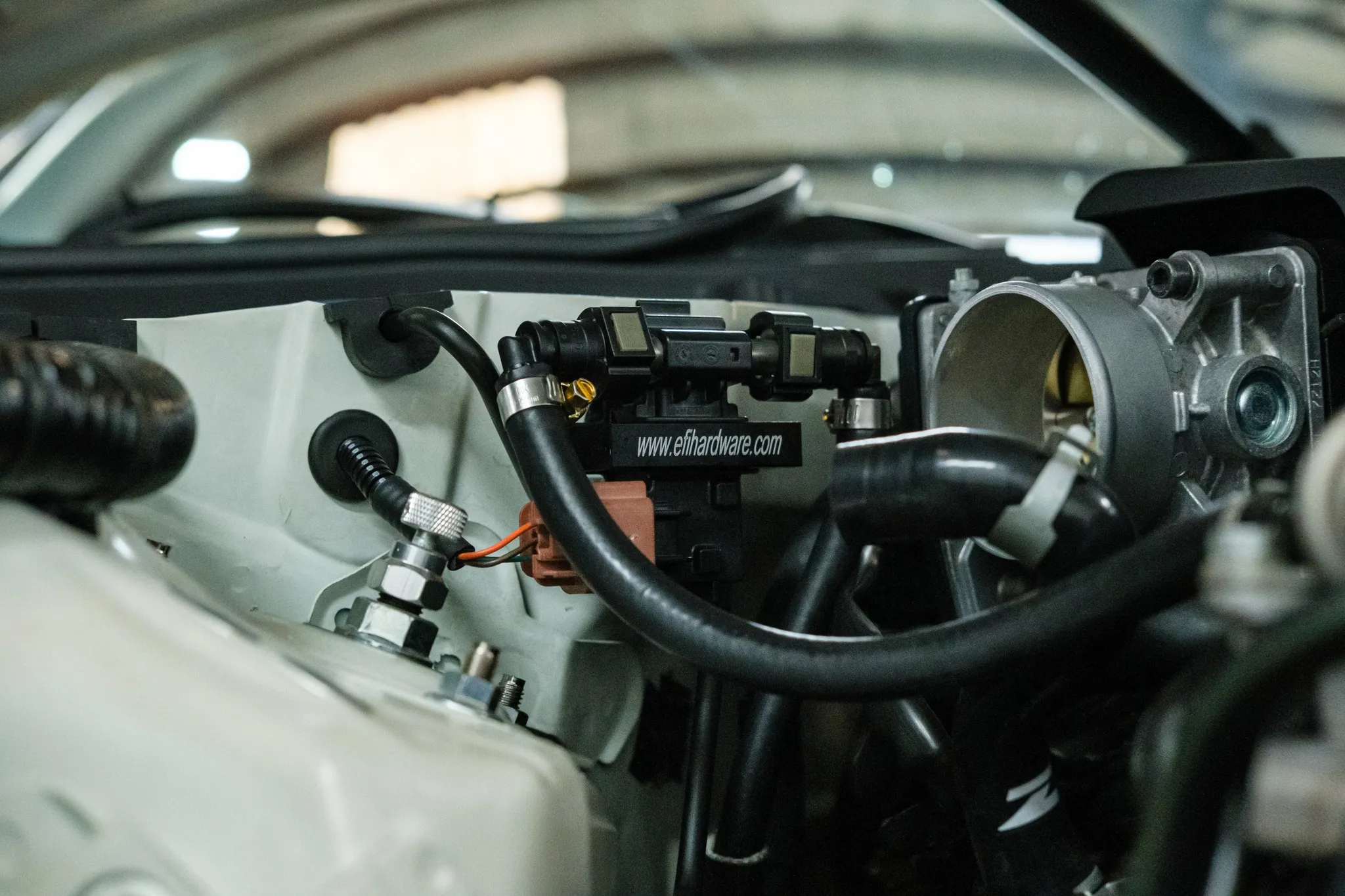
With the engine on the stand we had access to both banks for the Fujitsubo Super Ex headers and could sort the fuel system at the same time. The intake manifold came off to swap in six reconditioned GTR35 injectors for E85 fuel demand, the fuel feed line was replaced, and the EFI Hardware flex fuel sensor was wired in so ECUTEK could read ethanol content in real time.
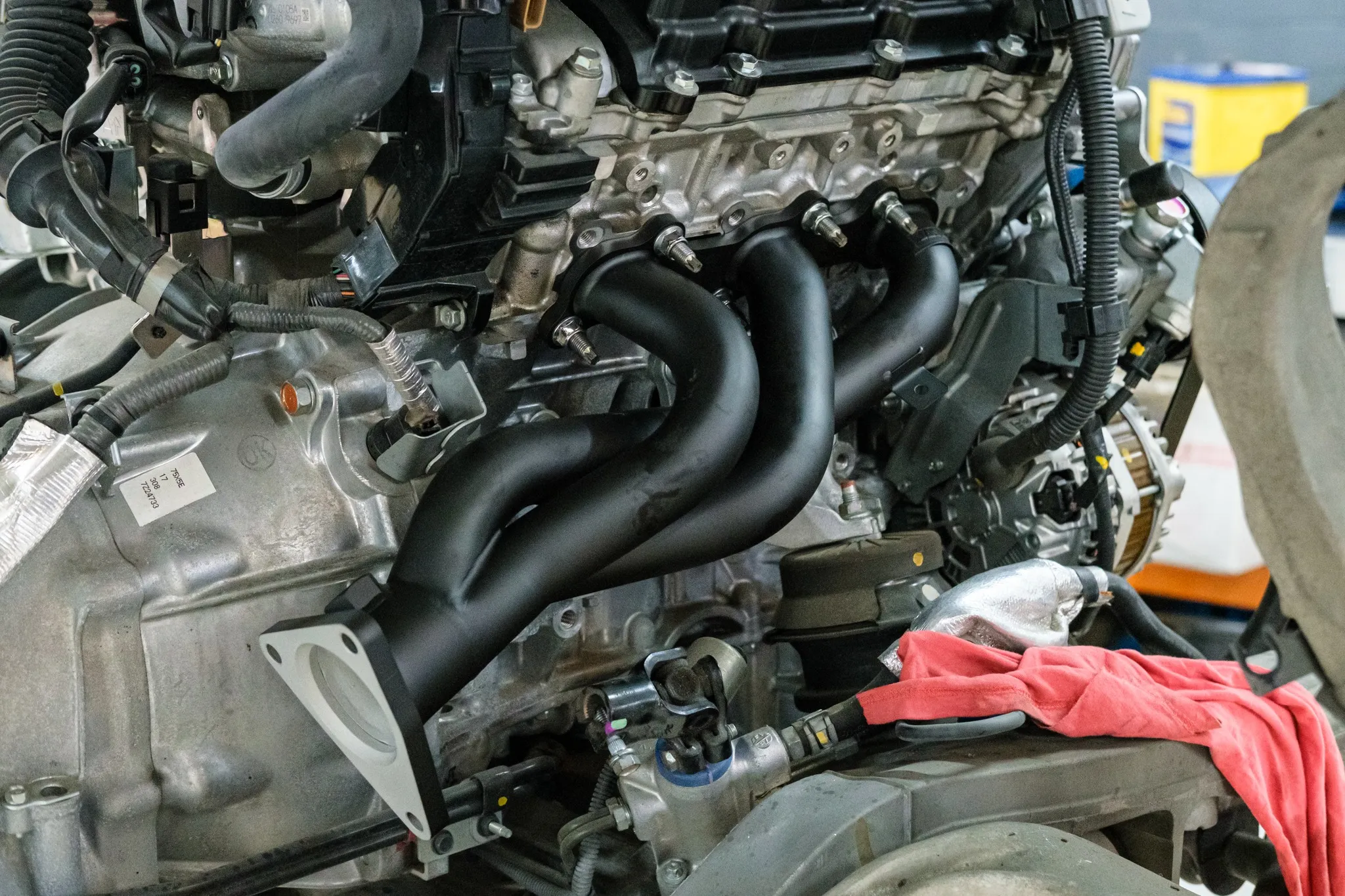
The factory manifolds are the single biggest restriction on the VQ37. That’s where the biggest gains come from, and that’s what justifies the engine-out labour. The rest of the exhaust is Invidia catted test pipes and the HKS Full Dual Muffler catback. Deep and controlled at cruise, opens up at full noise. The whole system breathes properly from port to tip without losing its street manners.
Oil cooler
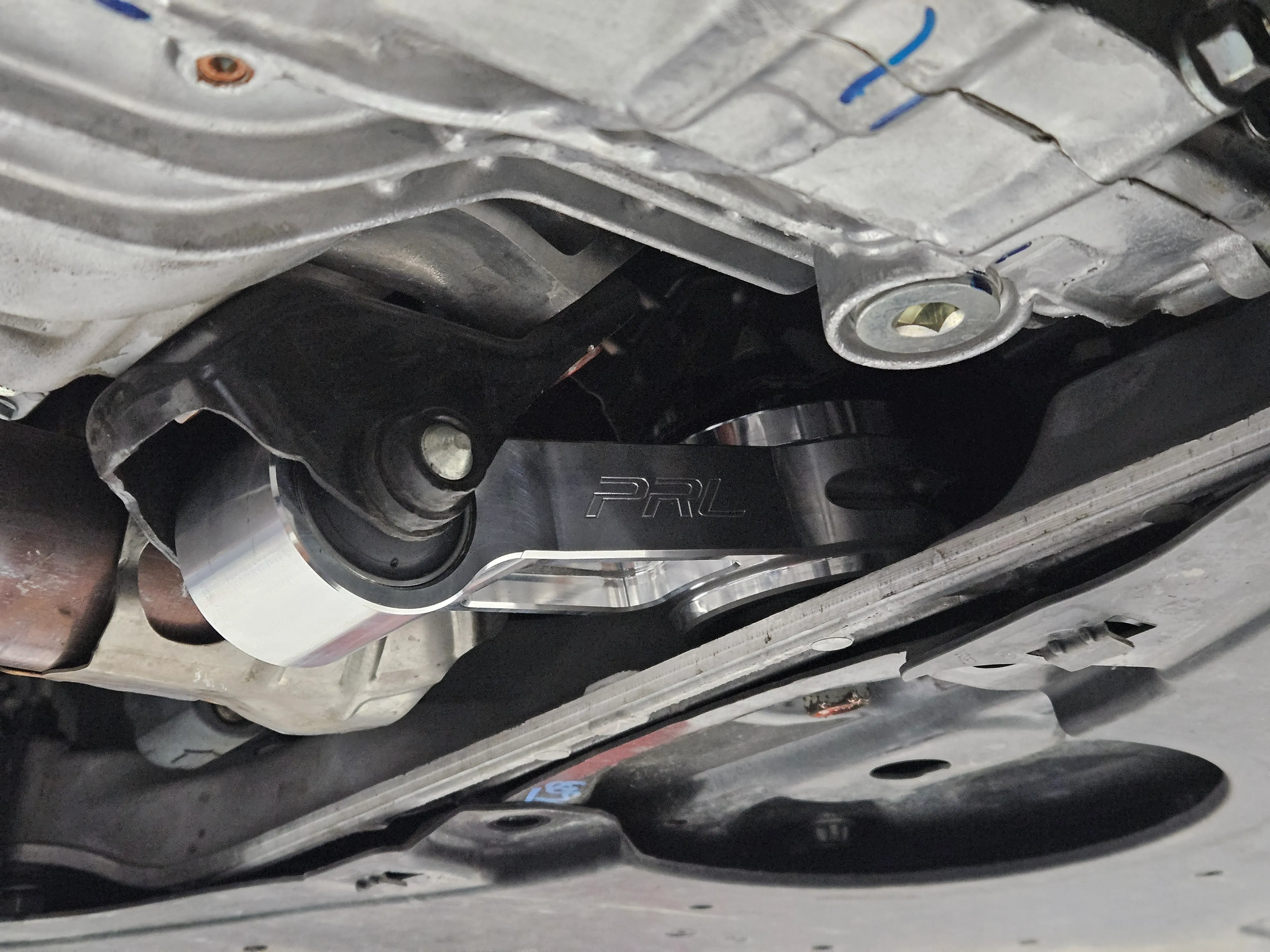
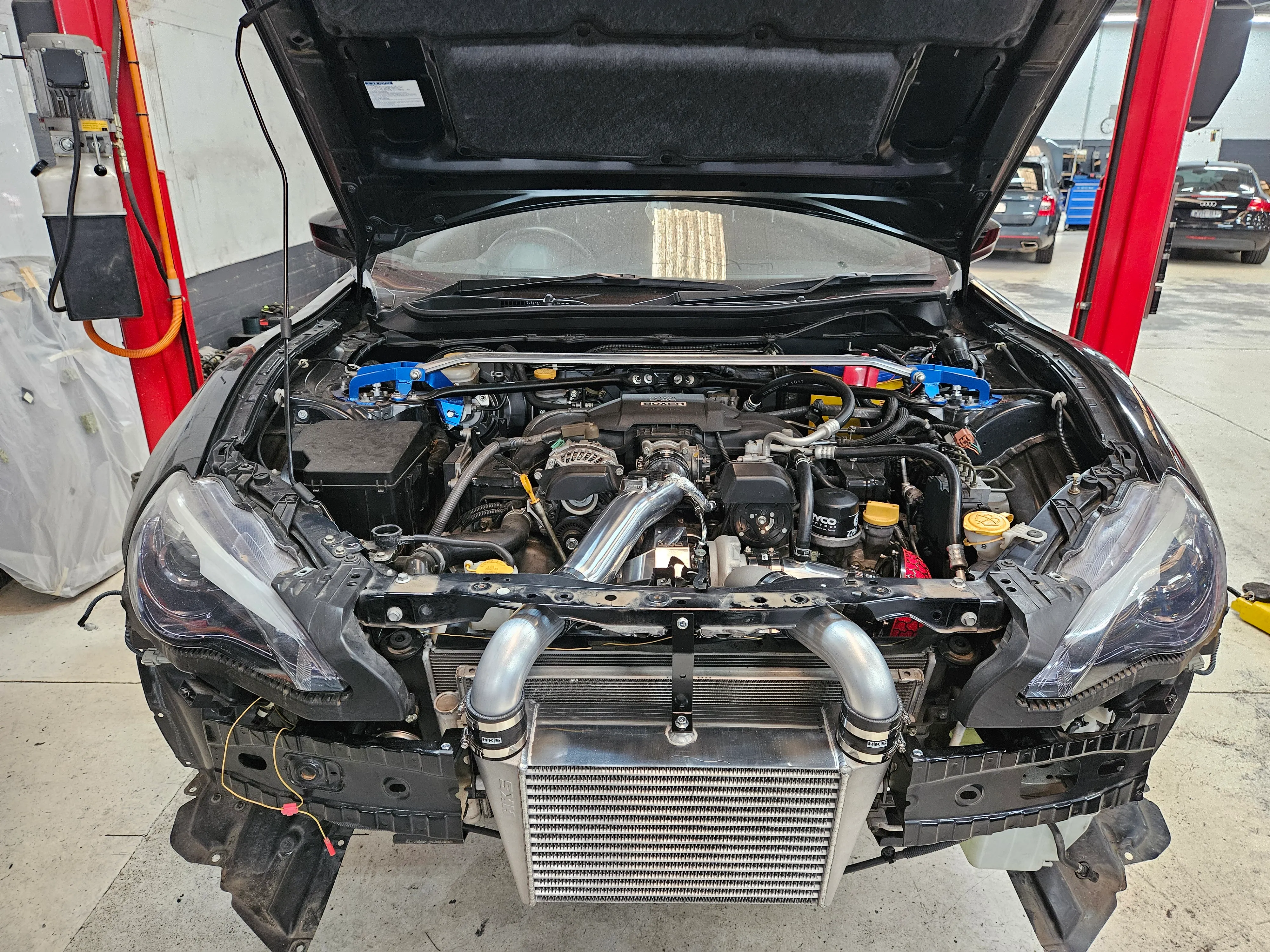
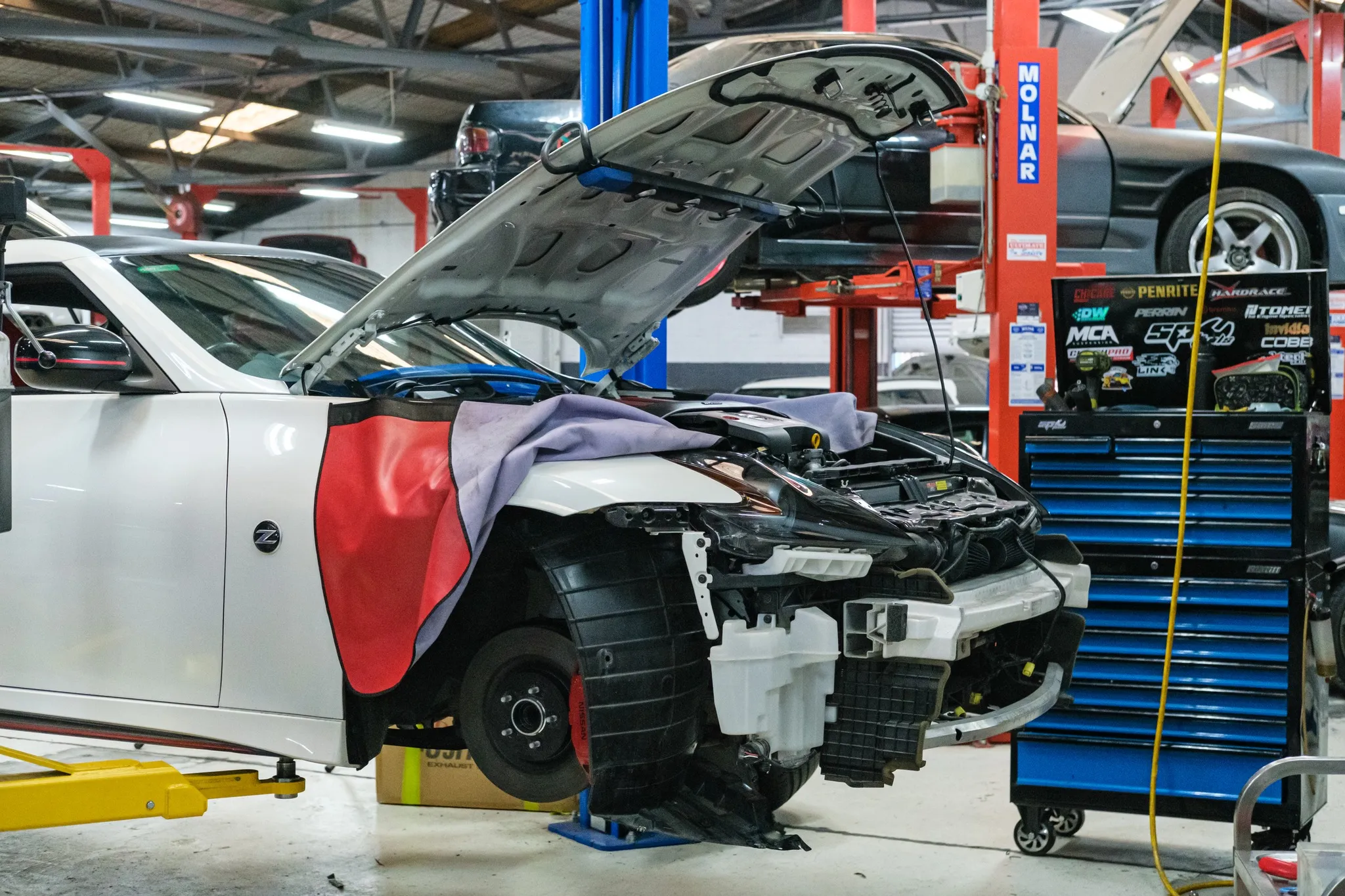
The HKS S-Type went behind the front bar. Getting it in there meant pulling the bumper, modifying the front tray for intake venting, remounting the crash sensor, and sleeving adjacent hoses and wiring with Racework fibreglass heat shield to keep everything safe from exhaust heat.
Tuning
The car was tuned on our roller dyno across both 98 RON and E85, with the flex fuel system calibrated so the ECU blends between maps automatically based on what’s in the tank. Fill up with 98, fill up with E85, mix them. The car sorts itself out.
Cold start calibration on E85 is the part most shops rush or skip. E85 needs significantly more enrichment at cold start than petrol, and if you don’t get it right the car starts rough and idles like garbage in winter. We spent time on this. A final road tune outside the dyno cell dialled in throttle response and part-throttle behaviour in real driving conditions.
Results
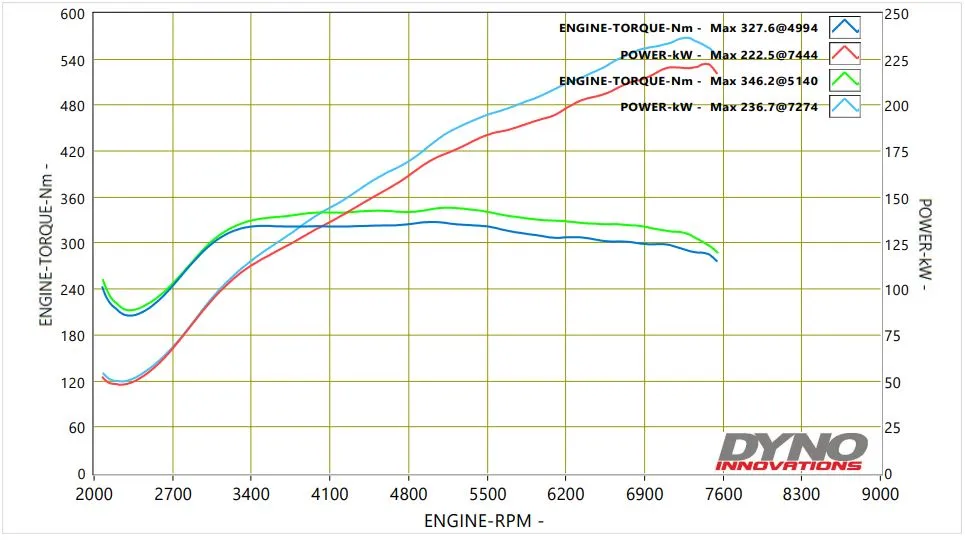
Both runs measured at the wheels on our roller dyno:
On E85: 236.7 kW @ 7,274 RPM / 346.2 Nm @ 5,140 RPM
On 98 RON: 222.5 kW @ 7,444 RPM / 327.6 Nm @ 4,994 RPM
E85 gains: +14.2 kW / +18.6 Nm
A stock 370Z Nismo puts down around 205 kW at the wheels. This one is making 236.7 on E85. Over 30 kW gained, naturally aspirated.
Torque comes on strong from about 3,400 RPM and holds flat through to 6,200 before the power curve pulls hard to the 7,400 RPM peak. Broad, usable, and it hits hard on corner exits. On 98 it’s still making 222.5 kW, which is a real improvement over stock without needing to hunt for ethanol.
What Sam had to say
“After I chose to wait for some selected parts it is exactly what I asked for. I got it back and took it for a drive and boy did it transform the car. It drives smoothly and quietly; I can have an uninterrupted conversation with my wife and lightly accelerate through the rev range with elegance to our favourite breakfast bar. Then on club track days the NA engine gives instant throttle response, the engine roars and gives an intense kick in the pants upon corner exits that requires some serious throttle modulation. This is serious acceleration.”
— Sam