Hot air, lost power
The VR30DDTT in the Nissan Z makes decent power from the factory, but the stock intake system is conservative. The airboxes are small and the intake path is restrictive, particularly on the hot side of the engine bay. Once the turbos start working hard, the factory intercooler can’t keep charge temperatures down. The intake charge heats up, the ECU pulls timing to protect itself, and you lose power. On a warm Melbourne day, it adds up fast.
The owner wanted more from the car without bolting on bigger turbos. Intake, cooling and a proper tune, which is what our Stage 2 package is built around.
AMS Performance intake
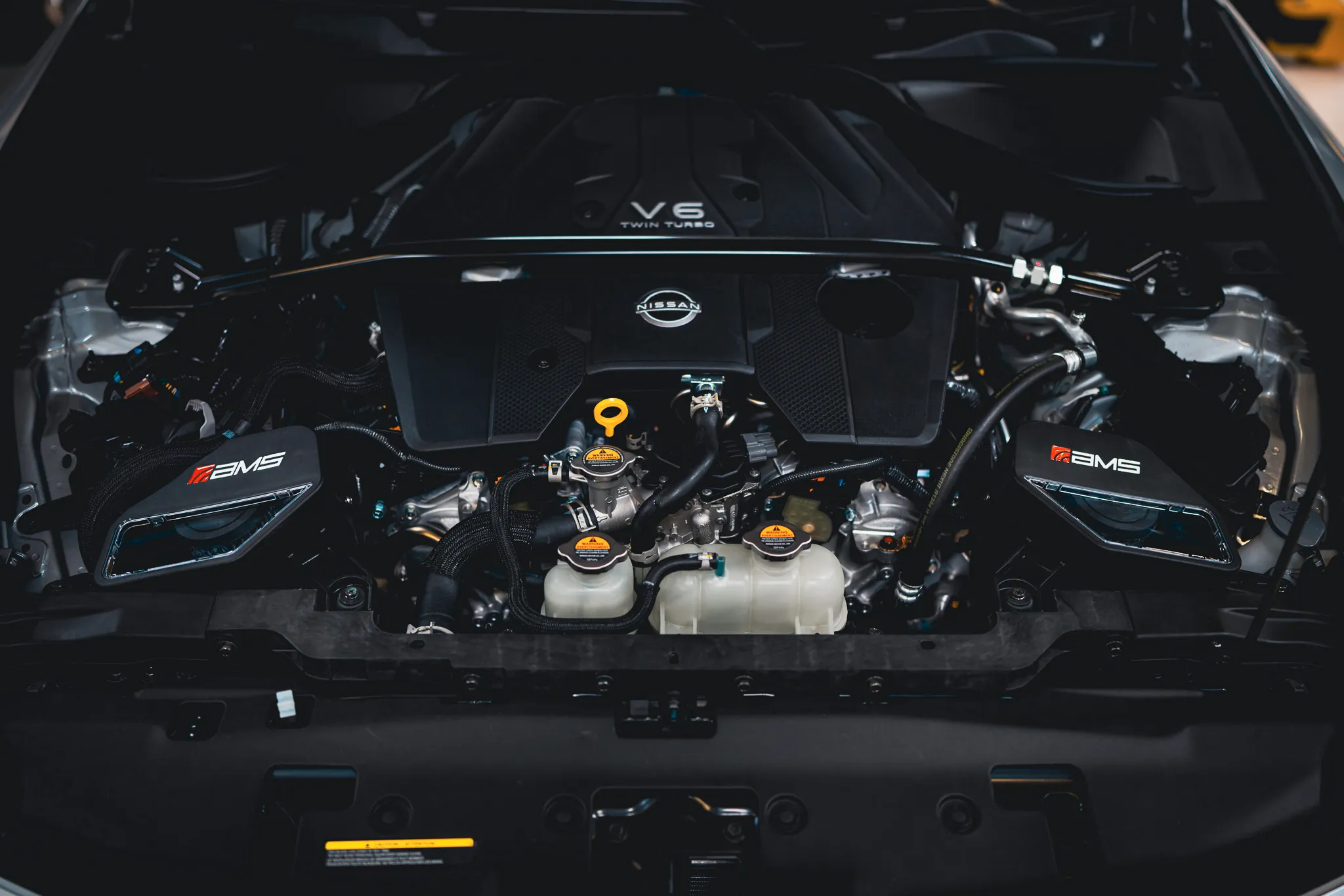
The AMS cold air intake is a dual system. Two enclosed airboxes replace the factory units, each with its own Alpha dry media filter and carbon fibre intake pipe feeding the turbo inlet. The airboxes are sealed from the engine bay, so they pull cooler air from the front of the car instead of recycling heat off the manifold.
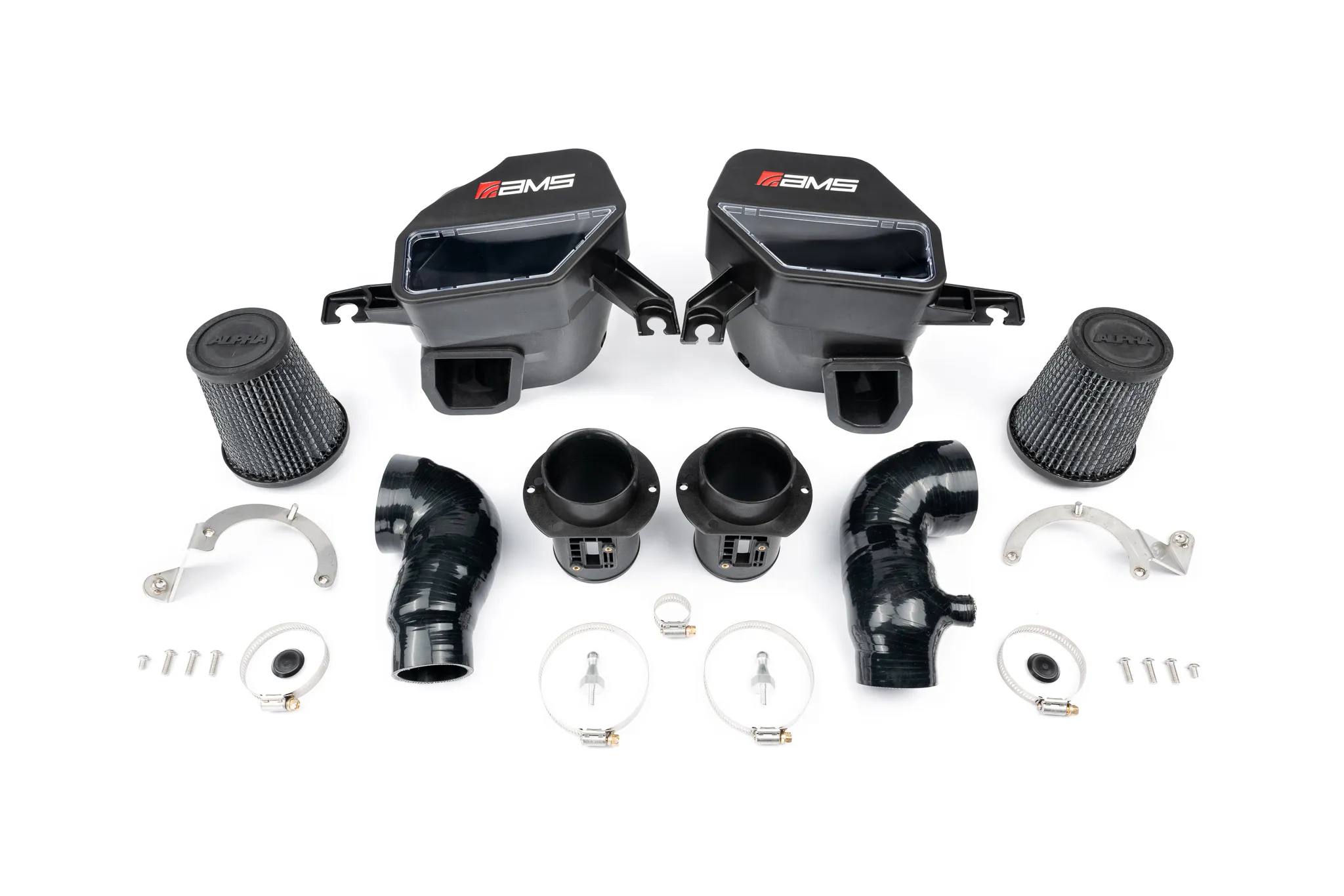
Factory airboxes out, AMS units in, everything bolts to the existing mounting points. The carbon piping and sealed boxes actually do what pod filters promise but never deliver.
Z1 Motorsport heat exchanger
The factory heat exchanger on the Z is undersized for anything beyond stock power levels. Under repeated hard pulls or track use, charge temperatures climb and the ECU dials back boost and timing. The Z1 Motorsport bar-and-plate unit is a direct replacement with a much larger core and better flow. Fits the factory mounting points without modification.
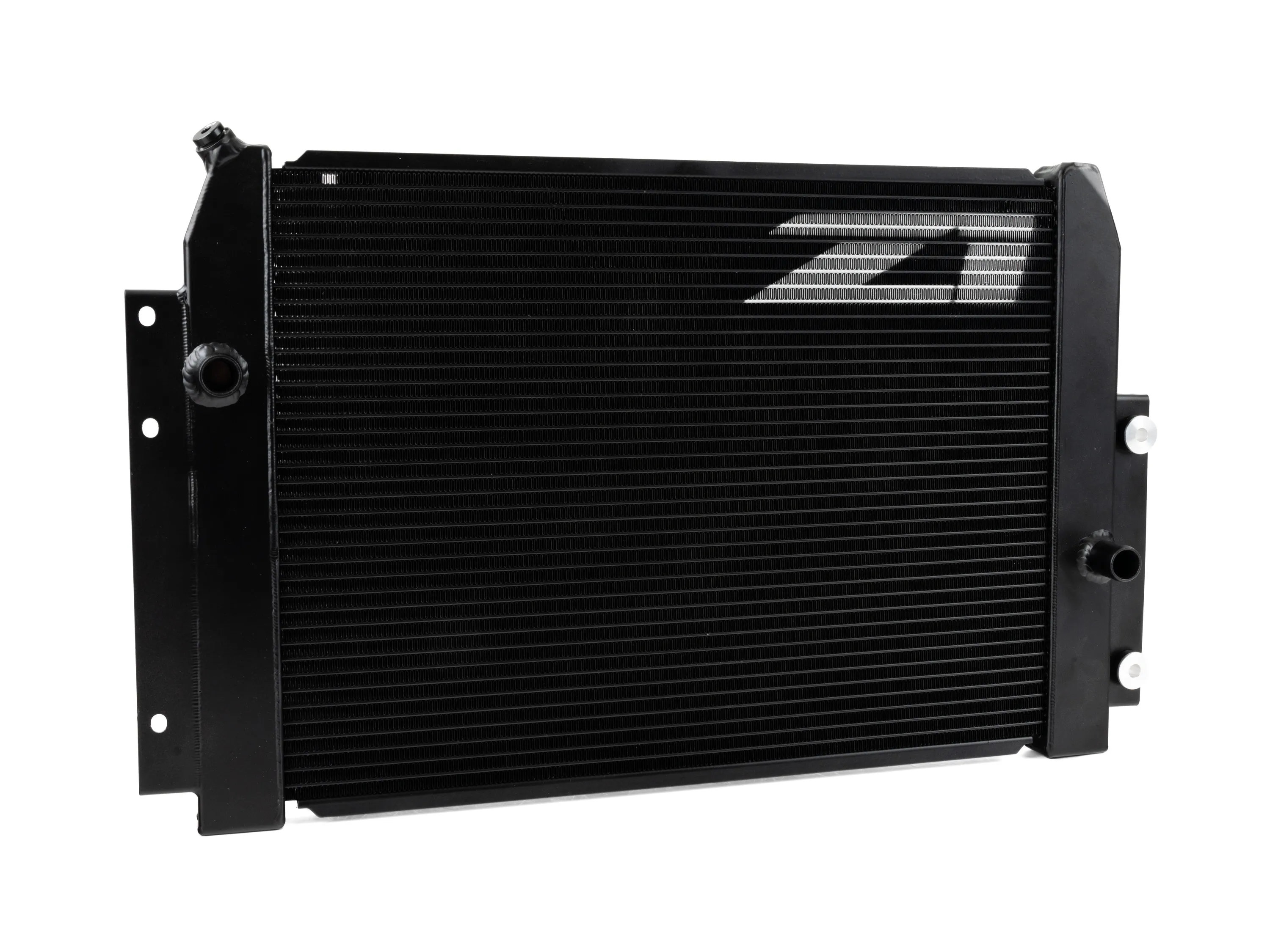
With the Z1 unit in, the intake charge stays consistent even after back-to-back dyno pulls. That matters because a tune calibrated on the first cool pull of the day is useless if temps climb 20 degrees by the third.
Ecutek custom dyno tune
We strapped the car to the dyno and wrote a custom Ecutek calibration. Ecutek gives full control over the VR30’s boost, fuel and timing maps, and the RaceROM features let us set up launch control and flat-foot shifting.
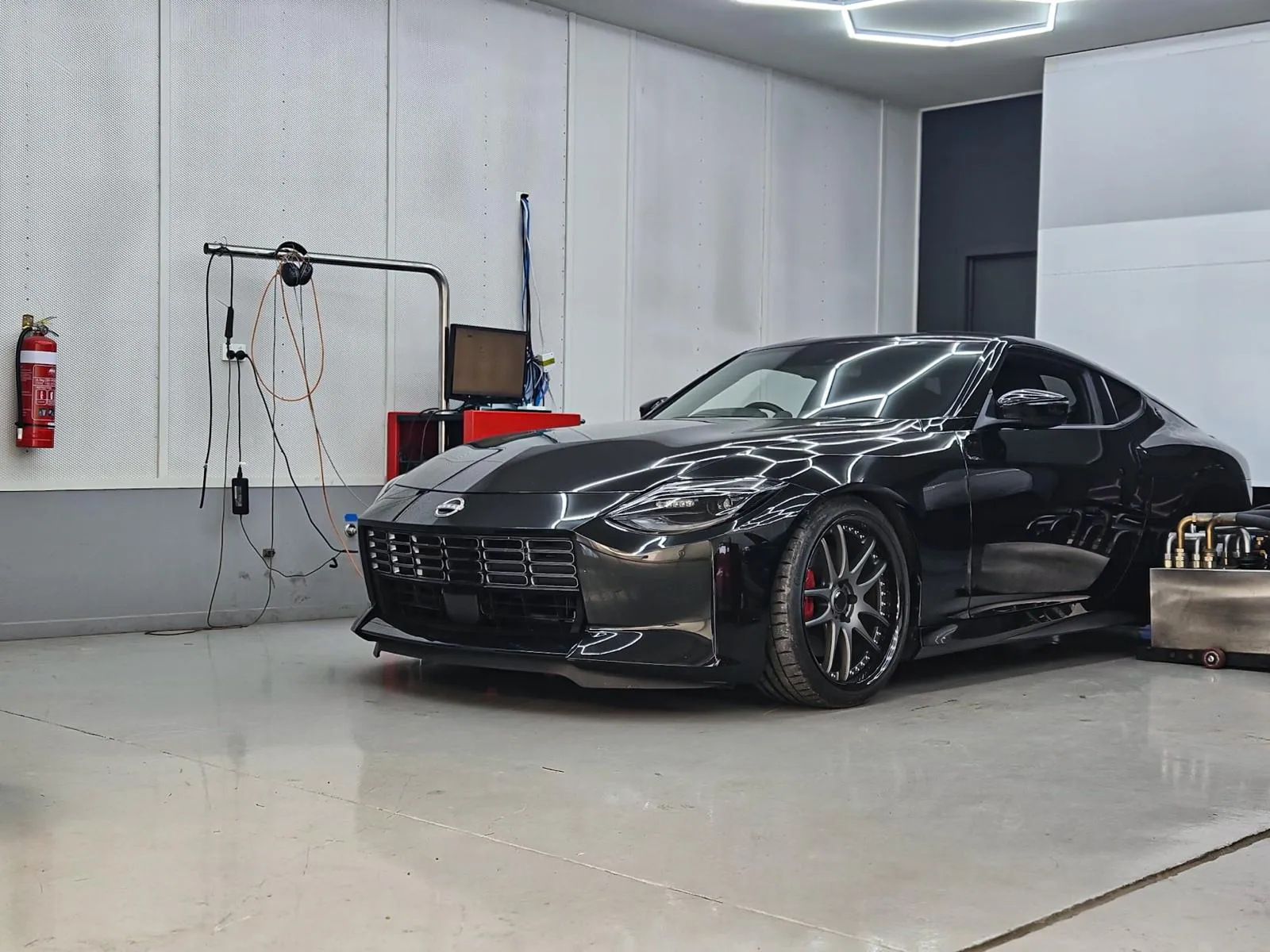
Custom tuned on our Dynapack dyno, no generic flash maps. Every pull is logged and adjusted until the power delivery is clean and the air-fuel ratios sit where they should be across the rev range. If you’re after a Stage 1 ECU tune only, we do that too.
The numbers
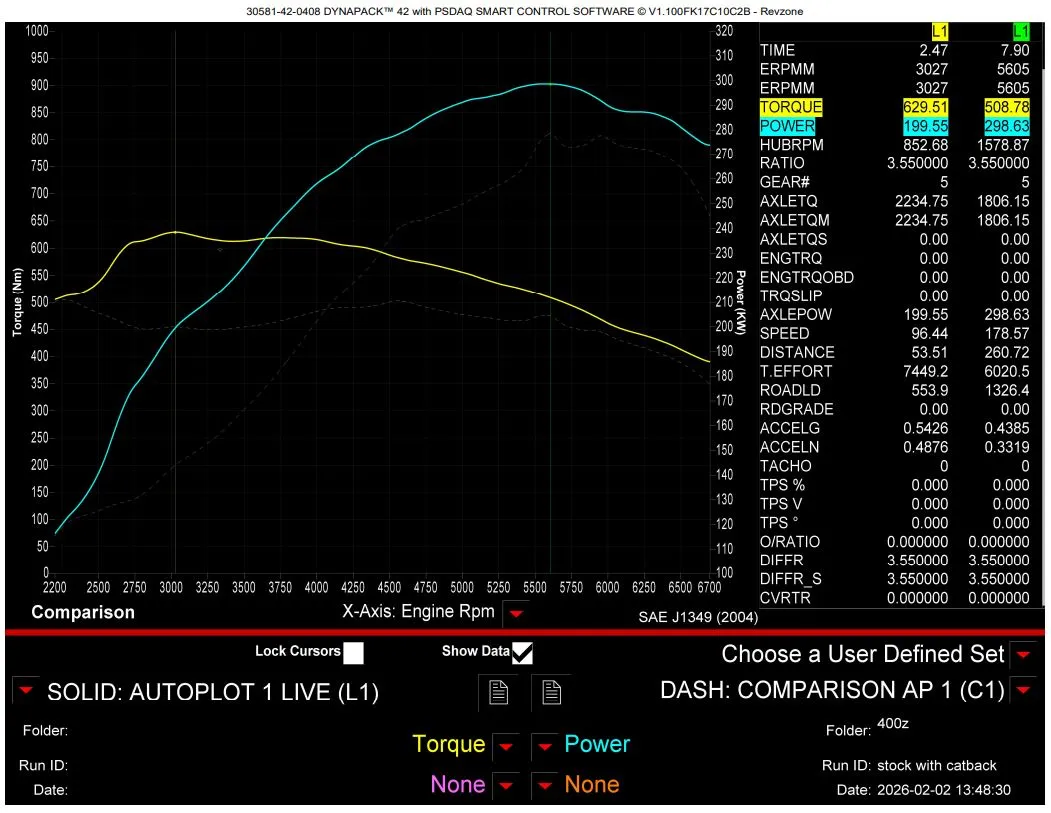
Stock runs (yellow and dashed lines) sit around 210kW and 500Nm at the wheels. After the intake, heat exchanger and Ecutek tune, the car put down roughly 300kW and 900Nm. No turbo upgrades, no fuelling changes. Just bolt-ons and a tune.
The torque curve is flat and wide from around 3,000 RPM through to 5,500 RPM, which is where you actually use it on the road. Power holds to redline with no drop-off.
Why the tune matters
An intake and heat exchanger on their own don’t do much. The factory ECU compensates and you end up with slightly different noises and roughly the same power. The hardware gives the ECU room to work with, cooler air in and better charge cooling, so the tune can safely push the factory turbos harder. Without the tune, you’re just making intake noise.
This Z drives the same as stock around town. Idle is unchanged, the gearbox shifts normally, no check engine lights. Get on the throttle and the difference is obvious.