Daily driver, weekend track car
The RS3 8V makes close to 300 kilowatts from the factory with Quattro putting it down. It’s fast. But the reason people buy them is that they don’t look or feel like race cars. You can commute in one all week and nobody bats an eye. That’s the whole point of the car, and it’s also why the suspension choice matters so much when an owner wants to push harder on circuit.
The factory adaptive dampers are fine for road use, but Audi tunes them soft. Even in Dynamic mode there’s more body roll and pitch than the chassis should have. Take it to a track day and the limits show up quickly. The car feels floaty through fast direction changes, the nose dives under brakes, and the rear doesn’t inspire confidence when you’re trying to carry speed.
The owner drives this car through Melbourne during the week and takes it to track days on weekends. He wanted sharper handling on circuit without ruining the ride for daily use. That’s a hard thing to get right, and it’s why we went with Öhlins.
Why Öhlins Road & Track
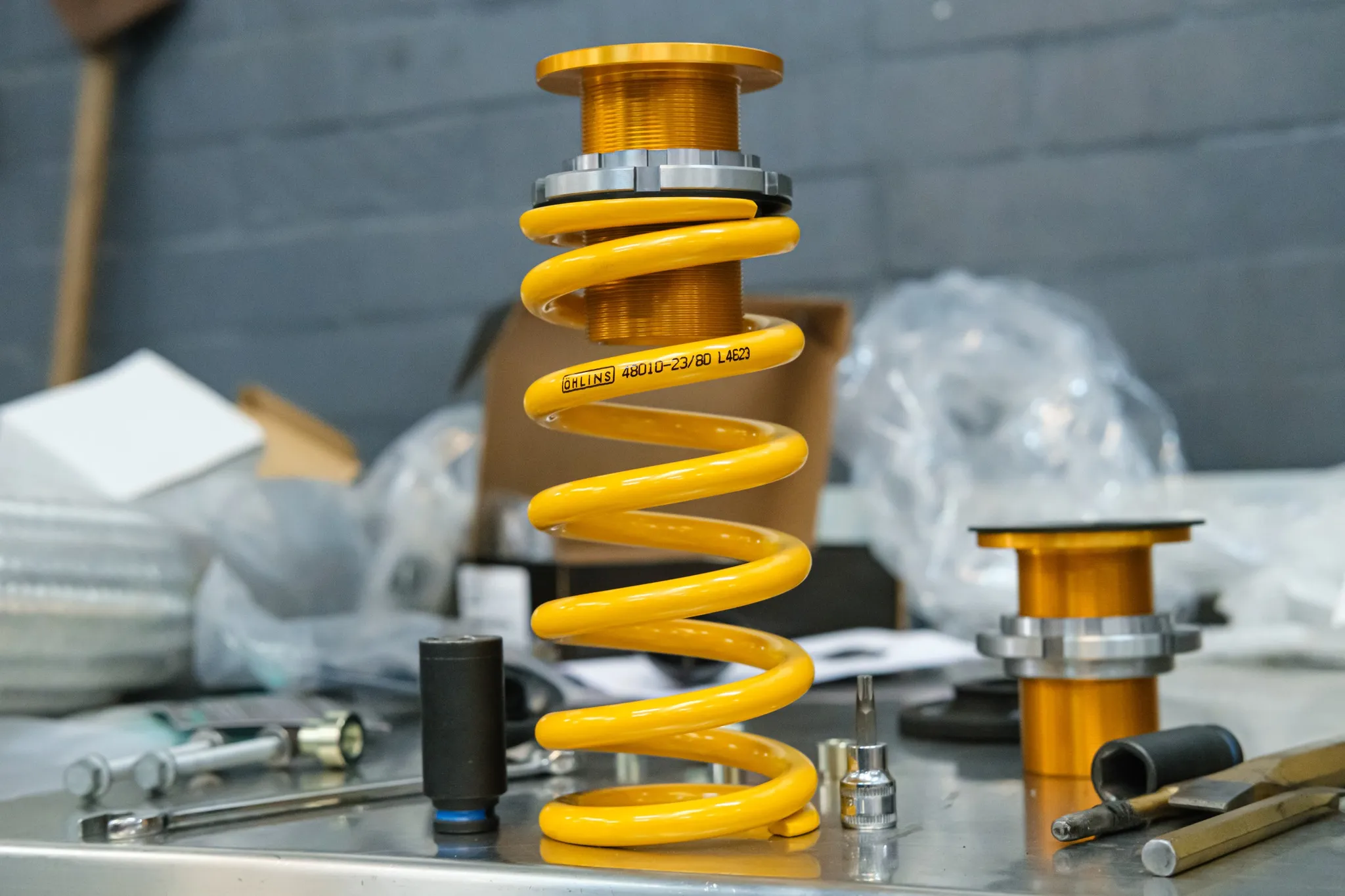
Öhlins have been building suspension for professional motorsport for decades. The Road & Track range is their street and track product, and what separates it from most aftermarket coilovers is the DFV (Dual Flow Valve) damper.
A normal monotube damper has one piston valve stack. You tune it for one condition and accept that it’ll be wrong for others. The DFV adds a second valve at the base of the damper body. The two valves work together so the damper can be soft over small bumps and road imperfections, but firm over the big inputs that matter on track: hard braking, fast direction changes, cornering loads.
What that means in practice is the Öhlins rides properly over rough Melbourne roads without beating you up, but controls body roll and pitch far better than the factory dampers when you’re driving hard. It’s not magic. It’s just a better damper design that handles a wider range of conditions than a single-valve setup can.
The kit fits the RS3 8V MQB platform with full ride height and damping adjustment. Drop it to where it looks right and handles well, dial the damping softer for the commute or firmer for the track.
Install and alignment
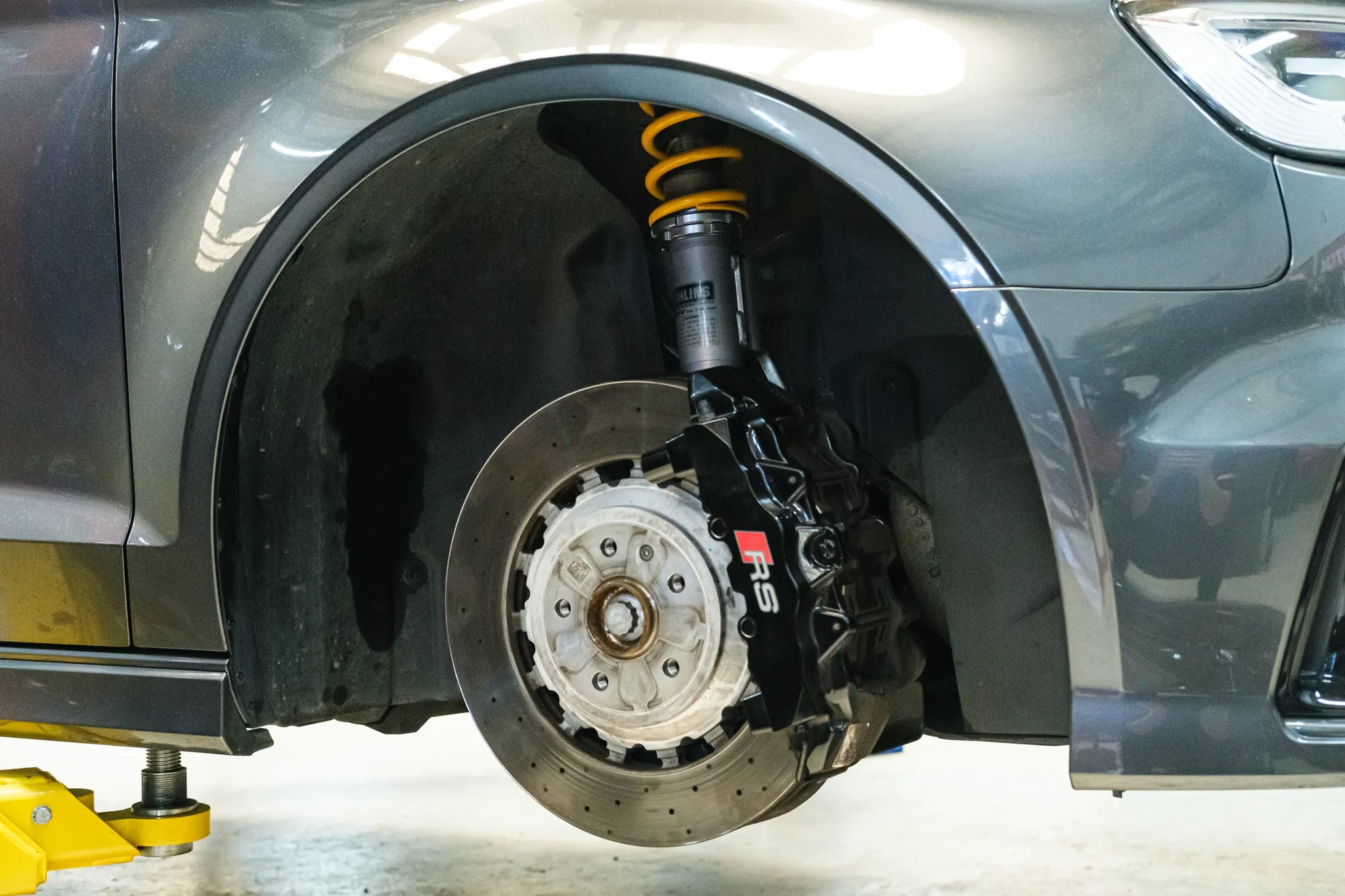
Factory struts and springs came out at all four corners and the Öhlins went in. Ride height was set on the bench to a moderate drop. Low enough to improve the centre of gravity and look right, not so low that it scrapes speed bumps or causes problems for daily driving. Damping was set to a baseline that’s noticeably firmer than stock but still comfortable on the street.
After the install, we did a full four-wheel alignment. This isn’t optional. When you change the ride height, camber, toe, and caster all move from their factory positions. Skip the alignment and you’ll chew through tyres unevenly and the handling won’t be right. We set this one with a touch more front negative camber for better turn-in on track, but kept it conservative enough that the tyres will wear evenly during the week.
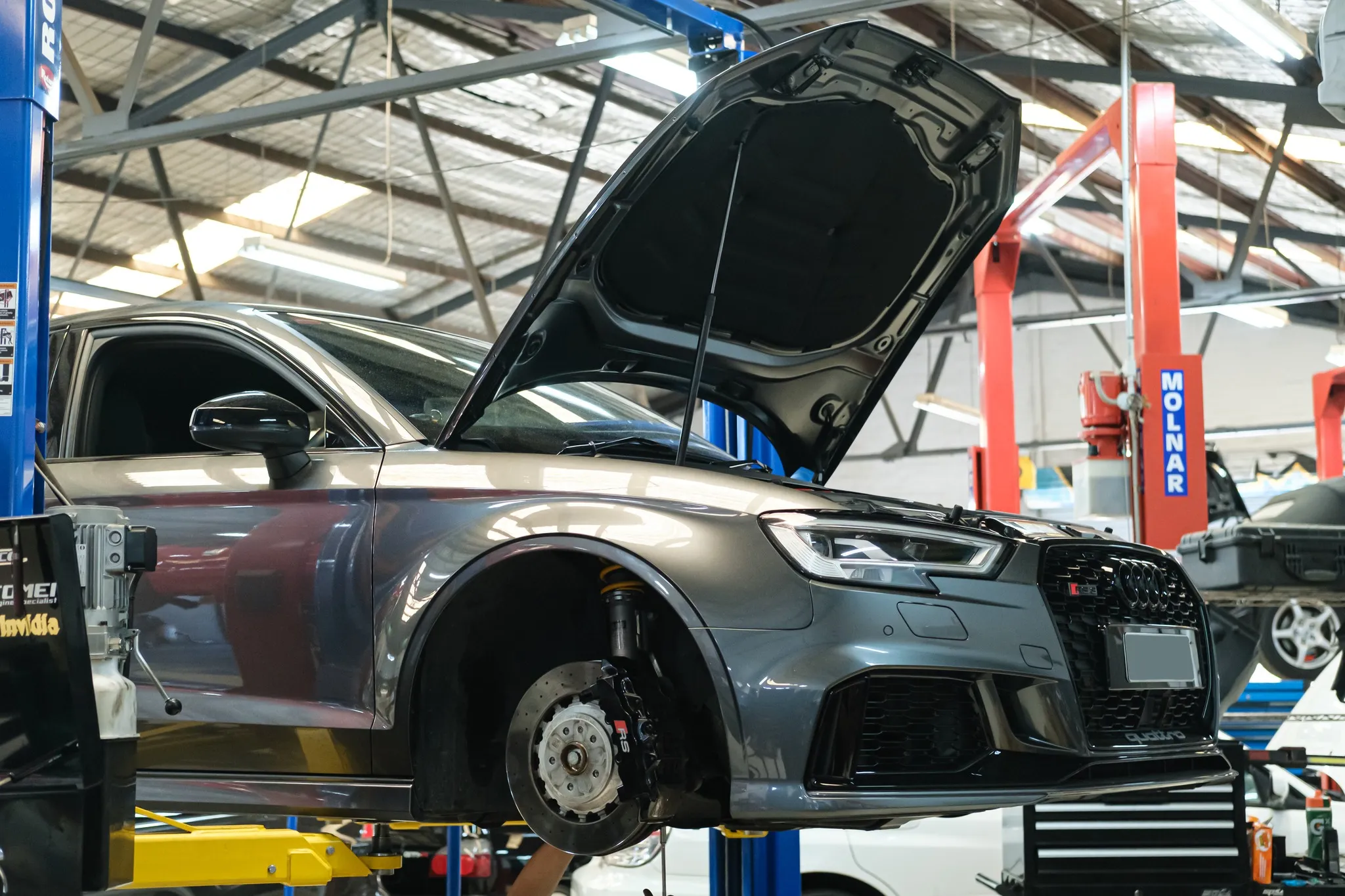
On the road and on track
On the street, the car is tighter and more composed but not harsh. It soaks up the rough stuff without the floaty, disconnected feeling the factory dampers have at speed. Steering response is sharper because the front end actually reacts when you turn in, instead of rolling through body roll first.
On track, the difference is bigger. Way less body roll under hard cornering. The car brakes flatter, rotates better on turn-in, and puts power down with more composure on exit. Quattro works better when the chassis is controlled properly, because the electronics aren’t constantly fighting body motion to figure out where to send torque. The RS3 feels like a smaller, lighter car on circuit. For a heavy AWD hatch, that’s about the best result you can get from a suspension change.
The car still rides well on the commute, still does highway trips without any drama, and now actually handles the way the engine deserves.