The flat-six wagon nobody talks about
The BP Liberty Wagon in BPE trim has a 3.0-litre flat-six. It shares its platform with the Legacy GT. It’s a genuinely fun car to drive, and most people have no idea because it looks like something you’d pick the kids up from school in. Which, to be fair, is also what it does.
This owner dailies his and pushes it through the hills on weekends. After 100,000-plus kilometres on Australian roads the factory dampers were finished. Floaty ride, body roll stacking up through corners, and the rear sitting high enough to give it an awkward nose-down rake. The handling balance was off and the car looked tired. He wanted it sorted.
Camber plates are the detail that matters
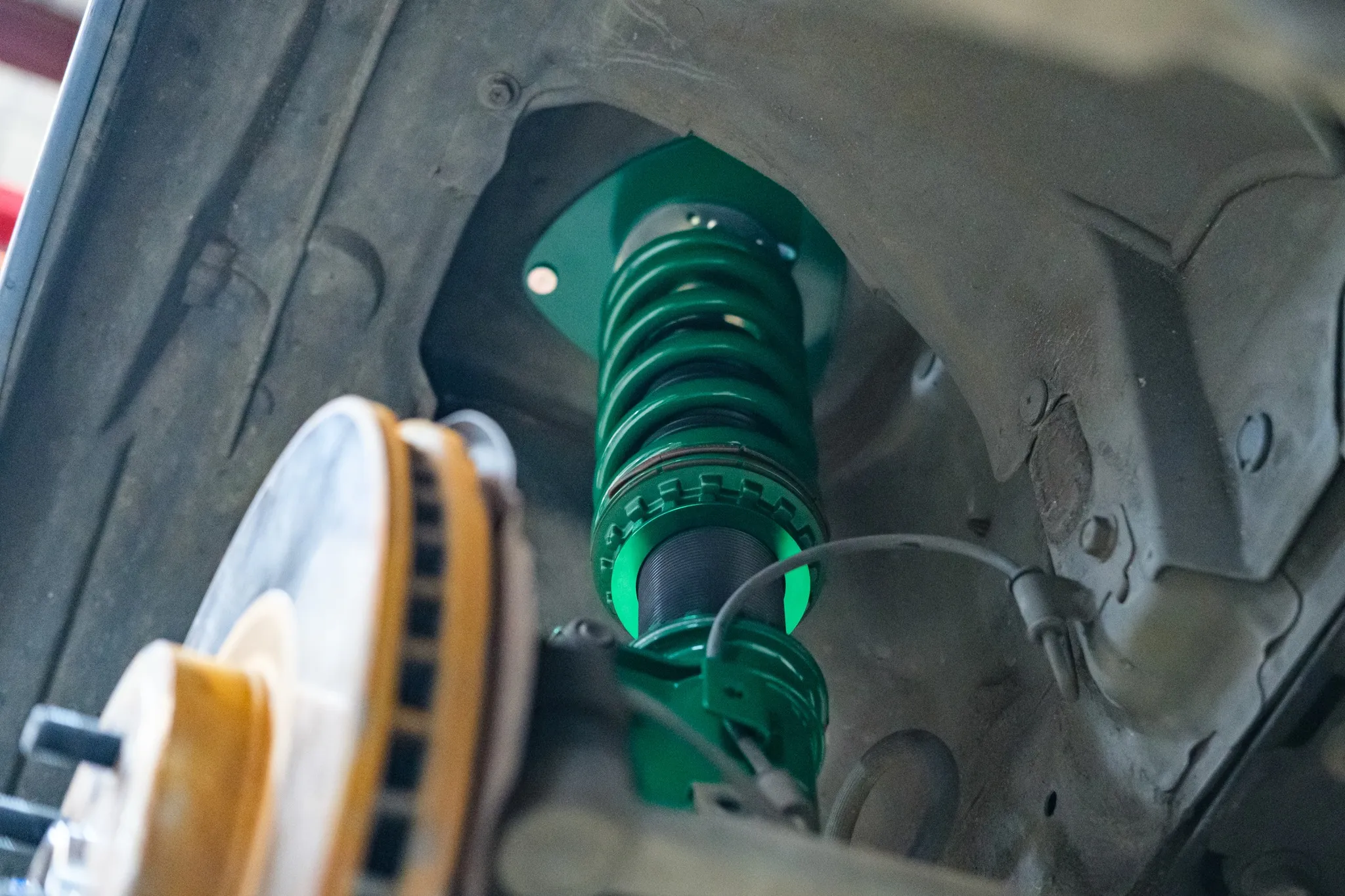
We went with the Tein Flex Z. Good balance of price and performance for a daily wagon. Twin-tube design, 16 clicks of damping adjustment, full ride height adjustability via threaded lower mounts. But the feature that actually sealed it is the camber-adjustable top mounts on the front struts.
Here’s why. The Liberty uses McPherson struts. When you lower a McPherson strut car, the top of the wheel tilts inward, adding negative camber. Without adjustable camber plates you’re stuck with whatever geometry the new ride height gives you. That usually means chewed inner edges on the front tyres and a worse contact patch under hard cornering. Most budget coilovers don’t have camber plates. The Flex Z does, so we could actually set the alignment properly after lowering instead of just living with whatever we got.
The 16-click damping adjustment is useful too. Softer for the highway, firmer when the road gets interesting. We set the baseline somewhere in the middle.
Levelling the wagon out
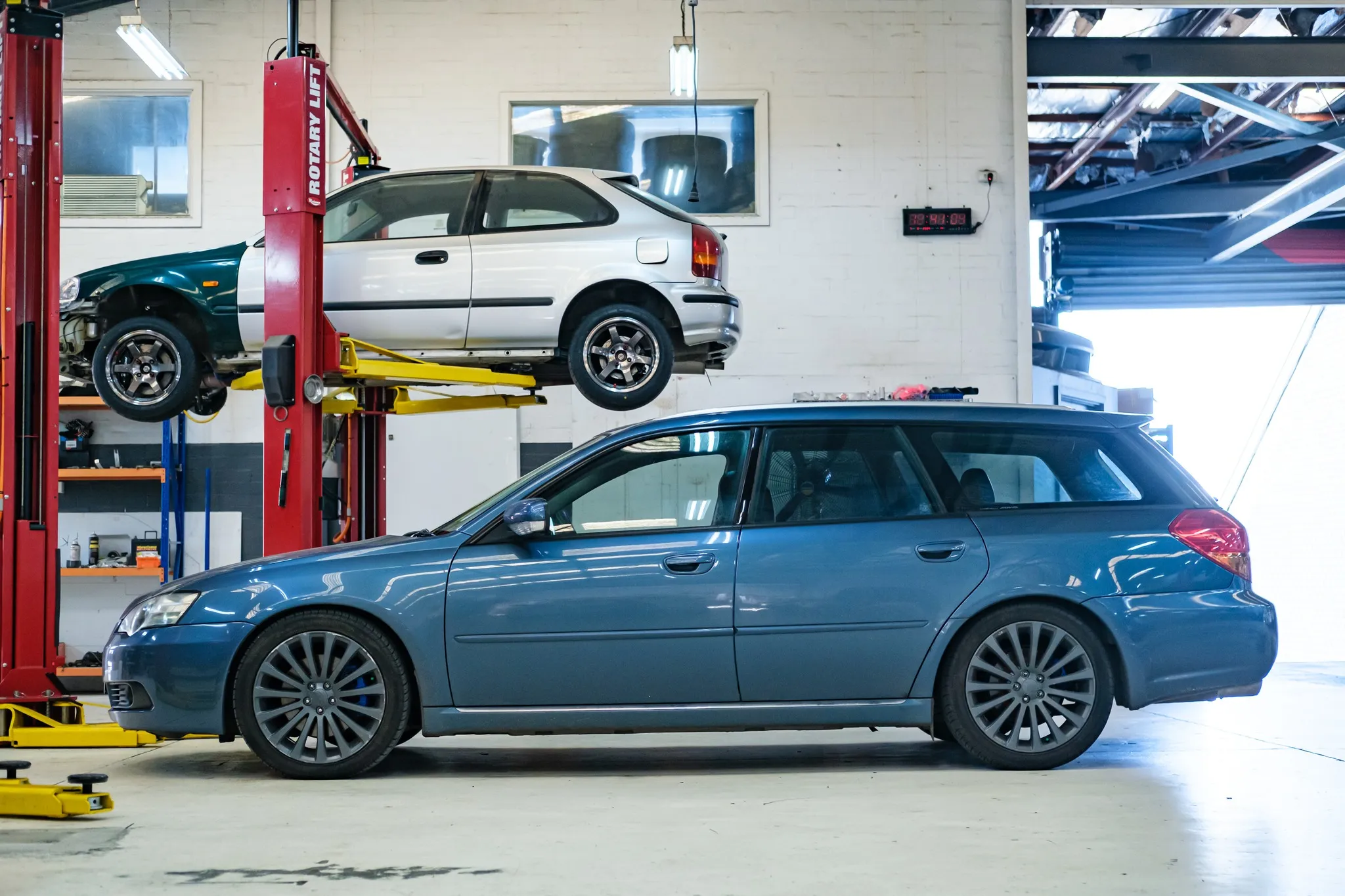
Factory struts and springs came out at all four corners. The Tein units went in with fresh hardware. Ride height was set to close the excessive rear wheel gap and level the wagon out. Low enough to look right, not so low that driveways become an issue.
Then a full four-wheel alignment. This gets skipped too often after coilover installs and it shouldn’t. Lowering a car changes camber, caster, and toe. If you don’t realign, you’ll chew tyres and the handling won’t be right. With the Flex Z’s camber plates on the fronts we had full control over the alignment rather than accepting whatever the lowered height gave us.
Before and after
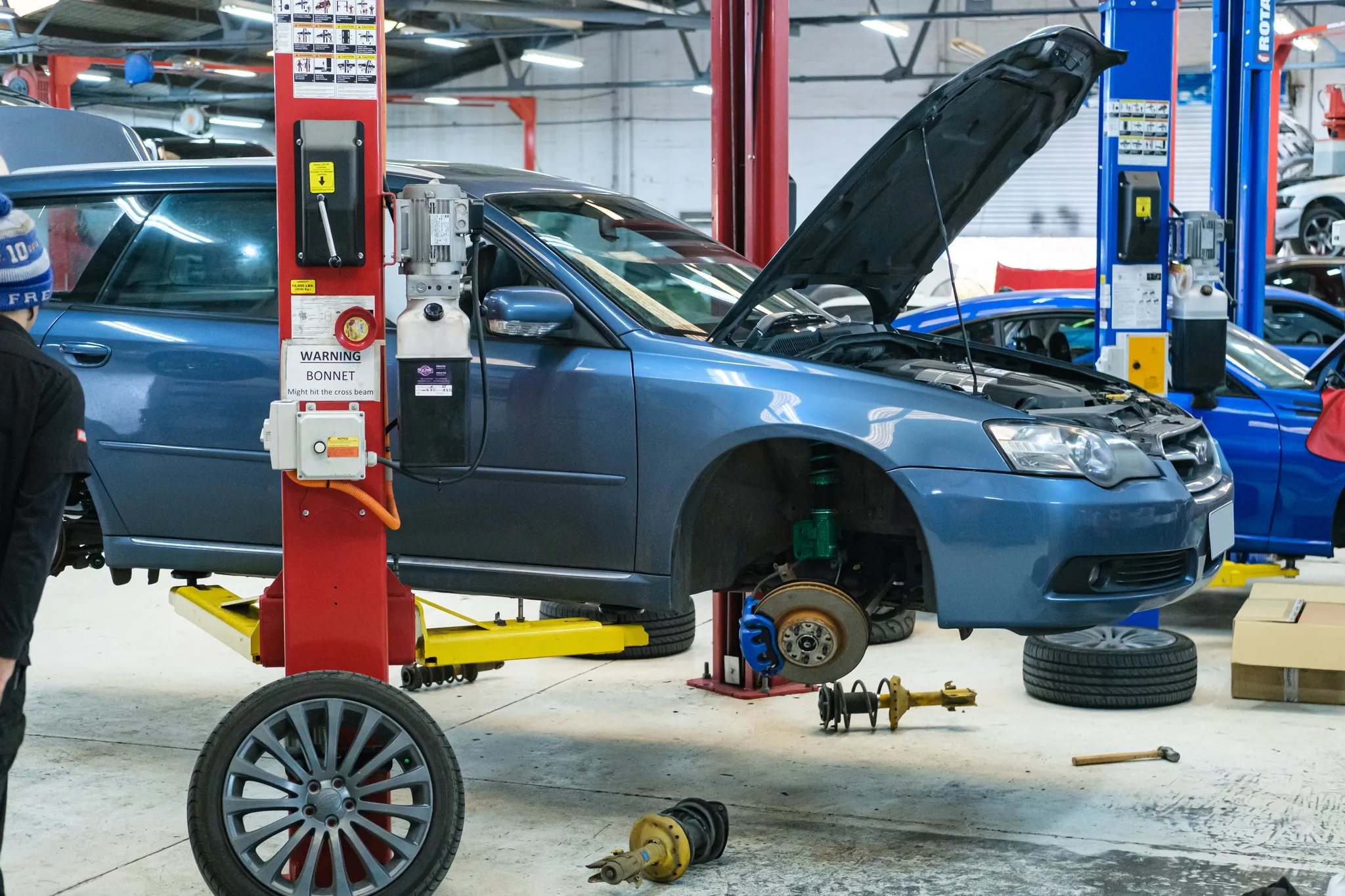
The wagon sits level now. Consistent gap at all four corners, rear ride height corrected, nose-down rake gone. It looks like a car someone cares about.
From the driver’s seat the difference is just as obvious. Body roll is way down. The floaty feeling from the dead factory dampers is gone. Over bumps and rough surfaces it’s firm and controlled without being harsh. The car actually responds when you turn the wheel instead of rolling over first and then changing direction.
For a car most people wouldn’t look twice at, it drives properly now. The flat-six pulls, the chassis keeps up, and it sits the way it should have from the start.