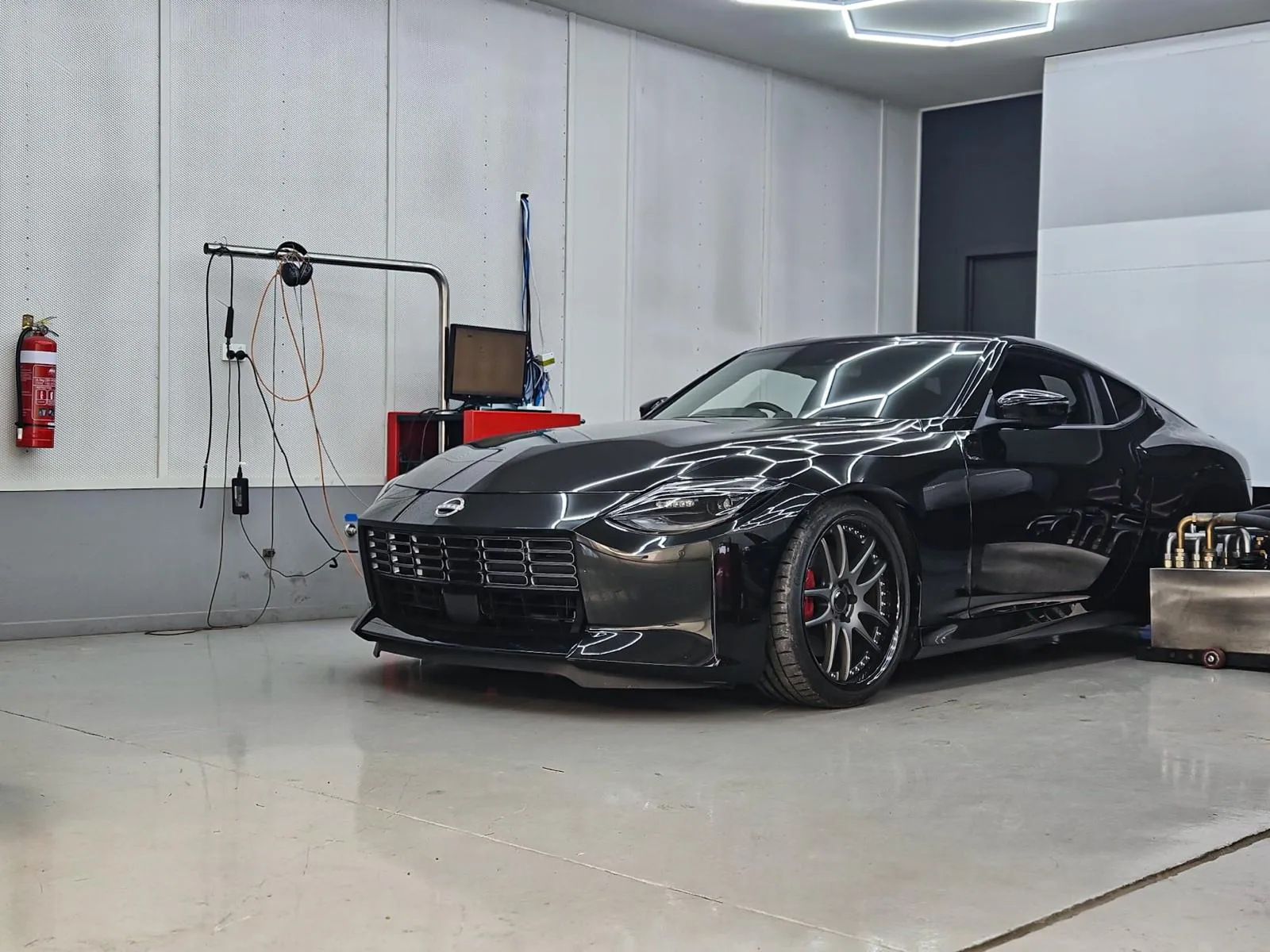
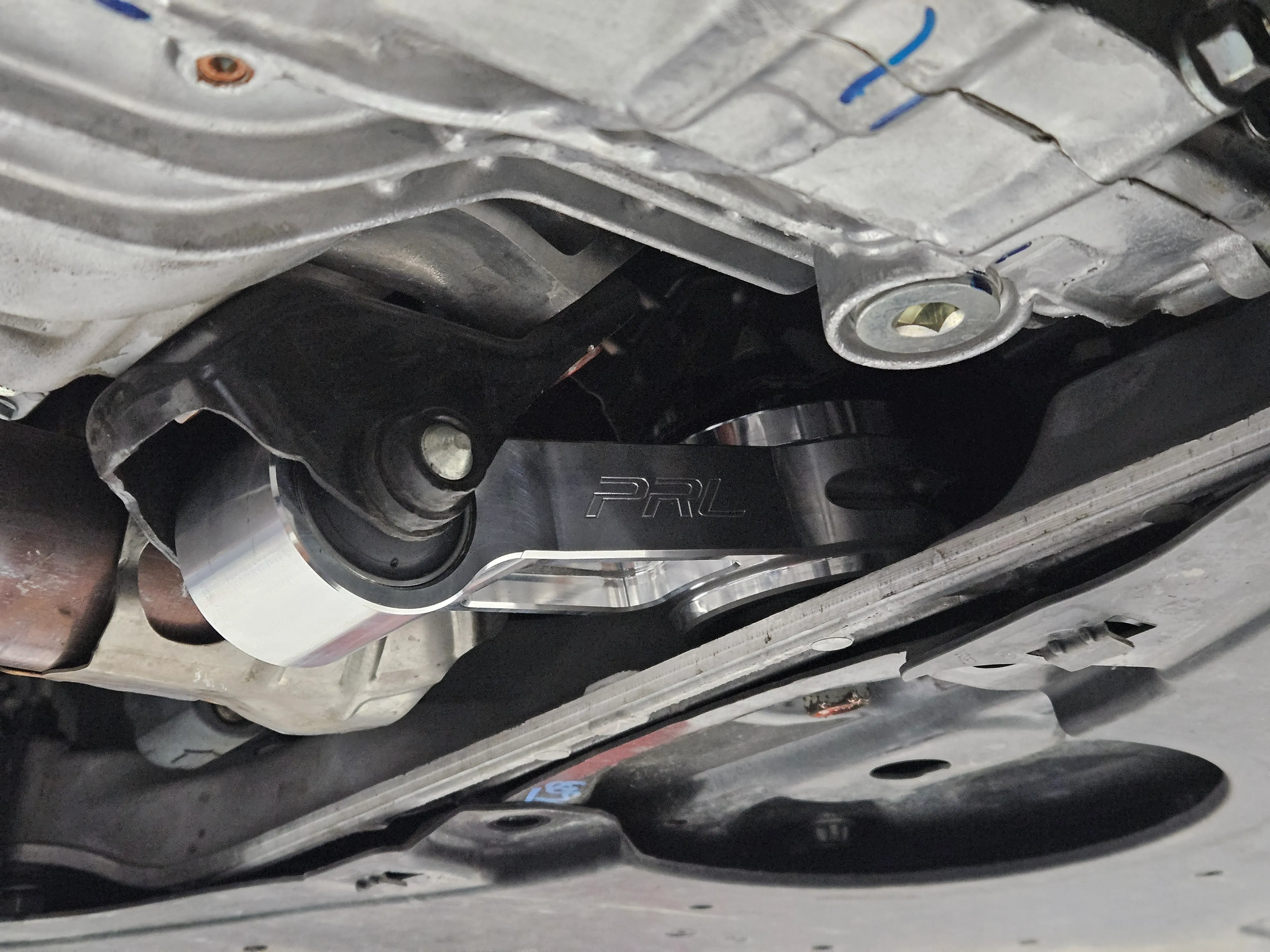
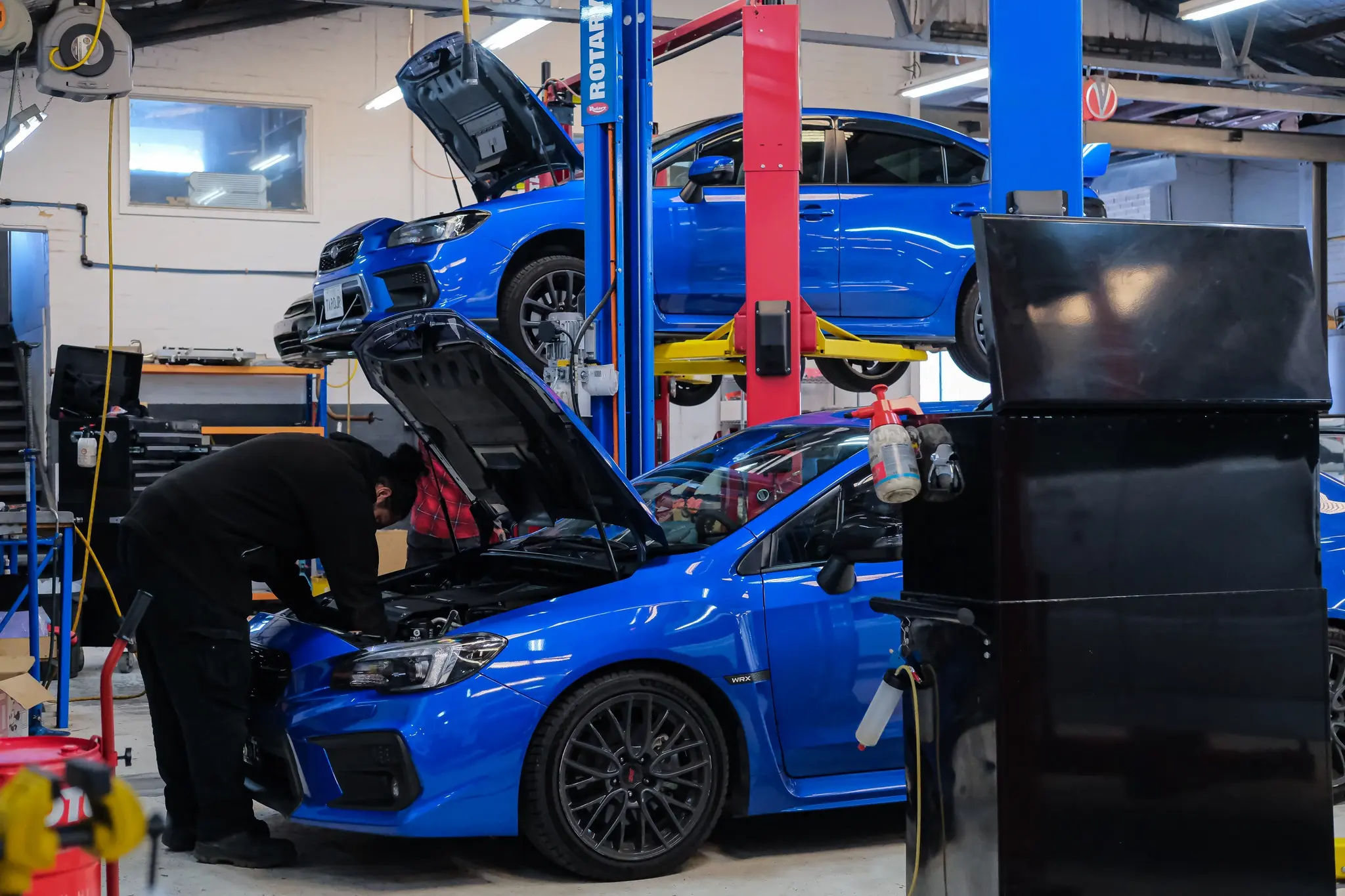
HKS turbo with flex fuel on the FA20
Another 86 in for the HKS turbo kit, but this one got flex fuel as well. The owner wanted to be able to run E85 when it suits him and 98 the rest of the time without touching anything. Just fill up and drive.
The FA20 makes about 150 kilowatts from the factory. The chassis deserves more than that. We have done enough of these builds now to know exactly where the FA20 sits on stock internals with the HKS kit, and adding the flex fuel system on top opens up another 27 kilowatts when the owner decides to put E85 in the tank.
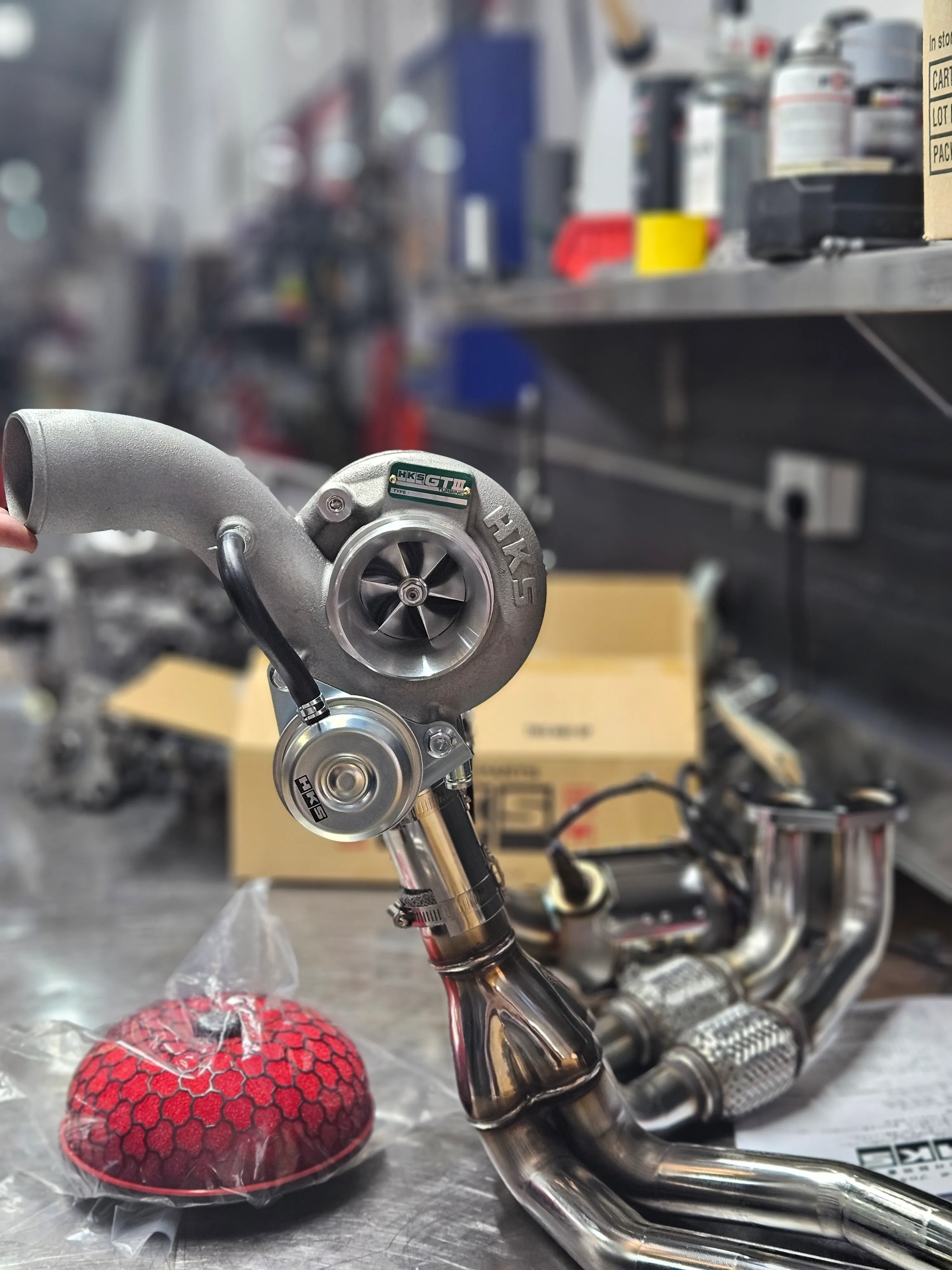
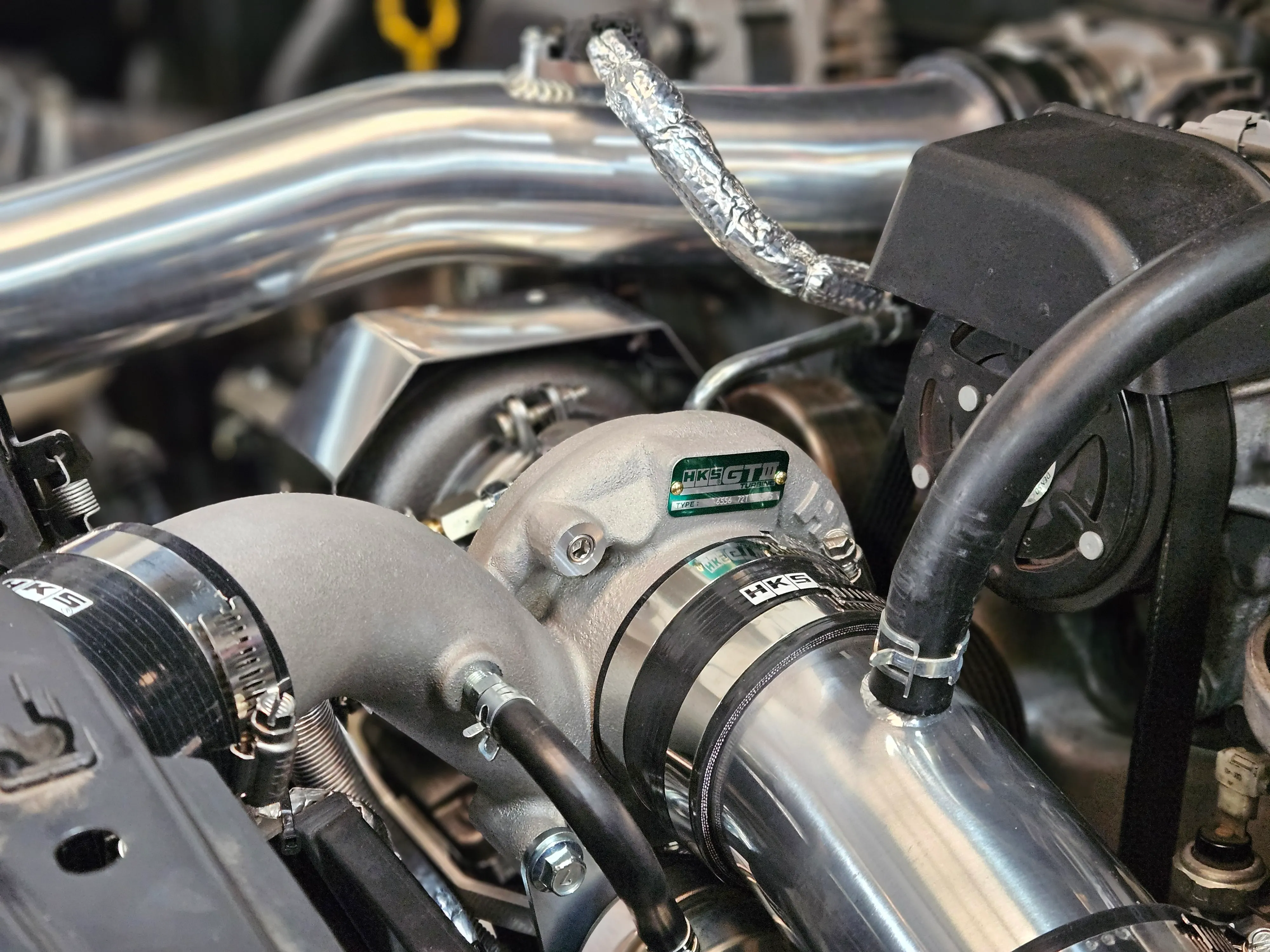
The HKS GTIII-RS
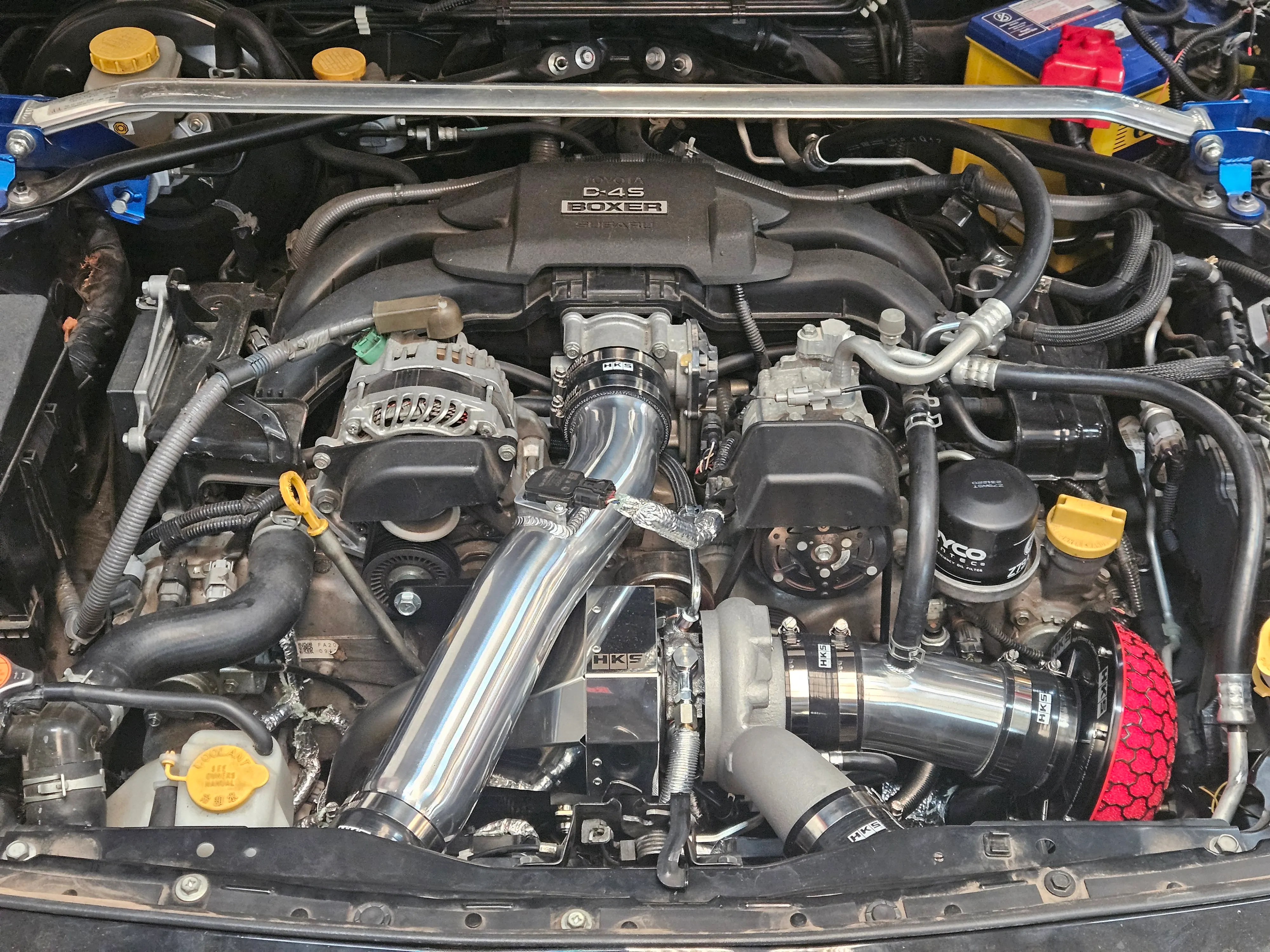
We have fitted this kit to a lot of 86s and BRZs at this point. The GTIII-RS is a complete bolt-on package: turbo, tubular manifold, front-mount intercooler, all the charge piping, hardware, gaskets. No fabrication needed. It goes on clean and it works.
The compressor is well sized for 2.0 litres. It spools early and still has enough flow to pull hard at the top of the rev range. A bigger turbo would make more peak power on paper, but you would lose the quick throttle response that makes the 86 fun to drive in the first place. The GTIII-RS keeps the car feeling like an 86, just a much faster one.
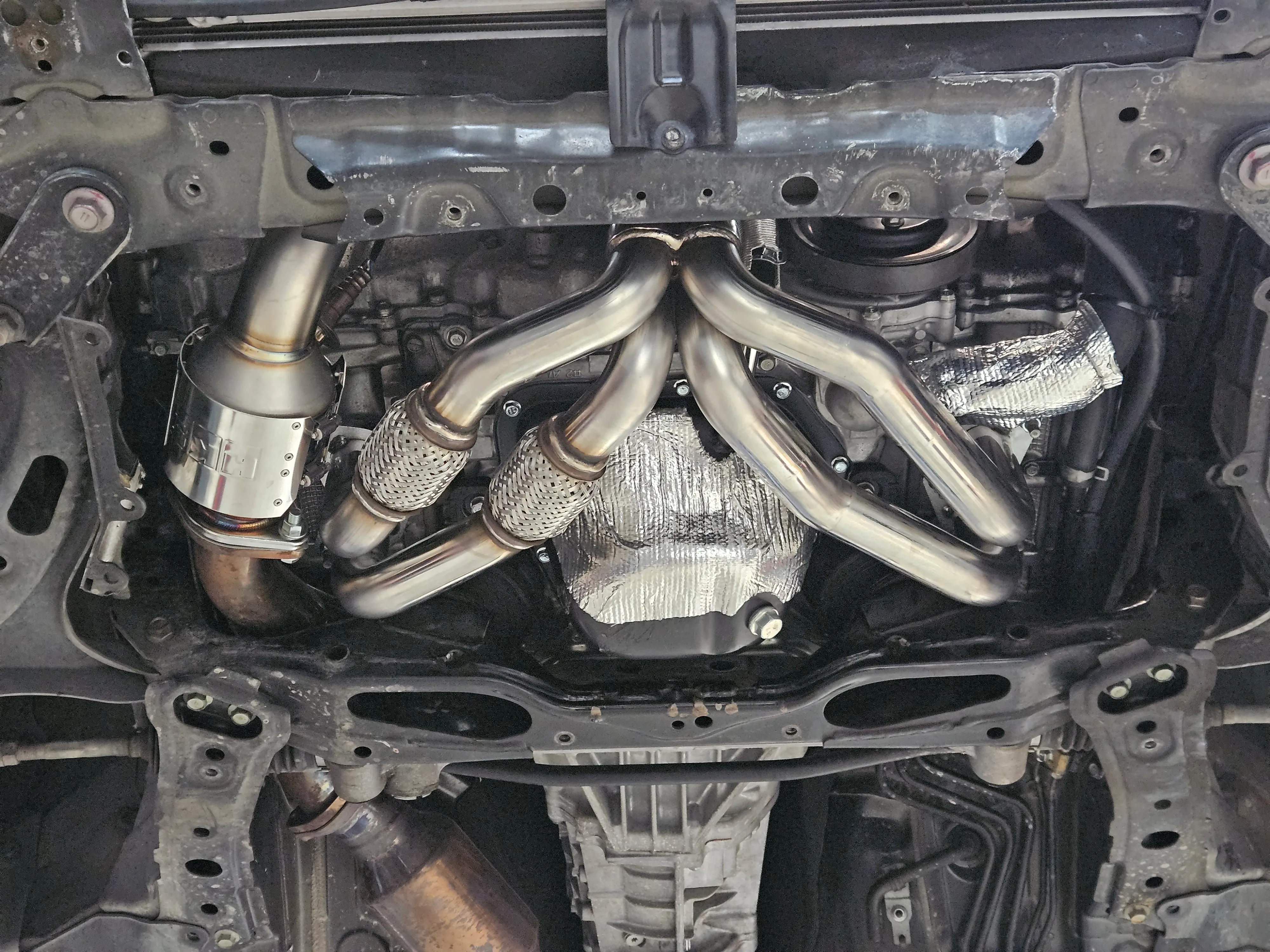
Exhaust manifold and intercooler
The HKS tubular exhaust manifold replaces the factory unit underneath. Better flow, better pulse separation, and the turbo spools faster because of it. We applied heat shielding to keep temperatures in check.
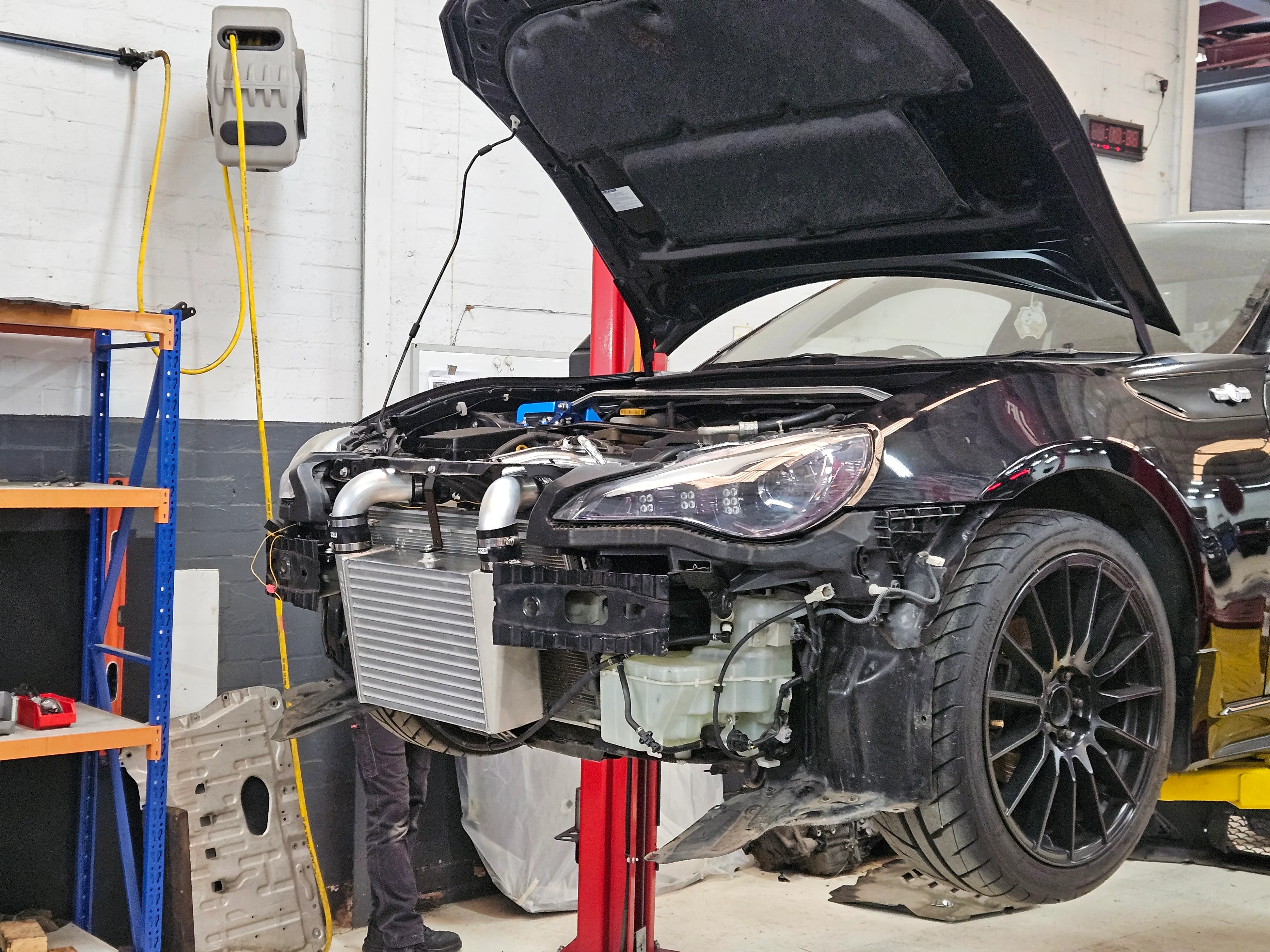
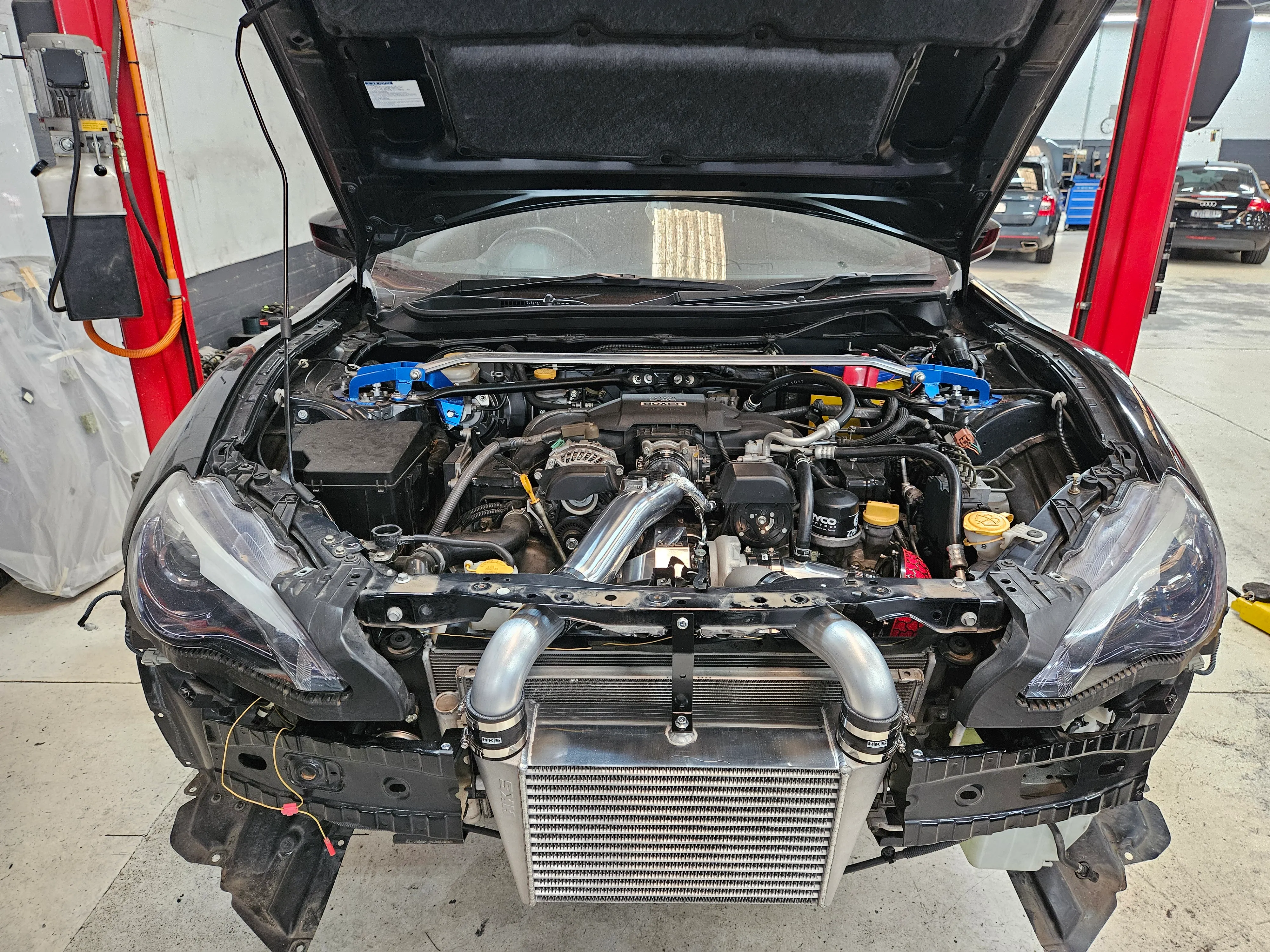
Up front, the HKS intercooler sits in the bumper opening where it gets direct airflow. At 13.3 PSI of boost the charge air temperatures matter. If the intake air gets too hot, the ECU pulls timing and you lose power. The front-mount keeps temps down so the engine can run the full calibration without the ECU having to back off.
Intake
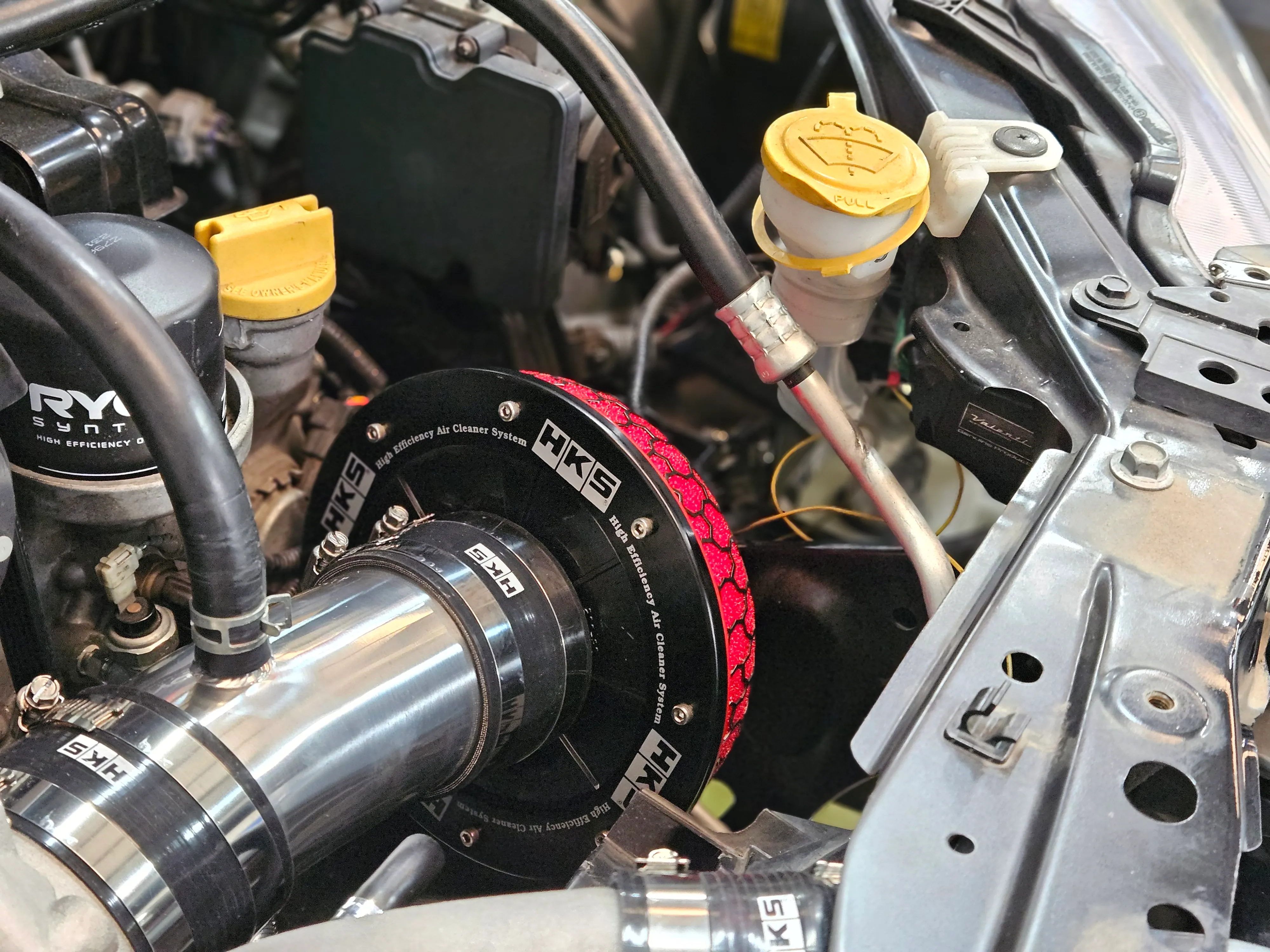
The factory airbox was replaced with the HKS Racing Suction, a mushroom-style filter that feeds air straight to the turbo inlet. Less restriction on the inlet side means the compressor doesn’t have to work as hard, so it spools quicker and boost holds more steadily through the rev range.
Flex fuel and fuelling
You can’t just bolt a flex fuel sensor on and call it done. E85 needs about 30% more fuel than petrol for the same power, so the whole fuel system has to keep up.
We upgraded the injectors to handle the extra fuel demand on E85 at full boost, with headroom left over. A DeatschWerks DW300C fuel pump went in to replace the factory unit. Running the fuel system out of capacity on a boosted engine is how you melt pistons, so we always spec this with margin above the target power level.
The Zeitronix x RZ Flex Fuel Kit reads the ethanol content in real time and feeds that to the ECU. The tune then adjusts fuelling, timing, and boost targets automatically depending on what fuel is in the tank. Could be straight E85, could be 98, could be a 50/50 splash blend from whatever was left at the servo. The ECU handles it.
In practice, this means the owner fills up with E85 when he wants the full 250 kilowatts, and fills up with 98 when E85 isn’t around. Either way, the car runs properly. No switching maps, no second thoughts at the bowser.
Dyno tune
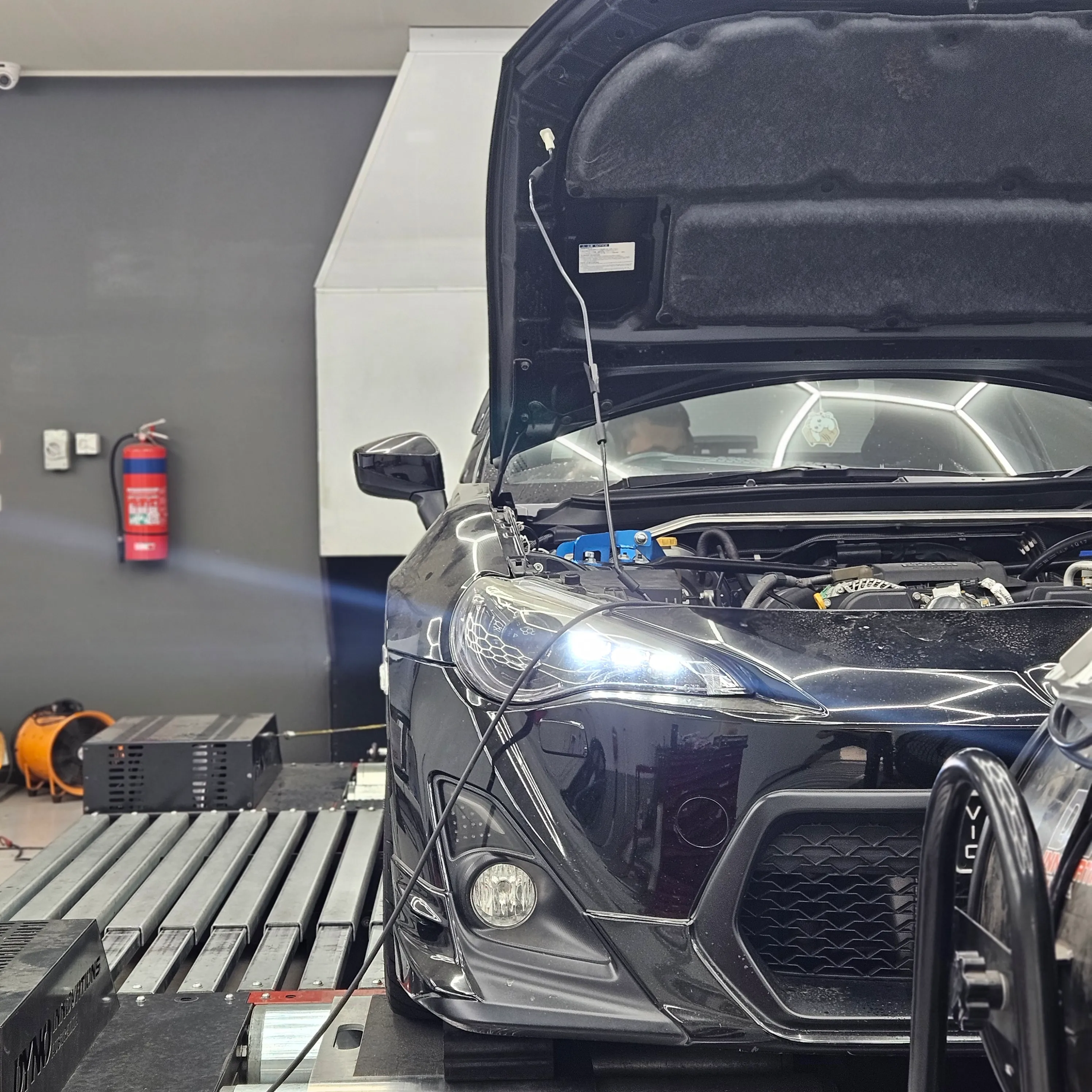
Once everything was bolted up, the car went on our roller dyno for tuning.
We tuned both fuel maps from scratch. Boost target is 13.3 PSI on both 98 and E85. The extra power on E85 comes from timing. Ethanol has a higher effective octane and cools the charge air as it evaporates, so the engine can take more ignition advance without knocking. That is where the 27 extra kilowatts come from, not from more boost.
Dyno results
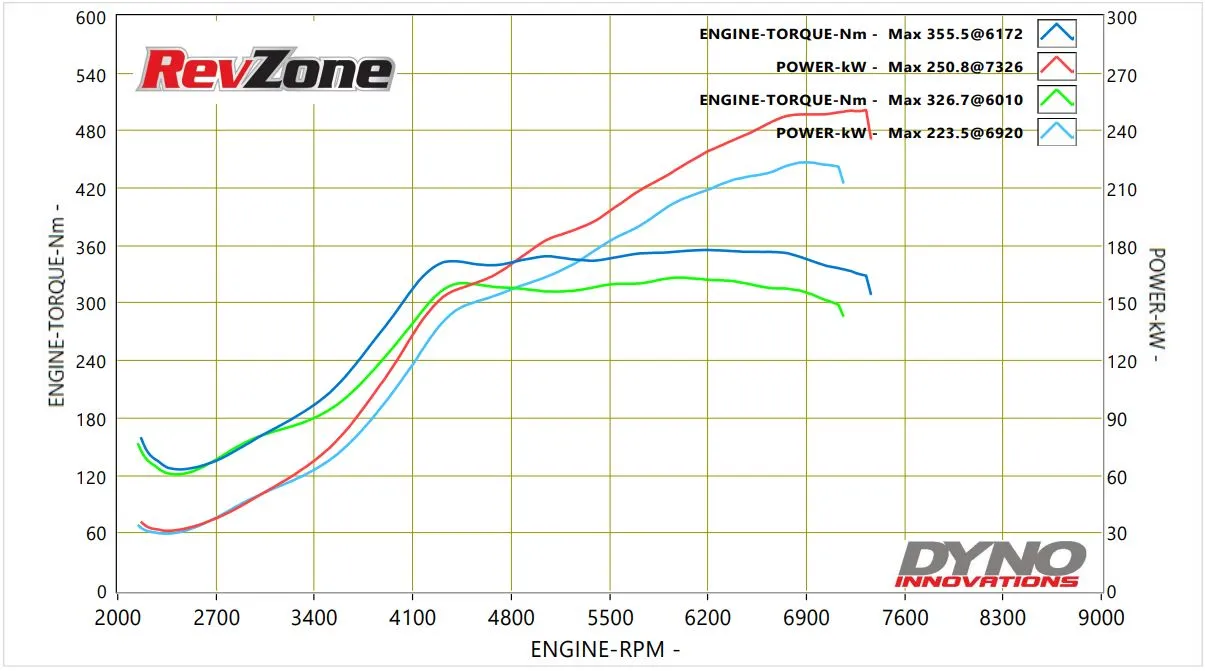
Measured at the wheels on our Dyno Innovations dyno:
On E85: 250.8 kW @ 7,326 RPM / 355.5 Nm @ 6,172 RPM
On 98 RON: 223.5 kW @ 6,920 RPM / 326.7 Nm @ 6,010 RPM
E85 over 98: +27.3 kW / +28.8 Nm
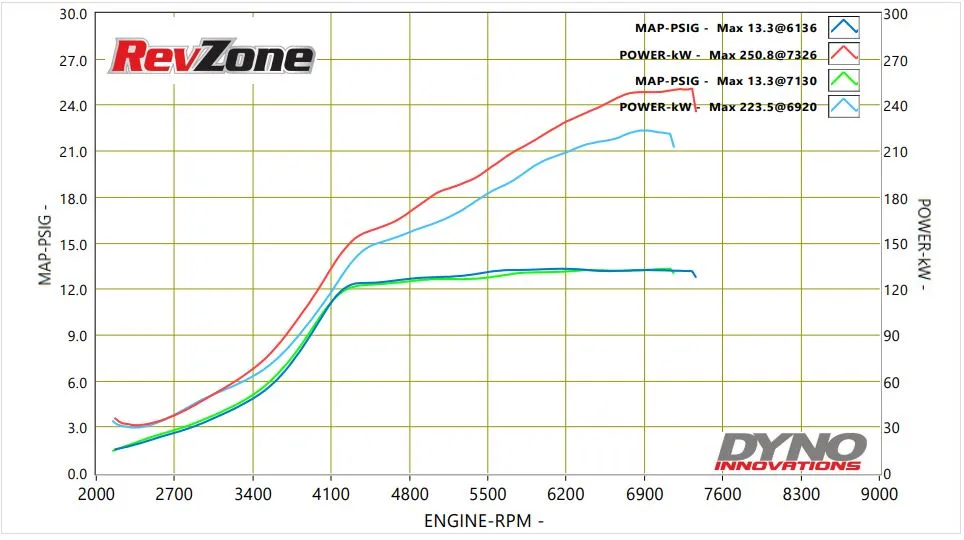
The boost graph shows it clearly. Same 13.3 PSI on both fuels, but the E85 tune carries more power through the top of the rev range because the timing is more aggressive. Torque is flat from about 4,800 to 6,200 RPM, then the power curve climbs to the 250 kW peak. It pulls hard from mid-range all the way to redline.
Stock, this car made about 150 kilowatts at the crank. It is now making 250 at the wheels on E85. That is a different car entirely.