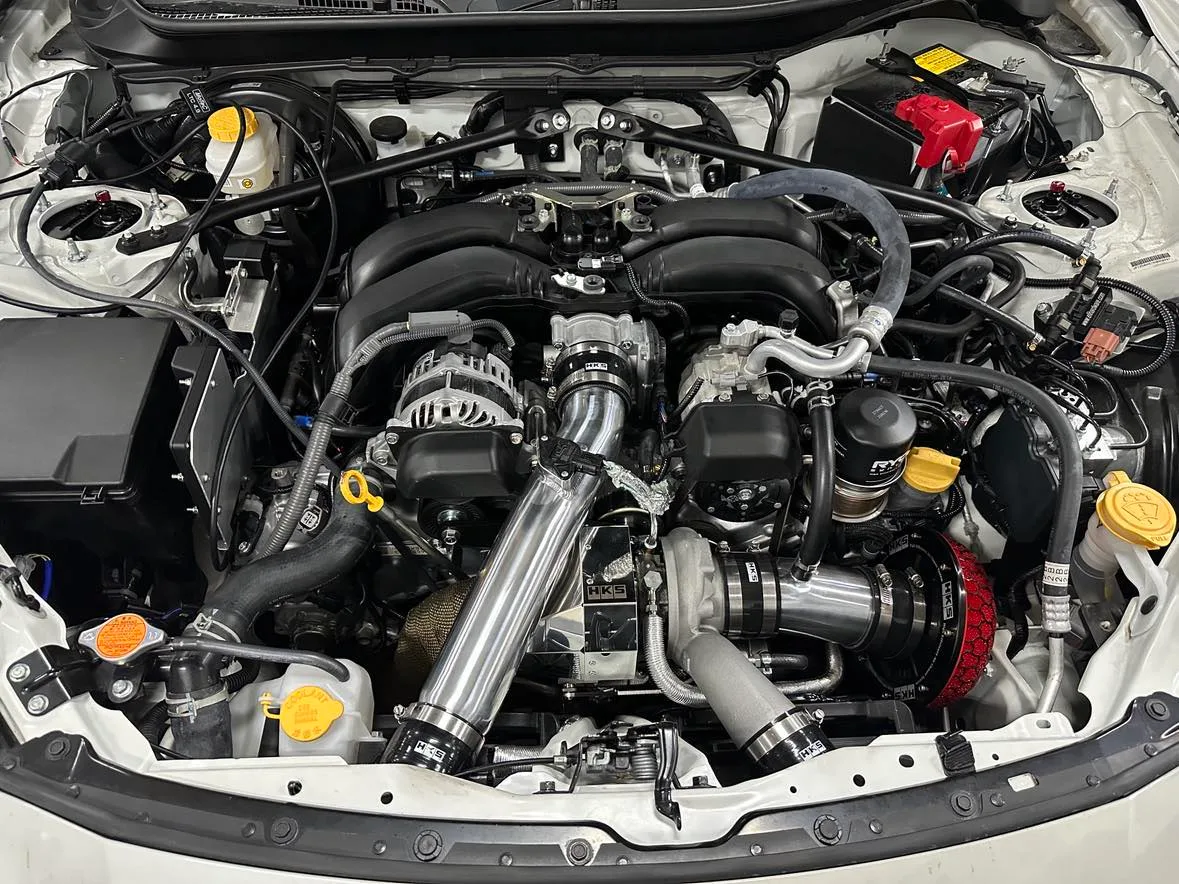
Turbo FA24, done right
The second-gen BRZ and GR86 got a solid upgrade with the FA24 swap. Bigger displacement, direct injection, and a much better torque curve than the old FA20. Still, 170-odd kilowatts in a chassis this good leaves you wanting more. The balance and low centre of gravity are there. The power from factory just isn’t.
This BRZ ZD8 came in with a straightforward brief: bolt-on turbo, proper engine management, fuelling sorted, and a driveline that can actually cope. The owner drives it on the street and takes it to track days, so it needed to be reliable and well sorted. No half-finished project sitting on jack stands chasing boost leaks.
The HKS GTIII-RS turbo kit
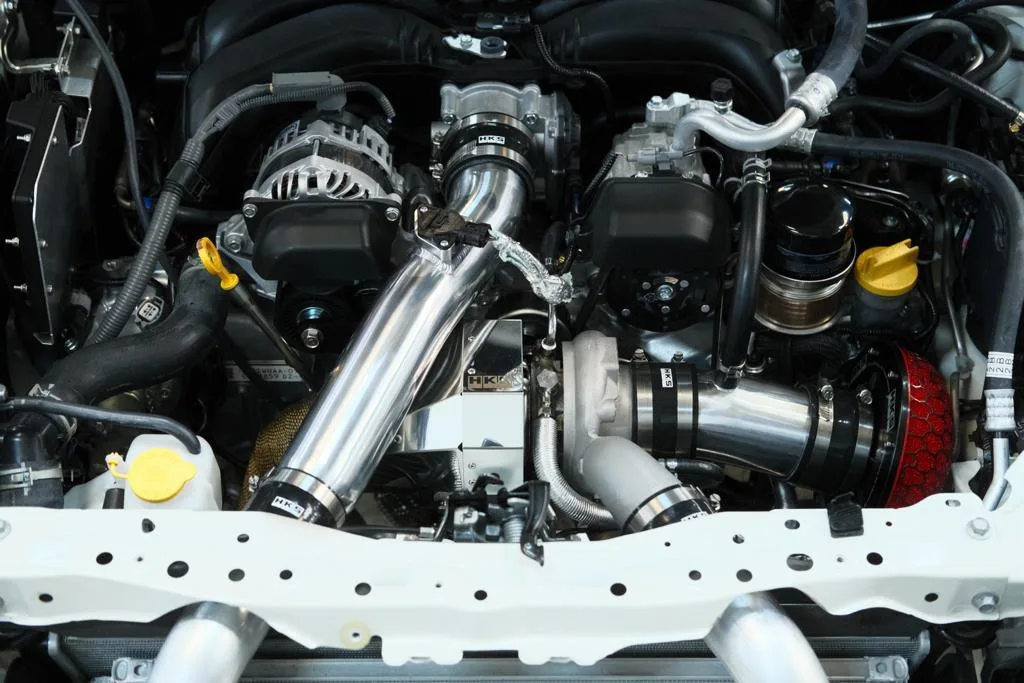
We went with the HKS GTIII-RS bolt-on turbo kit. We have fitted this kit to multiple cars on this platform now and it works well. HKS have done the engineering so the kit fits the FA24 without fabrication or cutting. The package includes the turbo, tubular exhaust manifold, dump pipe, front-mount intercooler, all charge piping, and the hardware to bolt it all on.
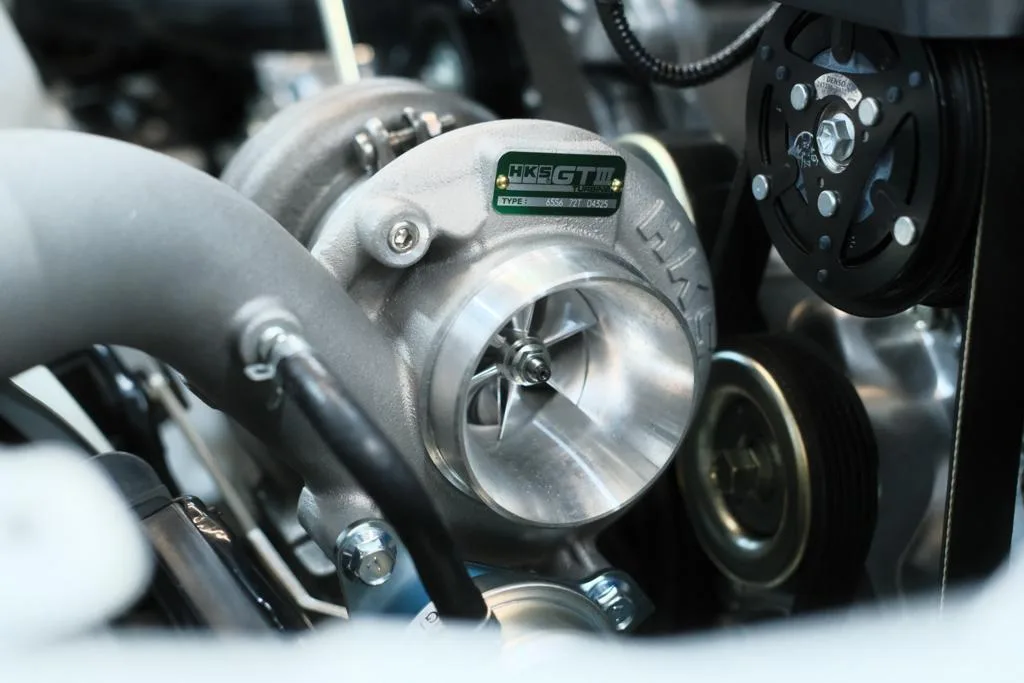
The GTIII-RS uses a billet compressor wheel in a compact housing. It spools quickly, which suits a lightweight car like the BRZ. No lag. The turbo comes on early and delivers smooth power through the mid-range and top end. For a car that sees both street and track use, that matters more than peak numbers. You want the power accessible and predictable, not all arriving at five thousand RPM.
Front-mount intercooler and charge piping
The HKS kit includes a front-mount intercooler that replaces the factory air conditioning condenser mounting position. We stripped the front end to access the crash bar and radiator support area, then routed the charge piping from the turbo compressor outlet through the engine bay, down to the intercooler, and back up to the intake manifold.
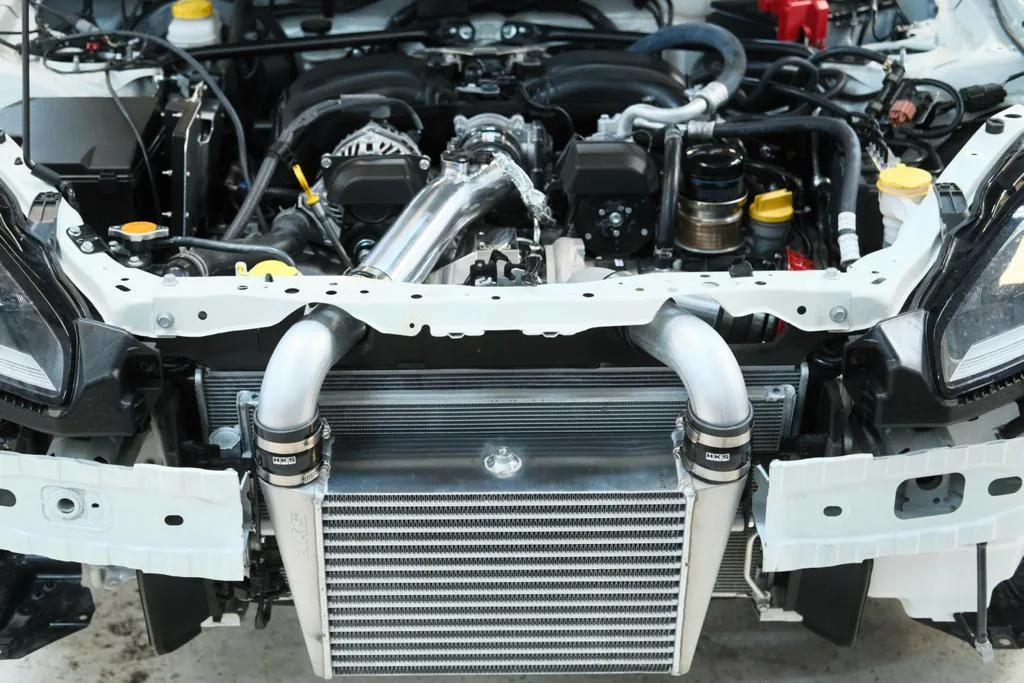
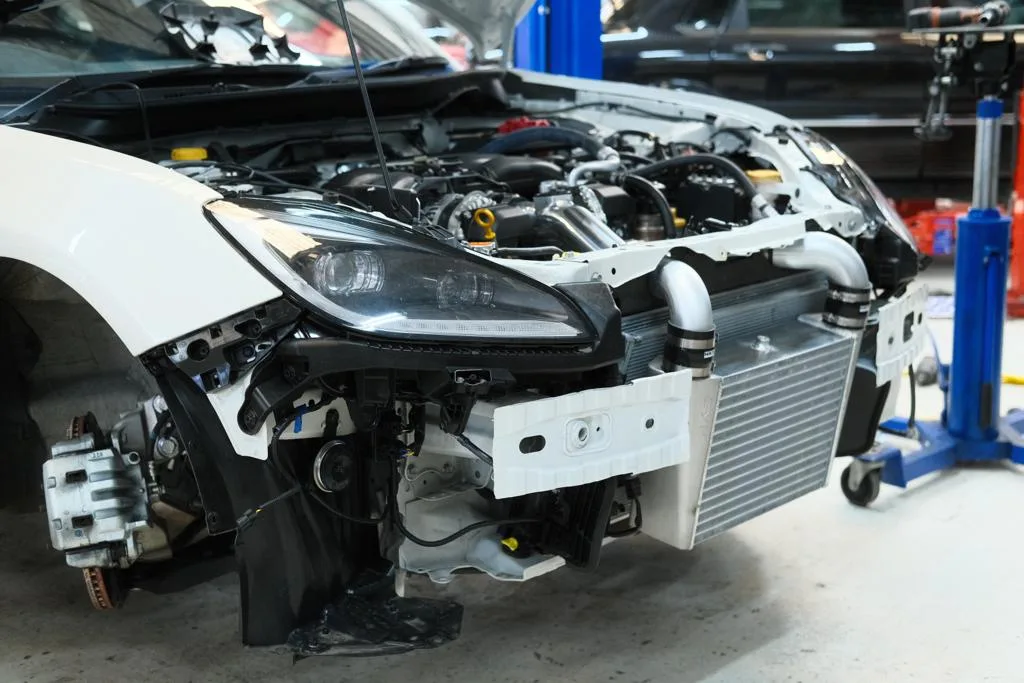
Intake air temps matter on a boosted engine, especially one doing laps. Hot intake air lowers the effective octane of the fuel, the ECU pulls timing, and you lose power. A properly sized front-mount intercooler keeps charge temps consistent regardless of ambient conditions or how long you have been on track.
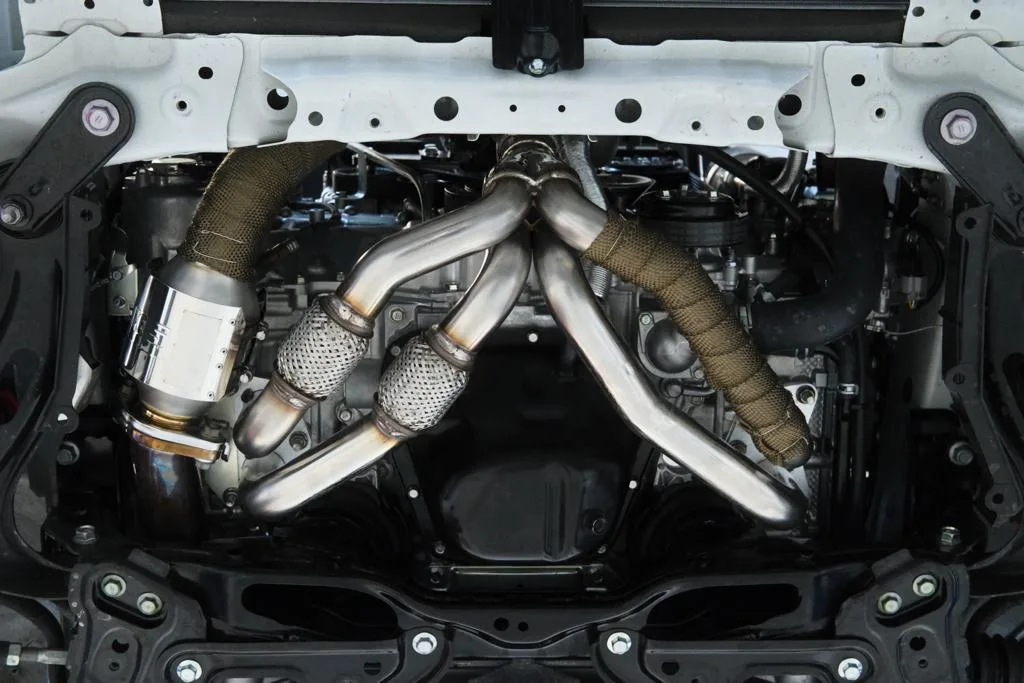
Exhaust side and heat management
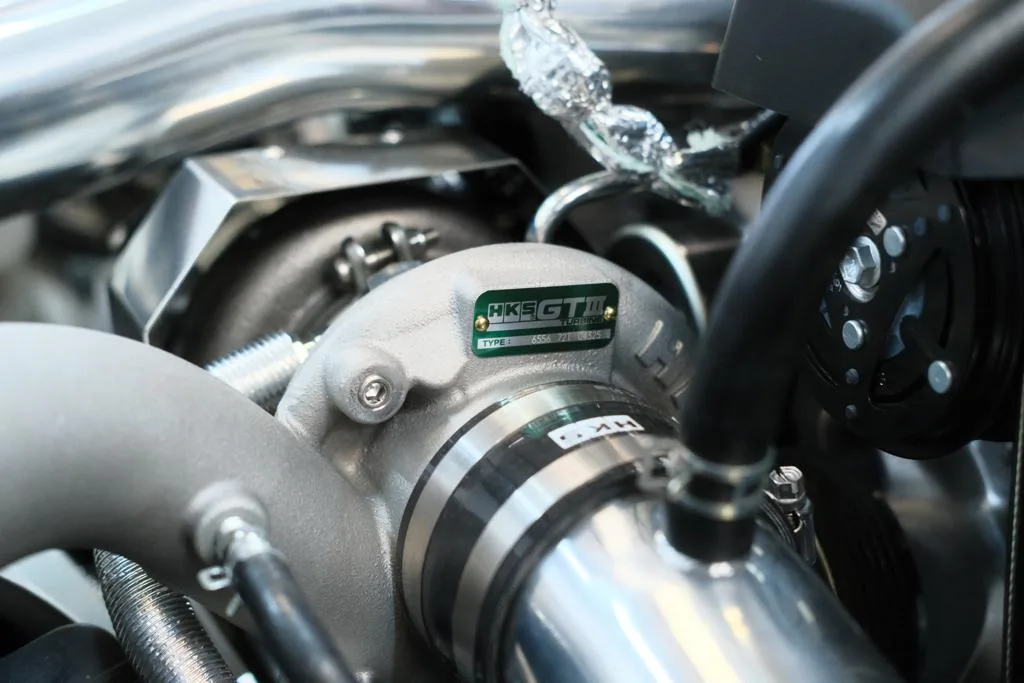
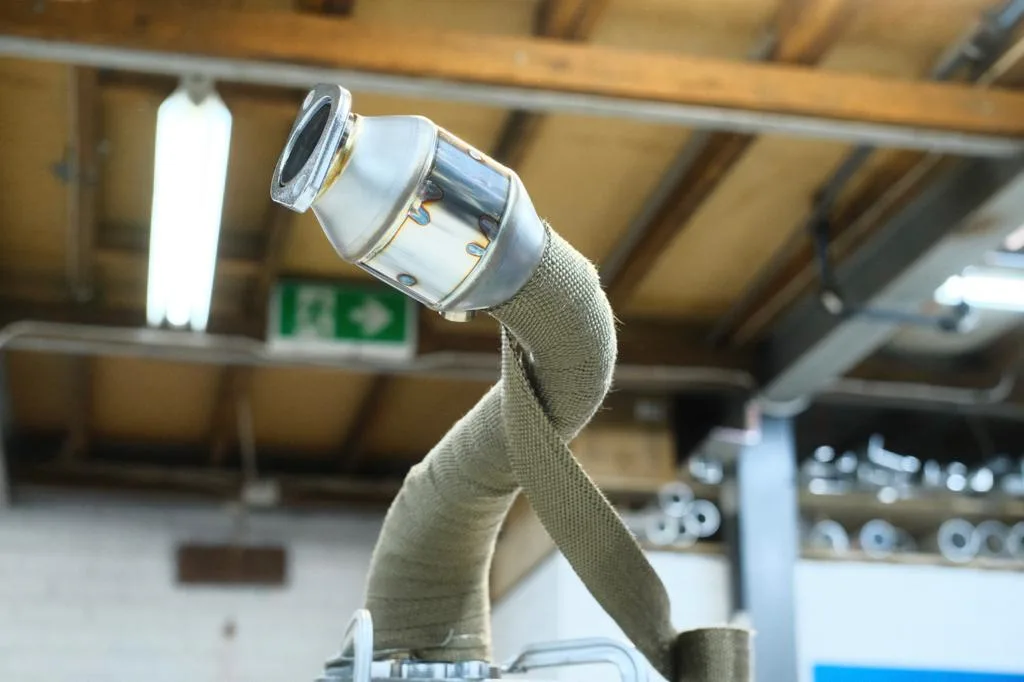
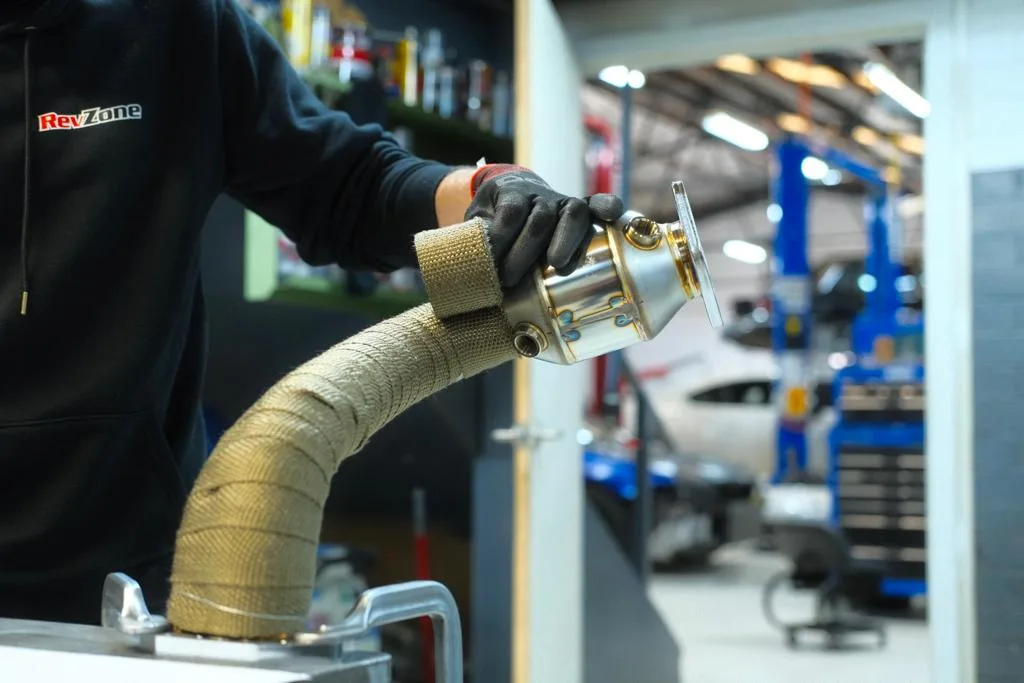
The hot side uses an HKS tubular exhaust manifold with heat-wrapped runners. Manifold design matters because it dictates how exhaust pulses feed the turbine. The tubular design flows better than a cast manifold and helps the GTIII-RS spool up quickly. We also heat-wrapped the dump pipe. On a flat-four with the turbo sitting close to the block, heat soak is a real problem. Wrapping the exhaust components keeps radiant heat away from the intake piping, fuel lines, and wiring that run nearby.
Why MoTeC instead of the factory ECU
This is where the build steps up from a typical bolt-on turbo job. The factory ECU on the ZD8 can be tuned to run boost, and plenty of people do it. But MoTeC standalone engine management gives us a level of control the factory ECU cannot match.
With MoTeC we have full authority over fuel delivery, ignition timing, cam timing, boost targets, safety strategies, and flex fuel operation. The factory ECU’s tuning platforms work within the constraints of the original software architecture, so you are always working around limitations that were never designed for forced induction. MoTeC starts from scratch and lets us build the calibration from the ground up for this specific engine, turbo, and fuel system.
Flex fuel was a key part of the brief. A Zeitronix flex fuel sensor reads the ethanol content of the fuel in real time and feeds that data to the MoTeC ECU. The calibration adjusts fuel delivery, ignition timing, and boost targets automatically based on whether the car is running 98 RON, E85, or any blend in between. Fill up with whatever is available and the ECU handles the rest. On E85, the higher octane rating and charge cooling effect of ethanol let us run more aggressive timing and boost for more power. On 98, the ECU dials everything back to safe, optimised levels.
Upgraded fuelling
Forced induction on E85 needs a fuel system that can keep up. E85 requires roughly thirty percent more fuel volume than petrol for the same power level, so the factory pump and injectors are not going to cut it.
We fitted Xspurt 1050cc fuel injectors. The 1050cc flow rate gives enough headroom for the power targets on E85 with margin to spare, and the injectors atomise well at lower pulse widths so there are no drivability issues at idle or light throttle. A DeatschWerks DW300C 340LPH fuel pump replaced the factory in-tank pump to maintain consistent fuel pressure and volume at full boost. Running a fuel system out of capacity is one of the fastest ways to lean out a boosted engine and cause serious damage, so we always spec fuel system components with headroom above the target power level.
Driveline and chassis
Bolting a turbo onto the FA24 roughly doubles torque at the crank. The factory clutch is not designed for that kind of load. It will slip almost immediately under boost. An Exedy Kevlar ballistic clutch went in during the same stripdown. The Kevlar friction material gives a progressive engagement that is still manageable in traffic, unlike a full ceramic puck clutch that chatters and grabs.
More power also means the suspension setup needs to match. MCA Reds coilovers were fitted at all four corners with an initial alignment for the new ride height. The MCA Reds are two-way adjustable with separate compression and rebound damping adjustment, so we can fine-tune the chassis balance for how the owner actually drives the car. With this much extra power, a chassis that puts it down predictably and gives the driver confidence is a must.
How it all came together
The difference between a decent turbo build and a good one comes down to how the parts work together. Everything on this car was chosen with the full picture in mind, and it was all installed, set up, and calibrated as a single package.
The BRZ drives like a different car now. The GTIII-RS spools quickly and pulls hard through the mid-range with smooth power delivery. The MoTeC tune is clean and responsive across both 98 and E85, with the flex fuel system switching between fuels without any input from the driver. The Exedy clutch handles the extra torque without fuss, and the MCA Reds have sharpened up the way the car changes direction and puts power down. It is a proper full build, daily driveable, and ready for the track.