HKS Turbo Kit Install & Tune – Toyota 86/BRZ
86 / BRZ

HKS Turbo Kit Install & Tune – Toyota 86/BRZ

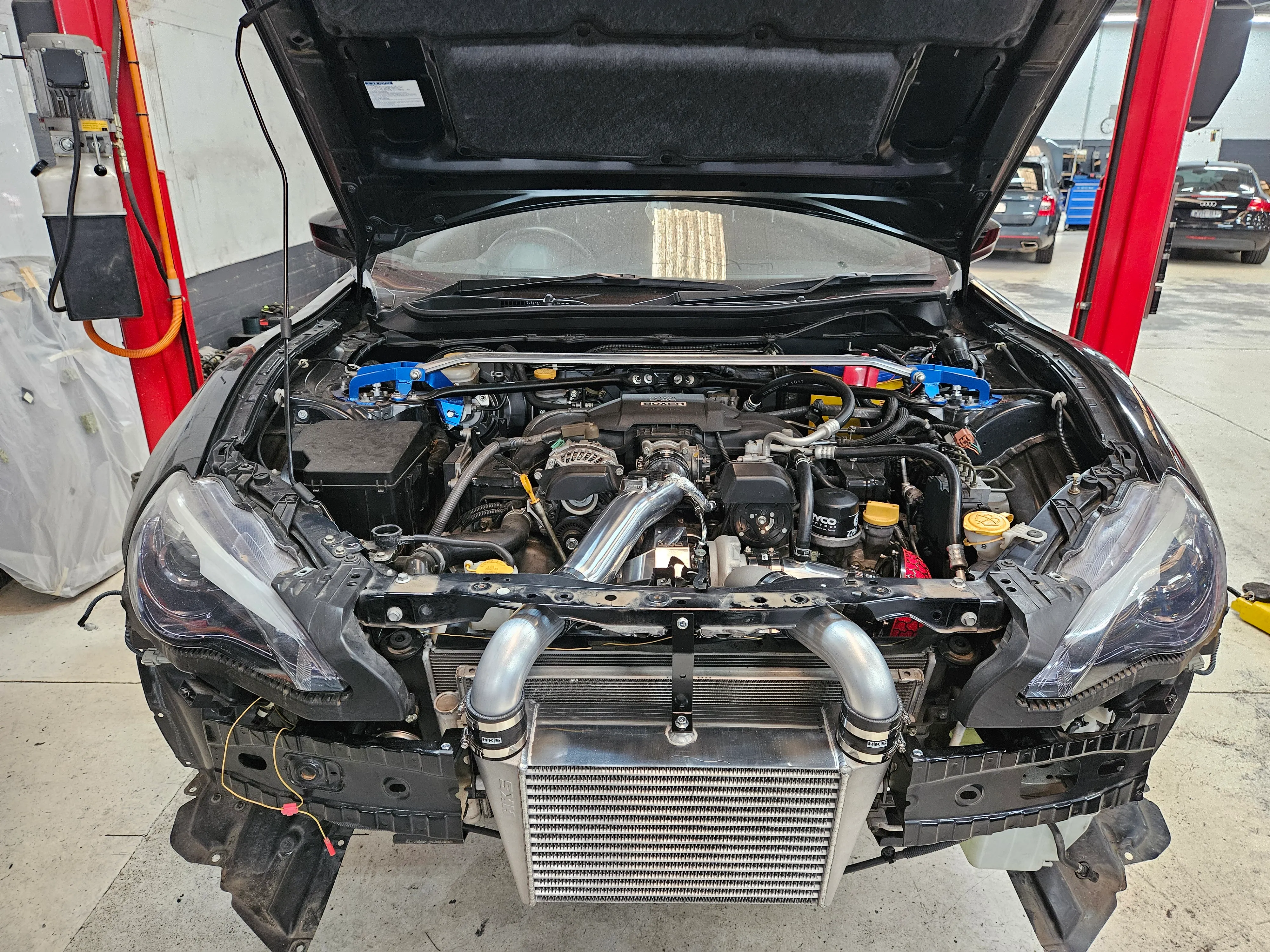
Full HKS turbo kit install on a Toyota 86/BRZ with custom dyno tune by Revzone Melbourne. 240kW at the wheels on a safe, reliable street setup.

HKS Turbo Kit Toyota 86 / Subaru BRZ 240 kW Street Tune

From Naturally Aspirated to 240 kW on Stock Internals

The first-generation Toyota 86 and Subaru BRZ earned a reputation as one of the best chassis platforms available for the money. Lightweight, rear-wheel drive, low centre of gravity, and a mechanical limited-slip differential. Everything about the car says it wants to be driven hard. The one area that always divided opinion was the FA20 engine. At around 150 kilowatts from the factory, the flat-four delivers a willing, rev-happy character but leaves many owners wanting more outright performance, particularly those who have experienced the chassis on a circuit and know how much more it could handle.

This 86 came to us with a clear goal: forced induction via the HKS turbo kit, built to be reliable on stock internals, tuneable for both 98 RON and E85, and capable of being driven daily without compromise. The owner wanted a car that could commute through the week and chase lap times on the weekend without worrying about whether the engine was going to hold together.

Why the HKS GTIII-RS V2

The HKS GTIII-RS V2 is the second revision of HKS’s bolt-on turbo kit for the ZN6/ZC6 platform, and it is a kit we have fitted and tuned extensively. The V2 addressed several fitment and performance refinements over the original, and it remains one of the most complete, well-engineered turbo kits available for the first-gen 86/BRZ.

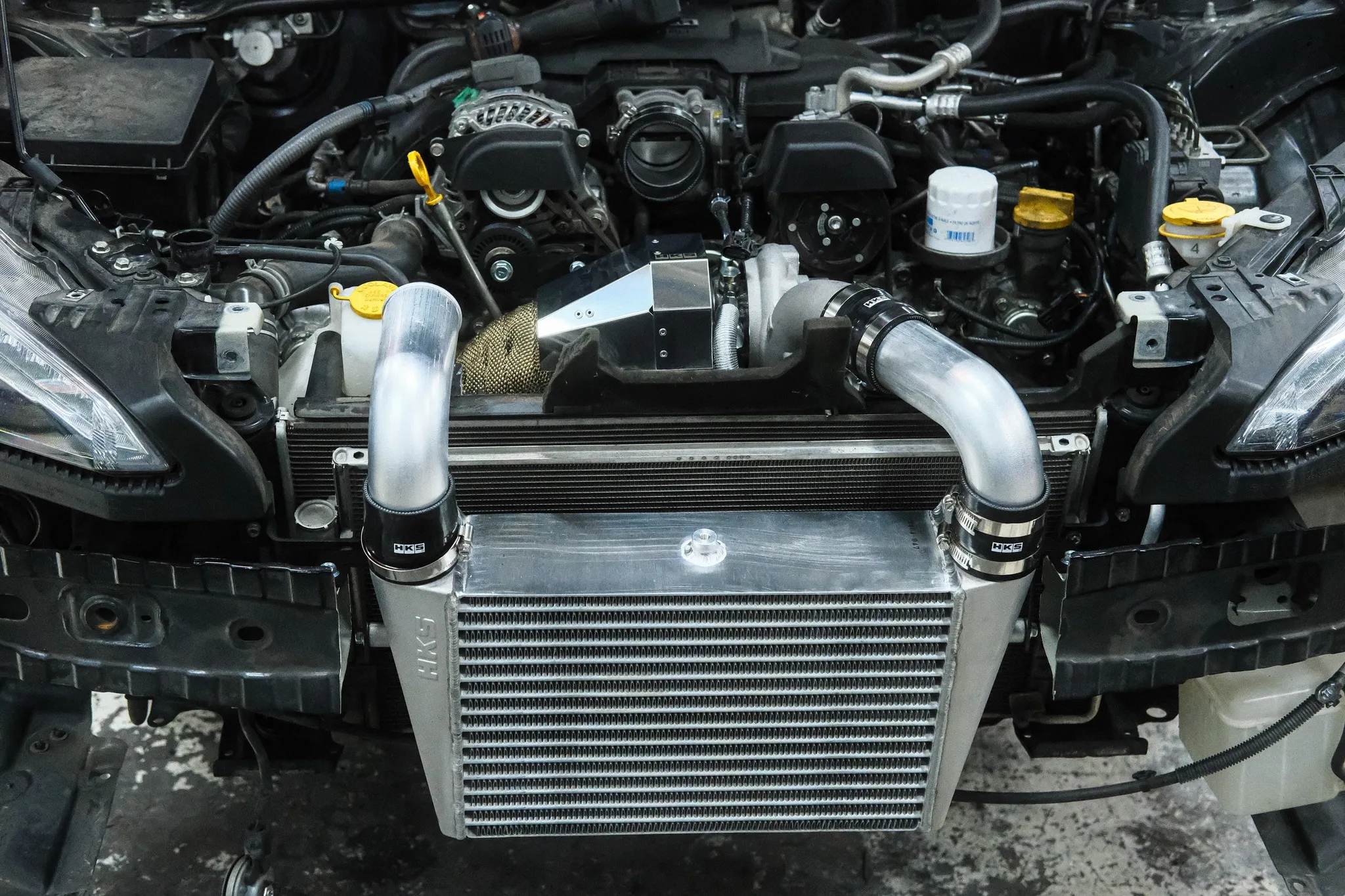
The kit includes the turbocharger, tubular exhaust manifold, heat-wrapped dump pipe, front-mount intercooler with all charge piping, and the associated hardware and gaskets. It is designed to fit without major fabrication, which keeps labour time reasonable and means the installation is repeatable and consistent.

HKS turbo manifold and heat-wrapped dump pipe installed on Toyota 86 engine bay

The GTIII-RS compressor is sized to deliver strong spool on the FA20’s relatively modest displacement while still having enough flow to make serious power at the top of the rev range. It is a balance that suits the 86 platform well. A larger turbo might make more peak power on paper, but the lag and on-off power delivery would fundamentally change the car’s character in a way that works against the lightweight, agile nature of the platform.

HKS GTIII-RS turbocharger assembly with heat shielding on Toyota 86

Fuelling for Boost and E85 Capability

Adding forced induction to the FA20 roughly doubles the fuel demand at full boost, and E85 requires approximately thirty percent more fuel volume on top of that. The factory fuel system is nowhere near adequate for either scenario, so the entire fuel delivery pathway was upgraded.

Injector Dynamics ID1050xds injectors replaced the factory items. The ID1050xds is a well-characterised, high-impedance injector with excellent linearity across its flow range, which means it delivers precise fuel metering at idle and part-throttle as well as at full load. This matters for drivability. Oversized, poorly characterised injectors can cause rough idle, poor fuel economy, and inconsistent part-throttle response, which defeats the purpose of building a car that is meant to be driven every day.

A DeatschWerks DW300C 340LPH fuel pump went in to ensure the fuel system can deliver adequate volume and pressure at full boost on E85. The DW300C is a drop-in replacement for the factory in-tank pump, so it does not require external fuel system modifications.

The Zeitronix x RZ Flex Fuel Kit provides real-time ethanol content data to the ECU via a sensor spliced into the fuel feed line. This allows the tune to automatically adjust fuel delivery, ignition timing, and boost targets based on the ethanol percentage in the tank. The kit includes a red gauge mounted in the cabin so the driver can see the current ethanol content at a glance.

An Omni Power 4 bar MAP sensor replaced the factory unit because the stock sensor does not have the range to accurately read the manifold pressure levels seen under boost. The 4 bar sensor gives the ECU accurate pressure data well beyond the boost levels this car will run, which is critical for the ECU to calculate the correct fuel delivery.

Exhaust, Oil Cooling, and Ignition

The HKS Stainless Dual Resonated Front Pipe connects the turbo dump pipe to the rest of the exhaust system. The dual resonator design is important on a street car because it controls the exhaust tone without adding significant backpressure. A single loud front pipe might work on a dedicated track car, but for a daily driver the resonated pipe keeps the interior noise levels civilised while still flowing enough to support the power targets.

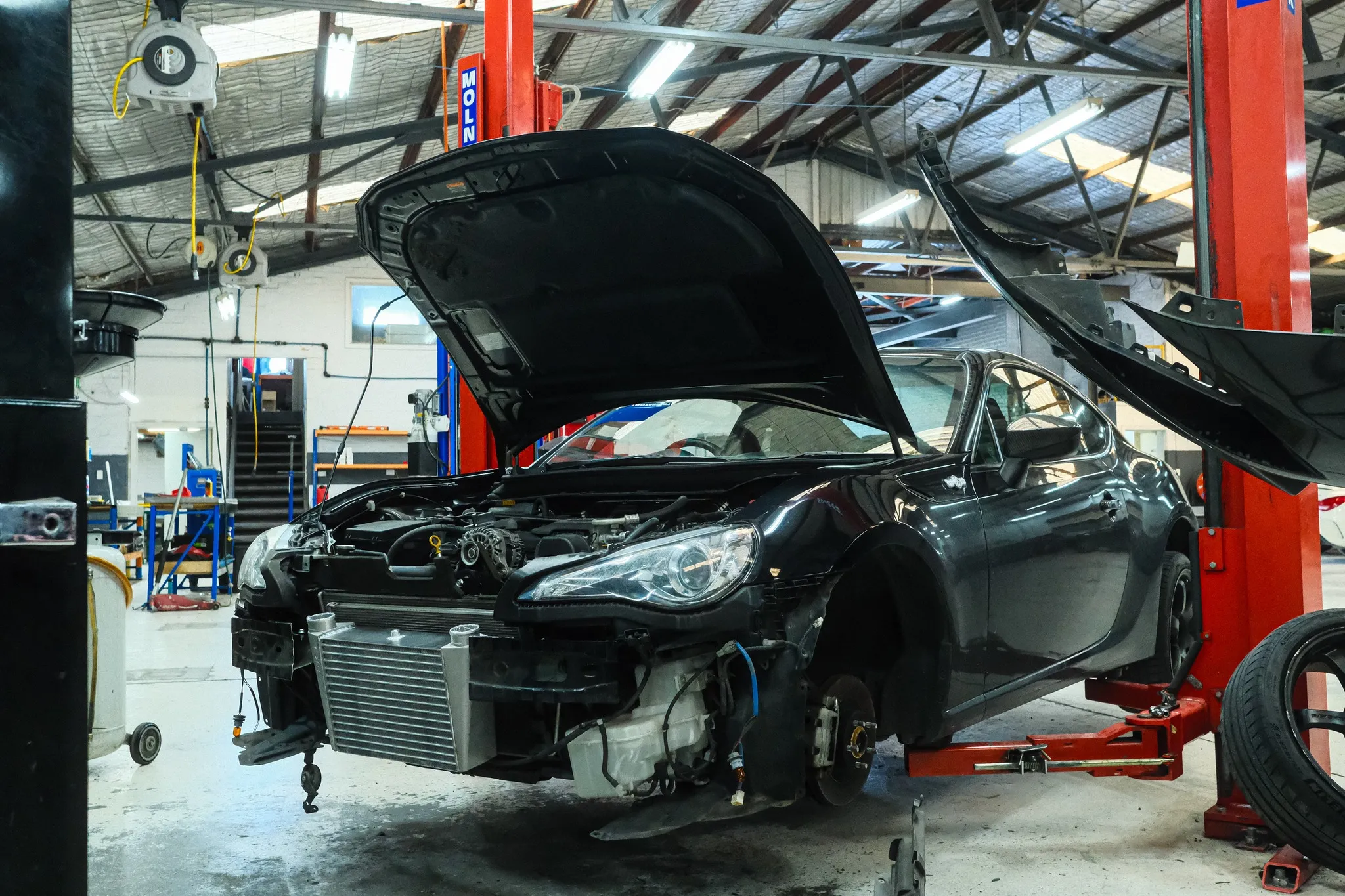
HKS front-mount intercooler and charge piping alignment on Toyota 86

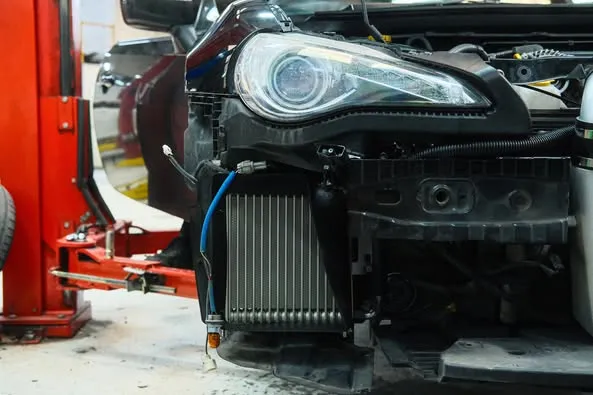
The HKS S-Type Oil Cooler Kit was fitted to manage oil temperatures under sustained load. The FA20 runs warm even in naturally aspirated form, and adding boost significantly increases the thermal load on the oil. On track, oil temperatures can climb into the danger zone quickly without a dedicated cooler, which leads to reduced oil viscosity, increased wear, and in extreme cases, bearing failure. The S-Type oil cooler mounts in the front of the car with dedicated ducting and keeps oil temperatures in a safe window even during extended track sessions.

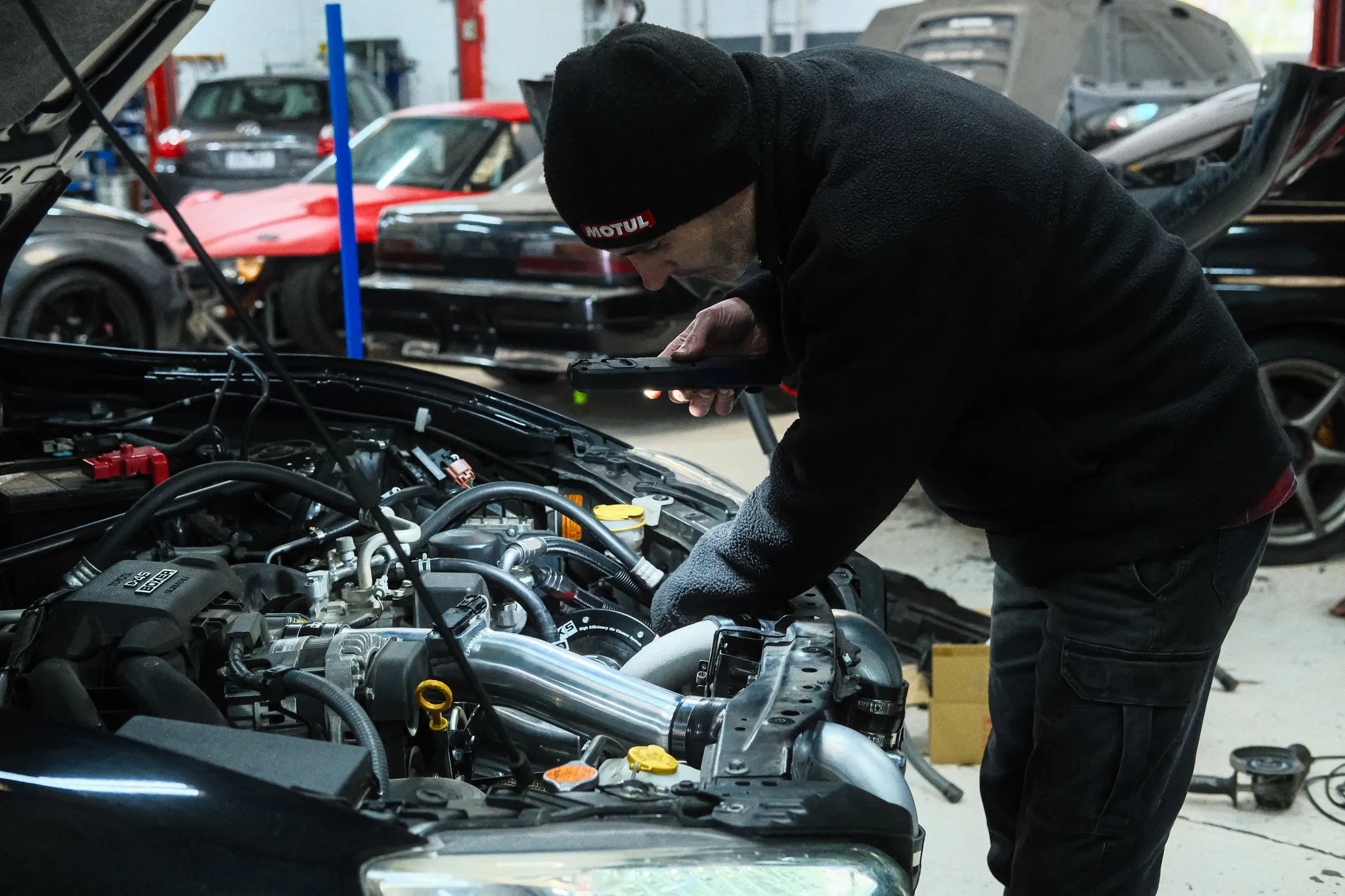
Engine bay detail showing HKS intercooler piping and blow-off valve

HKS Racing Super Fire spark plugs replaced the factory items. The colder heat range is necessary on a boosted engine because the combustion temperatures are significantly higher than in naturally aspirated operation. Running the factory heat range plugs under boost risks pre-ignition, which can cause serious engine damage. The HKS plugs are gapped to suit the boosted application and provide reliable ignition across the full operating range.

Custom Dyno Tune on the Dynapack

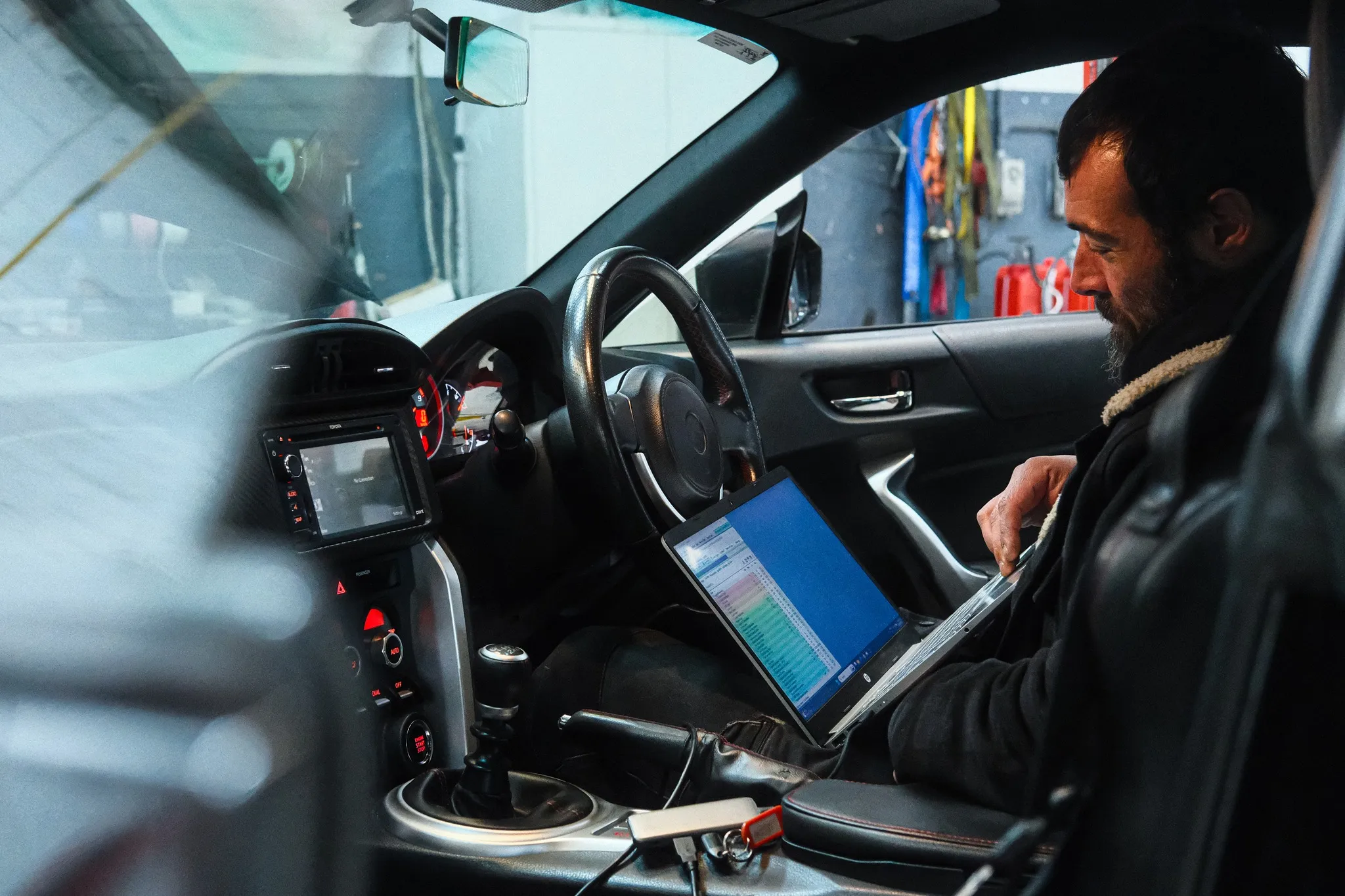
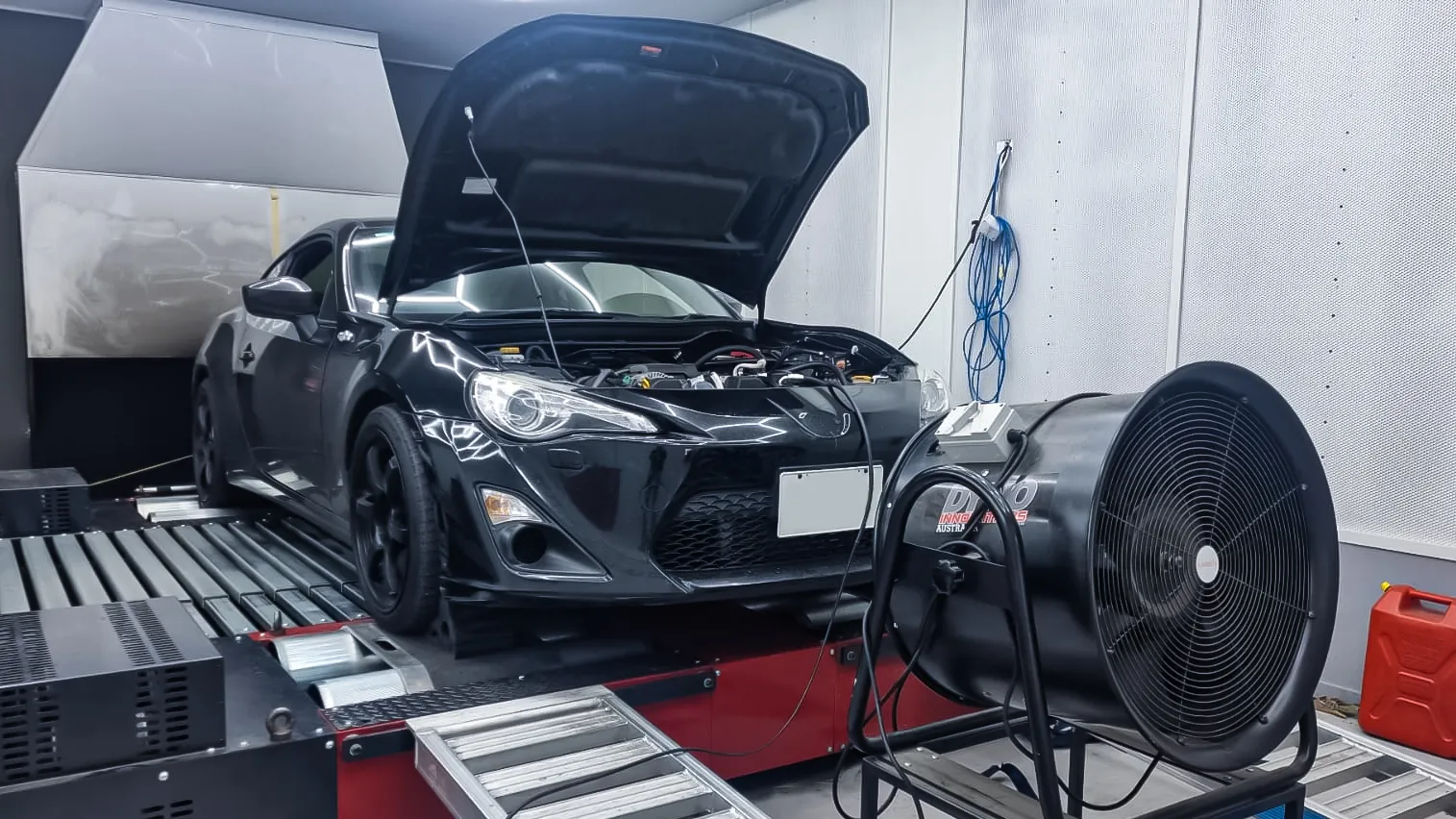
With all the mechanical work complete, the car went onto our Dynapack hub dyno for tuning. The Dynapack eliminates tyre slip and roller inertia from the equation, giving us clean, repeatable data to calibrate against.

The tune was built around two priorities: maximum safe power on stock internals, and real-world drivability. On stock internals, the FA20 has proven reliable at power levels well above factory, but there is a ceiling beyond which you are gambling with the ringlands and rod bearings. Our tune targets stay within the proven safe zone for the FA20’s bottom end while extracting everything the fuelling and turbo kit can deliver within that envelope.

The car was tuned on 98 RON as the primary fuel, with the flex fuel system calibrated and ready for E85 when the owner chooses to run it. On 98, the car made 240 kW at the wheels on the Dynapack. That is a strong result on stock internals and represents roughly a ninety kilowatt gain over the factory output measured at the wheels. With E85, there is room for even more, but the 98 tune alone transforms the car.

Completed HKS turbo Toyota 86 build on Revzone's dyno pulling 240kW

Driving a Turbocharged 86

The difference on the road is immediately obvious. The GTIII-RS spools early and the boost builds progressively through the mid-range, which gives the car a sense of urgency that the naturally aspirated FA20 simply could not deliver. The power delivery is smooth and linear rather than arriving in a sudden hit, which means the car is predictable and confidence-inspiring whether you are exiting a tight corner on track or merging onto a freeway.

The oil cooler and heat management keep everything in check during sustained hard driving, the resonated front pipe keeps the exhaust note controlled at cruise, and the flex fuel kit means the car is ready for E85 whenever the owner wants to unlock the additional power. It is a comprehensive build that addresses every aspect of the forced induction conversion, not just the turbo itself, and the result is a car that is genuinely transformed while remaining reliable and liveable as a daily driver.

Final dyno verification run showing 240kW power output on completed HKS turbo build

Full Parts List

  • HKS GTIII-RS V2 Bolt-On Turbo Kit Shop
  • HKS Racing Super Fire Spark Plugs Shop
  • Zeitronix x RZ Flex Fuel Kit (Red Gauge) Shop
  • Injector Dynamics ID1050xds Injectors Shop
  • Omni Power 4 Bar MAP Sensor Shop
  • HKS Stainless Dual Resonated Front Pipe Shop
  • HKS S-Type Oil Cooler Kit Shop
  • DeatschWerks DW300C 340LPH Fuel Pump Shop

More photos

Want a similar turbo setup?

Get a quote for an HKS turbo build and tune tailored to your fuel, usage, and power goals.

View the 86/BRZ RZ Stage 3